Protect your innovations with D2M’s Intellectual Property Services. Tailored patent, trademark, and IP management solutions for global security and monetisation.
We partner with a couple of Intellectual Property Specialists to support our clients in protecting their innovations. Vicki from Strachan IP has helpfully written this section of our website to help you understand more about IP strategy.
At Strachan IP, we endeavour to offer a collaborative, rather than purely transactional service. This means that we like to get to know you, your business and your aspirations right from the start, so that we can tailor our advice and service to exactly what your business needs to thrive.
What exactly is Intellectual Property (IP)?
IP is the term given to a set of legal rights that allow you (as their owner) to stop others from copying your innovation and muscling in on your revenue stream, There are lots of different types of IP, registered and unregistered, such as patents, registered designs, registered trade marks, unregistered design rights, copyright, database rights, and even know-how and trade secrets. The real ‘magic, is knowing how to put together the right set of IP rights for your business and use them to ensure your innovative product or service is properly protected.
Understanding the value of IP
Without any IP rights, a third party could simply come along and copy your product and bring it into the same market, eating into your revenue stream, and you would have no way of stopping them. This third party might be a much larger organisation than yours, and this could obviously make it much more difficult for you to make a profit on your own products. They may have an existing client base/following and, of course, they may be able to offer the same product for a lower cost because they won’t have had the R&D and manufacturing overheads that you have This is why it is so important to have the right IP advice early on and as the project progresses, so that the right set of IP right can be put in place for your product before it’s launched.

Expense vs Value
Registered IP can be costly. There’ no way around that. Patent applications and (usually) registered design applications must be filed before there is any non-confidential disclosure of your invention, i.e. before it launches and before you can make any money from it, although the right patent attorney will usually work with you and your budget to try and mitigate the problems this can cause. Nevertheless, it is an expense that needs to be factored in.
The dictionary definition of ‘expensive’ is “commanding a high price and especially one that is not based on intrinsic worth (https://www.merriam-webster.com), and we do tend to think of things as ‘expensive’ if we deem the cost to be more than the perceived value we receive in return. So, is IP really ‘expensive’? Or is it just that the true value of it is unknown and therefore had to quantify?
One of the biggest mistakes an innovative business can make is to overlook their intellectual property rights. Why? Because only your IP rights can help to stop a competitor from copying your unique selling point(s) and muscle in on your market share. Why do customers come to you and not your competitors? What is it that sets your business apart from everyone else? I always say, where there’s a USP, there is (almost) always IP, but it can only add value to your business and protect your interests if you know it’s there and how to make sure it’s enforceable should you ever need it.
Nevertheless, business owners are often put off by the perceived expense of securing and maintaining a robust IP portfolio.
Cost/Benefit Analysis
If we think of this issue purely in terms of figures, what do you think would be your loss of revenue if your biggest competitors could simply copy your USP(s) and offer the same goods/services (perhaps at a lower price because they would not have had the same overheads in developing the ideas)? The answer is, in effect, at least part of the value of any IP rights that will allow you to stop them from doing that.
Having arrived at some nominal figure for this value, you can assess the cost of securing those IP rights against that value. If the former is less than the latter, then surely it’s the opposite of ‘expensive’? A bargain, even?!
And that’s without considering the hidden value of IP rights (see above) – value you may never even realise you have received.
So, is IP really ‘expensive’? Or is it just that the cost of IP seems high because the value is hidden? We would strenuously argue the latter.
Here’s why Intellectual Property is Crucial to you:
What you need to know about registered IP rights
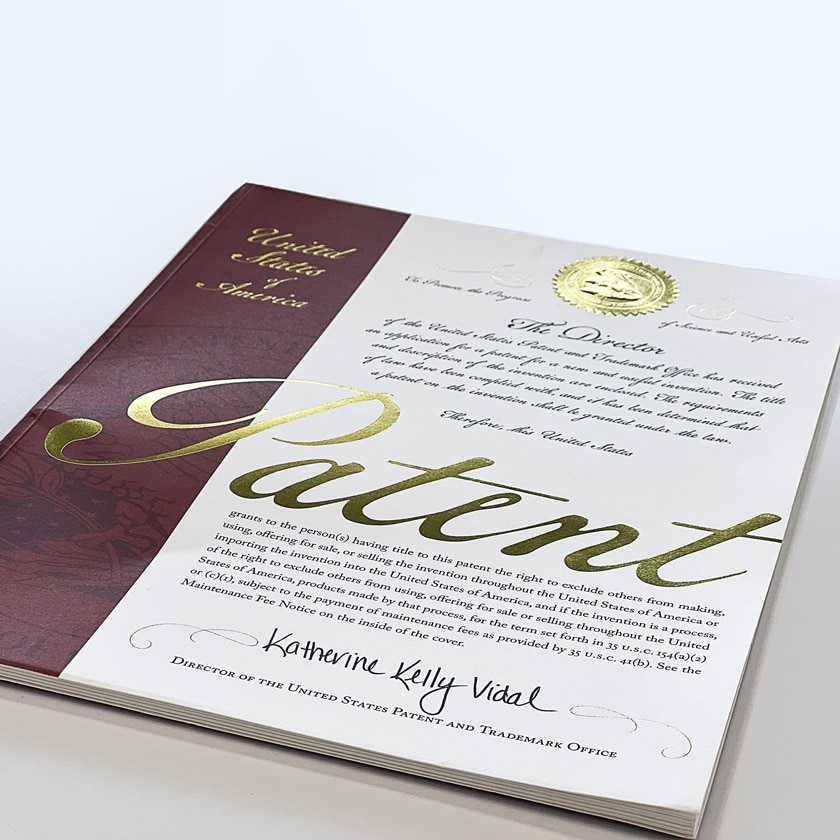
Registered IP rights are patents, registered designs and trademarks. Patents protect technical innovation, registered designs protect the outward appearance of a product, and trademarks protect brand names and logos – the things people will recognise your business by.
Step 1: Patents
The first step to having a patent is to file a UK patent application first – you then have 12 months within which to file any corresponding overseas applications and “keep” your original UK filing date.
A UK patent application must be accompanied by a patent specification, which is a detailed description of your invention and also any modifications or variations that could be made without changing the invention itself. This is where the cost comes in. It can take quite a lot of time to craft an appropriate specification, which should also include claims (or statements that look like claims), which are legal statements defining the scope of protection sought, and these, too, can take quite some time to create.
Once a UK patent application has been filed, you are free to proceed and disclose your invention. However, it takes about 3-4 years to get a UK patent application through to grant, and it goes through various stages, so further charges need to be budgeted for over that period.
When it comes to filing overseas applications, there are a couple of options that can be considered, and your patent attorney should be able to provide you with the right options for your business.
Step 2: Registered Designs
Unlike patents, which take some years to be granted and have to go through a relatively complex process in the meantime, registering designs in the UK and EU is a comparatively simple administrative process with formal registration usually taking around 8 weeks from the date of application. There is no detailed examination of design applications and, provided the drawings and application documents are complete and in the correct format, issues rarely arise.
This means that, during the early stages of commercialising your product, you could have a piece of registered IP that can be used to enforce your rights against early ‘copycats’ which could otherwise, not only undercut you on price, but also potentially damage your brand if the copies are not only cheaper but of inferior quality.
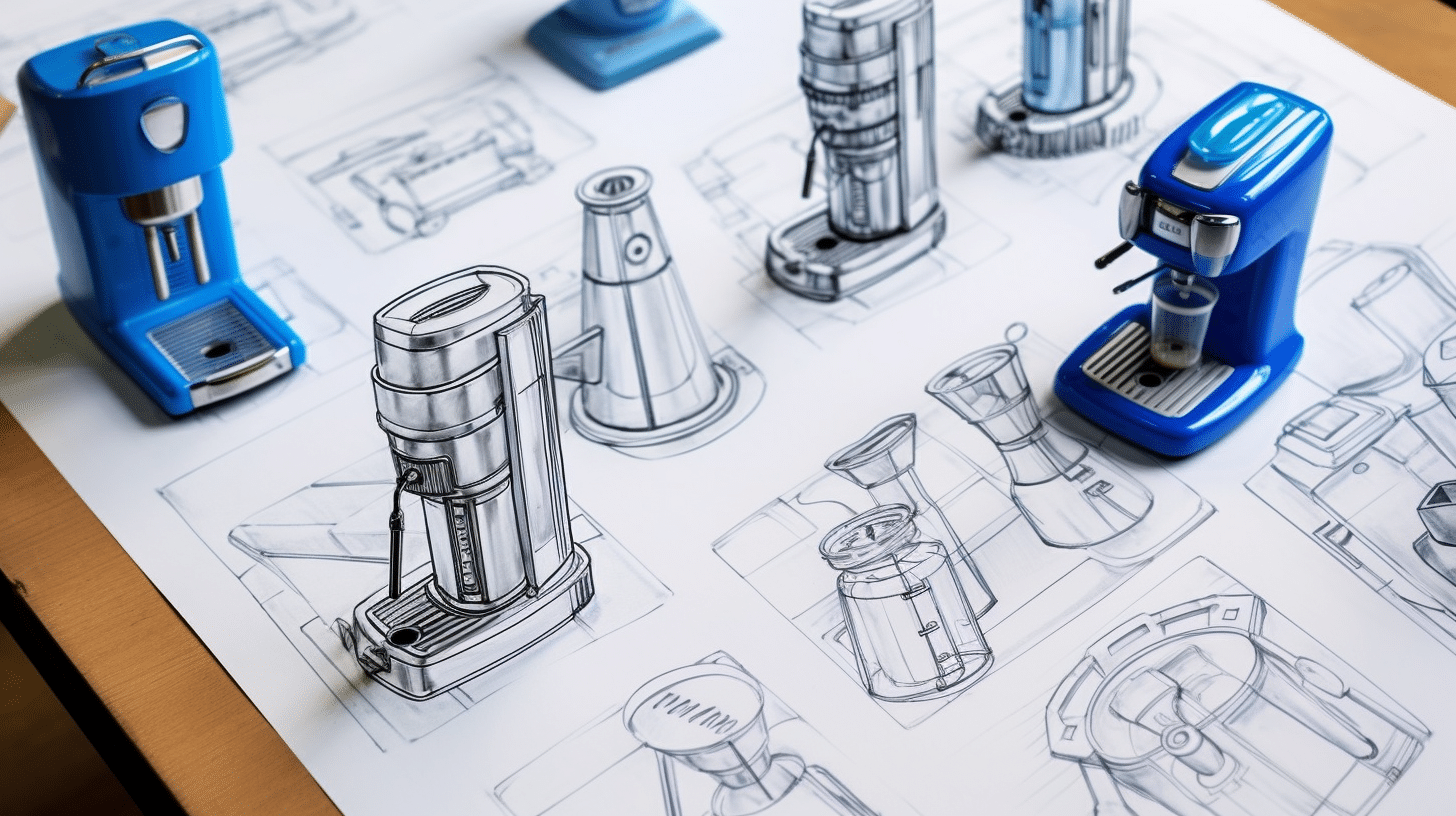
As registered designs protect the outward appearance of a product, it is very important to get the drawings right. Make sure your registered design covers the most distinctive aspects of your design without necessarily making it too detailed. Show the design in black and white, rather than with any specific colour scheme or surface pattern unless those are, in fact, particularly important to the design. You can ‘disclaim’ certain, less important elements of your design, where appropriate. A very simple example might be if your new product was a keychain, where the distinctive elements of the design relate to the fob, and it doesn’t really matter what type of keyholder is used (e.g. split ring, carabiner, lobster clasp, etc.). In this case, irrespective of what type of keyholder you actually use in your product, this part of the design can be disclaimed, either by omitting it altogether from the design drawings or showing it in broken lines. That way, if a third party copies the fob but uses a different keyholder, your registered design would still cover it.
Court Proceedings
You cannot enforce an IP right through the courts unless and until it is granted/registered. This can take 3+ years for a patent, during which time any copies in the market could have seriously damaged your market share and/or your brand. There is, of course, pre-court correspondence that can be entered into to try and persuade the infringer to stop, but ultimately you cannot issue court proceedings for patent infringement until the patent is granted…and the infringer’s legal representative will know that. If you have a registered design, however, your options for legal recourse in relation to direct copies are much more robust, and issuing early court proceedings can help to stop infringers before too much damage is done.
Words of Warning
The normal design registration procedure for a UK resident is to file a UK design application first. Any corresponding overseas (including EU) design applications can be filed within *six months* of filing the UK application to “keep” the UK filing date. It is wise to file your application for a UK registered design before there is any public disclosure of your design. Whilst the UK and EU provide for a so-called grace period of 1 year within which design applications can be validly registered after there has been public disclosure of the design, there are risks associated with this, and it could also invalidate any corresponding applications in other countries that don’t allow for this grace period.
Trademarks protect the logo and brand name of your product or service. Whilst it is important to protect these, this does not need to happen before there is any public disclosure of your product so, to some extent, can be left until last. However, it is imperative that you use a Chartered trademark attorney to perform a search before committing to your trade mark and especially before committing it to your packaging and marketing material, to ensure that you will not infringe someone else’s earlier rights. This is infinitely cheaper than having to change it all if a problem arises later!
Given all of the issues that need to be considered, we strongly recommend that you consult an IP attorney early in the design and development process of any product or service, so that they can stay with you ensure that you are doing everything at the right time.
If you have a registered design in the UK or EU, you can use a customs registration process to enlist the help of Border Force (or their EU counterparts) to stop infringing copies manufactured overseas from even entering your market territory. Click here for more information on the UK Customs Registration process.
If a copy of your product is listed on a third party sales platform such as Amazon, you can report it as an infringement of your registered design, patent, copyright and/or trademark, and the listing for the copycat product will usually be suspended unless and until the dispute has been resolved to your satisfaction.
Quite simply you may lose your rights to protect the new service or product that you are investing in if you don’t consider the best way to prevent others from copying your innovative ideas. It’s best to at least be fully informed of what could be done, should you wish, to start larger competitors from benefiting from all your hard work by reducing your market share post launch.
IP is a set of legal rights that give you the right to stop other from copying your innovation. Some have to be registered, others do not, but all of them do much the same thing in different ways. Consult an IP attorney as early as possible so that they an help you to decide what IP rights are relevant to you, and help you to secure them if necessary.
This varies greatly, depending on what your product or service is and what countries you ant to cover. However, the cost of preparing and filing a UK patent application would be of the order of £4500 exc VAT except for highly technical inventions, and the cost of preparing and filing a UK registered design would normally be somewhere between £500 and £1000 exc VAT (excluding the cost of preparing the drawings required). (Correct at the time of writing February 2024)
It is quite, simply, the only way you will be able to stop your competitors from copying your idea the minute it hits the market and, potentially, severely impact your revenue stream.
Registered IP refers to types of intellectual property rights that have to go through some sort of application or registration process in order to exist and they do, inevitably, carry a cost. Although there are others, the three main types of registered IP are: patents (for technical innovation), registered designs (generally for the outward appearance of a product) and trademarks (for brand names and logos).
All the resources you will need:
Bonus 40min extended case-study video!