When you are sourcing a bag, one of the first decisions is whether to buy through a supplier or go direct to a manufacturer. A supplier offers lower minimum orders and less hassle at a higher unit price, while a manufacturer gives you a bespoke product and a lower cost at volume, but with more work falling to you. In the bag trade the line between the two often blurs, so knowing who you are really dealing with matters. This guide sets out the real difference, so you can decide which route fits your product and your stage.
When you are bringing a bag to market, one of the earliest sourcing decisions is whether to buy through a supplier or go direct to a manufacturer. The two routes carry different costs, different levels of control, and different amounts of work on your side. The right choice depends on how bespoke your product is, the volumes you are planning, and how much of the process you want to manage yourself.
This guide sets out the practical difference between the two, so you can decide which fits your product and your stage.
The difference between a supplier and a manufacturer
The terms are often used interchangeably, which is where a lot of confusion starts, so it is worth separating them clearly.
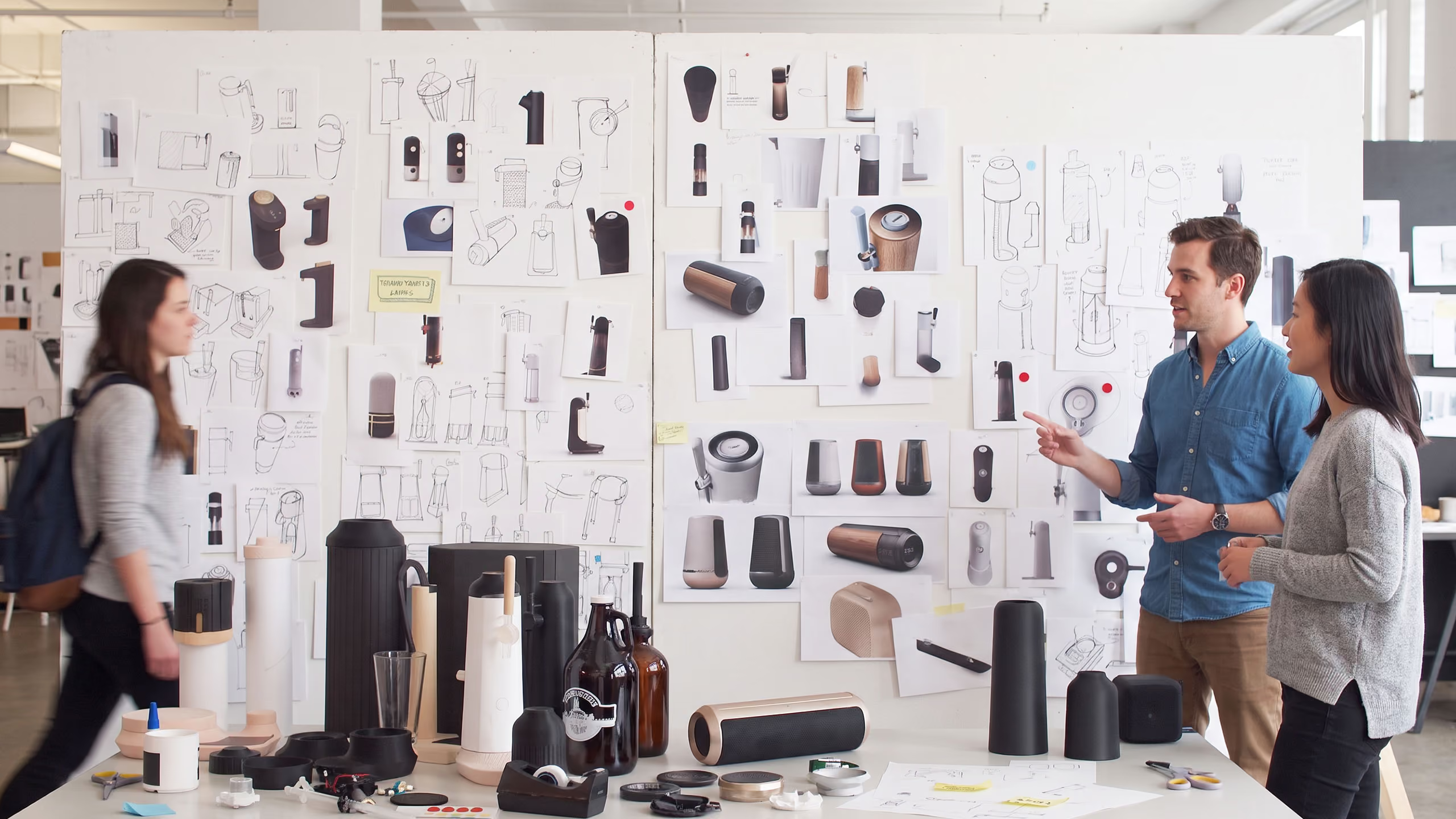
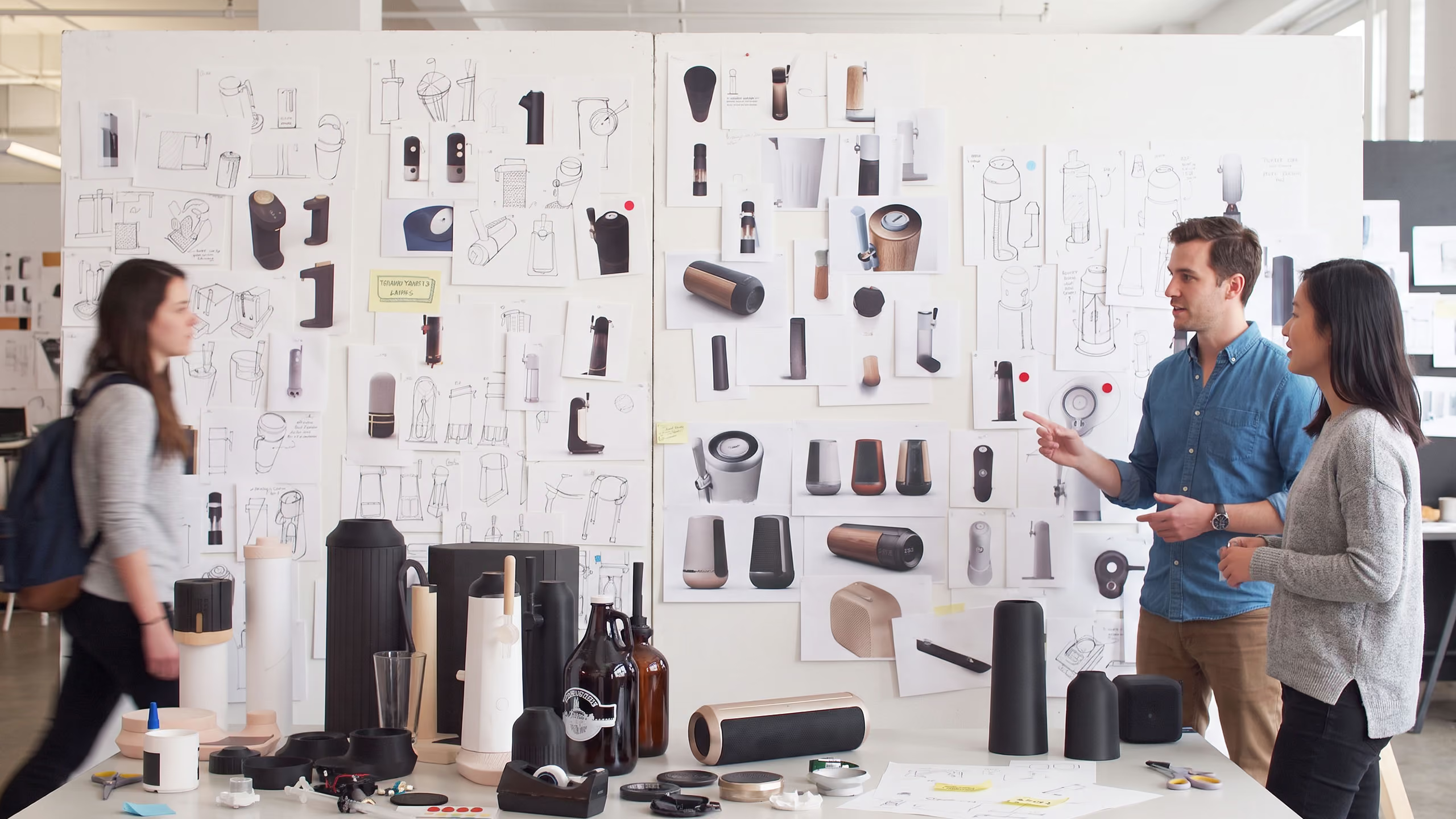
A supplier sells finished or near-finished product. They usually carry a range of their own, or draw on several factories, and offer it to you either as it is or lightly customised with your branding, colour or materials. You are buying into something that already exists.
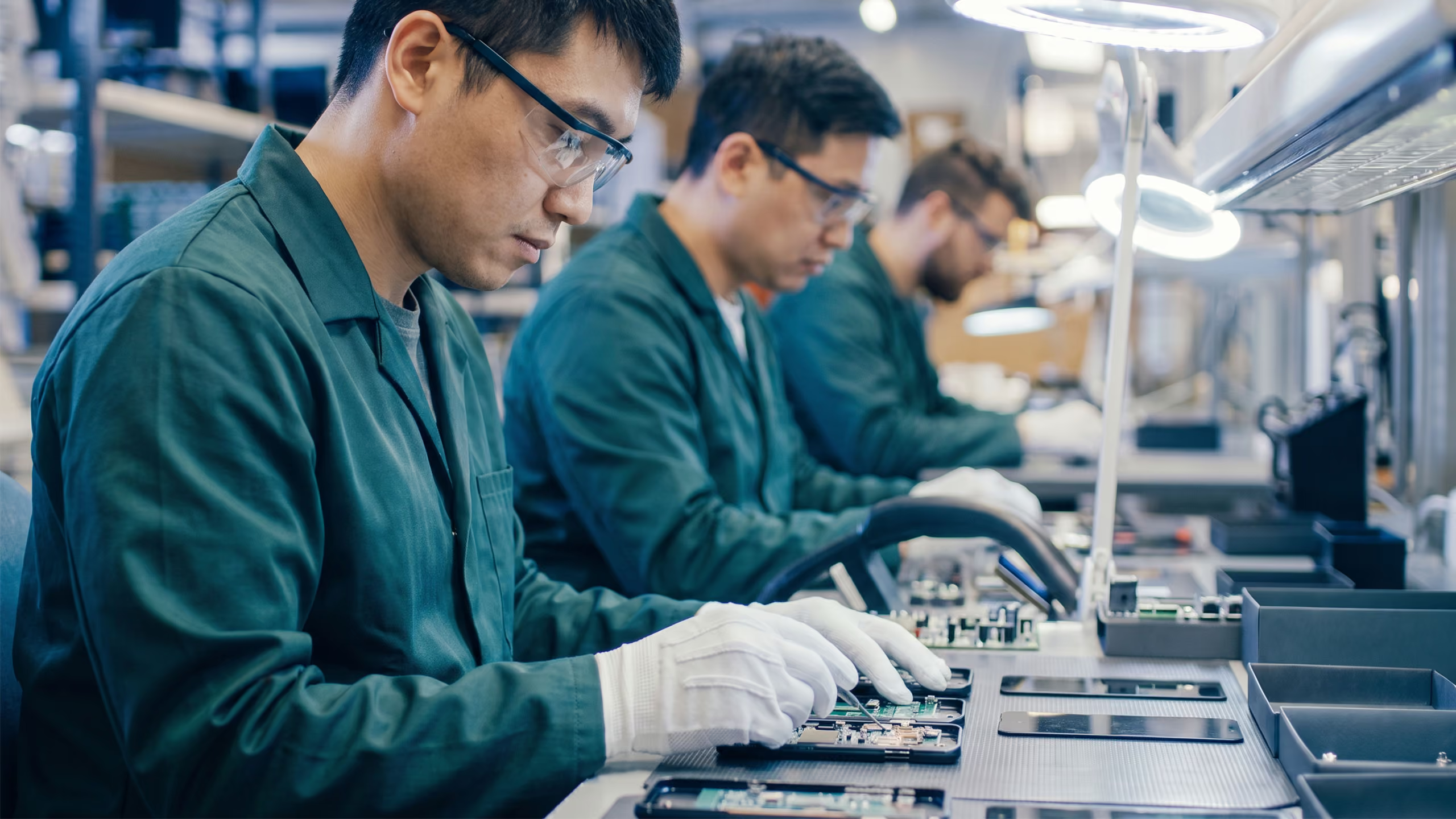
A manufacturer produces to your specification in their own facility. You bring the design, and they make it. This gives you a bespoke product built to your requirements, rather than a variation on stock.
In the bag trade specifically, the line blurs more than in most sectors. Many businesses that present themselves as manufacturers are in practice trading companies or agents who place your order with a factory they do not own. This is not necessarily a problem, and a good agent can be worth the cost, as we cover in our guide to who can help you find and manage a manufacturer. But it is worth knowing who you are actually dealing with, because it affects pricing, control and how directly you can resolve issues when they arise.
The supplier route
Buying through a supplier suits businesses that want to move quickly, test the market, or start small.
The main advantage is range and flexibility. A supplier draws on multiple factories, so you can access different styles, materials and constructions without sourcing each one yourself. That makes it easier to adjust orders to demand or seasonal changes.
Minimum order quantities are usually lower than going direct, which matters when you are starting out or validating a product before committing to volume. A supplier will also handle much of the sourcing, logistics and quality control, which removes the burden of managing overseas factories, shipping and customs yourself.
The trade-off is cost and control. A supplier is an intermediary, so their margin is built into the price, and you will pay more per unit than you would direct. Because you are a step removed from production, bespoke requirements are harder to achieve, and resolving a problem can take longer when it has to pass through a middle party rather than being raised directly with the factory floor.
If a supplier is the right route, the things worth checking are the breadth of their range, a transparent price with no hidden margin on top of the added service, a clear quality-control process, and responsive communication. On a product where branding or materials matter, confirm exactly how much customisation they will actually allow before you commit.
The manufacturer route
Going direct to a manufacturer suits a genuinely bespoke product, or one where you need control over how it is made.
The main advantage is that the product is built to your specification. You choose the materials, construction and detailing, which is what lets a bag stand apart rather than being a rebadged version of something already on the market. Working direct also gives you oversight of the production process itself, so you can hold the factory to your standards on materials and workmanship.
On unit cost, a manufacturer is usually cheaper at volume. Minimum orders tend to be higher, but once you are ordering in quantity the per-unit price is lower than buying through an intermediary, which makes direct manufacturing the more economical route as you scale.
The trade-off is that more of the work falls to you. Minimum order quantities can be prohibitive for a small or early-stage business. Bespoke production takes longer than pulling from existing stock, particularly for a highly specific product. And you carry the logistics yourself: managing international shipping, customs, and communication with a factory that is often in a different country and time zone.
One practical reality for bags in particular: if your product is textile-based, you are unlikely to find a UK manufacturer for it, as most volume textile and soft-goods production sits overseas. That is worth factoring into any expectation of manufacturing close to home.
If a manufacturer is the right route, look for one that specialises in your type of bag rather than a general producer, a stringent quality-control process, a pricing structure and MOQ that match your budget and volumes, and the capacity to scale with you as demand grows.
Which route fits your product
There is no single right answer, only the one that fits your project.
A supplier tends to be the better fit if you need flexibility, a range of options, or smaller quantities, and if you would rather have the sourcing and logistics handled for you while you focus on selling. It is often the sensible starting point for a first product or a market test.
A manufacturer tends to be the better fit if your product is genuinely bespoke, if control over production matters, or if your volumes are high enough that the lower unit cost outweighs the higher minimum order and the added logistics. It also suits businesses that already have the in-house capability to manage a factory relationship directly.
Many businesses move from one to the other over time, starting with a supplier to prove the product and moving to direct manufacturing once volumes justify it.
How D2M can help
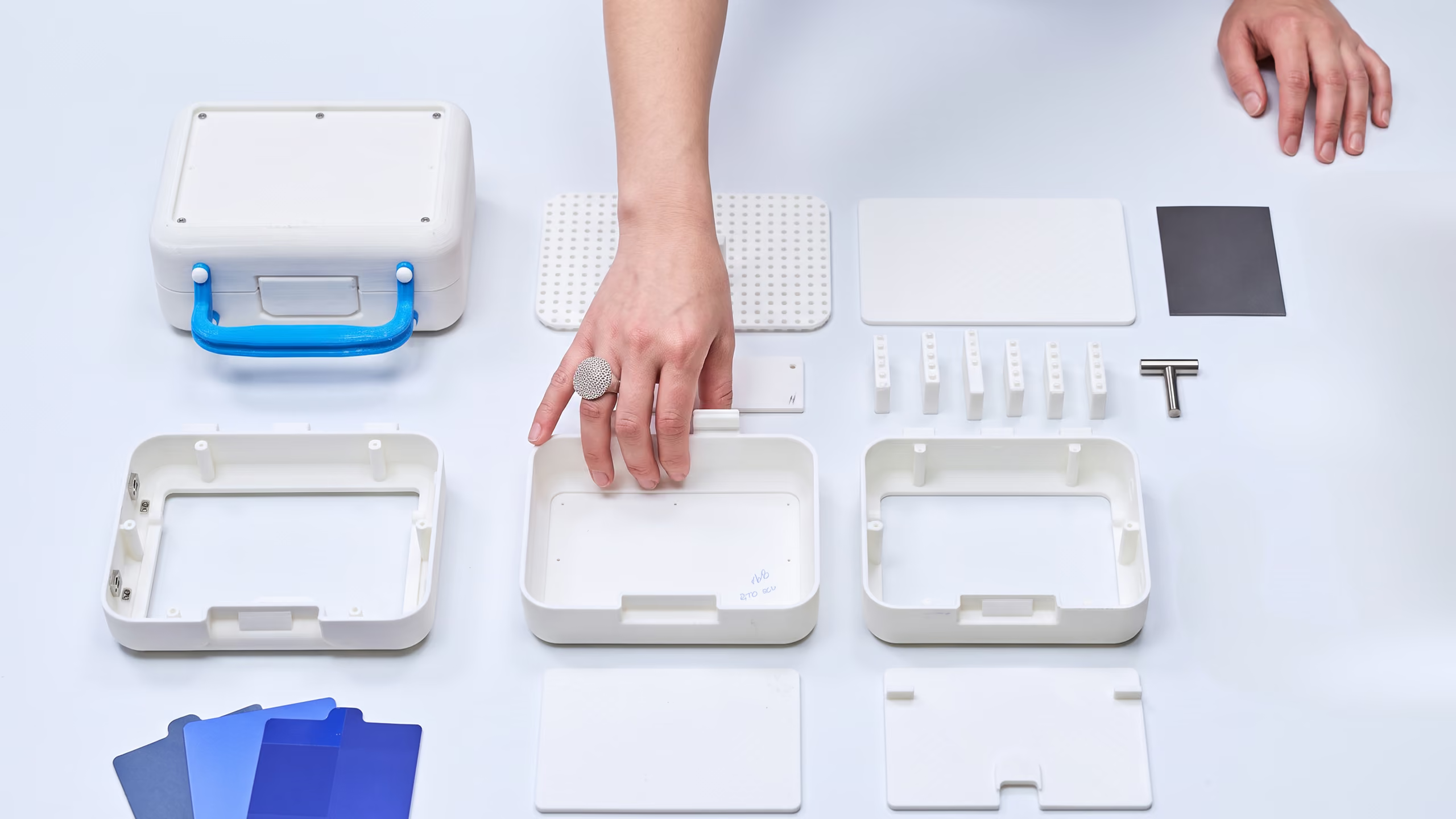
Whichever route suits your product, the decision is easier to make once the design and its commercial realities are clear. We help at the stages that shape it: refining the design so it is straightforward and cost-effective to produce, prototyping so the product is proven before you commit to a production run, and sourcing, where we help identify suppliers or manufacturers that match your quality standards, budget and volumes. Where a product calls for it, we also advise on protecting your design before it is shared with any third party.
Bags are a sector we have worked in extensively, from the RiutBag secure backpack to the ZenScape travel bag and the SwitchUp convertible pack, each taken from design through prototyping and on to sourced production.
In short
A supplier sells you finished product with lower minimums and less hassle, at a higher unit price and with less control. A manufacturer builds to your specification with more control and a lower unit cost at volume, but higher minimums and more work on your side. Start from how bespoke your product is and what volumes you are planning, and the right route usually becomes clear.