A focus group brings a small group of carefully selected users together to react to a problem or a concept, so that design decisions rest on evidence rather than assumption. Run by designers rather than market researchers, they reveal not just what users think but why, and they catch problems while they're still cheap to fix. This guide covers when to run them, how we conduct them, and what they protect you from.
Focus groups are one of the most effective ways to understand the people a product is actually for. They let us listen directly to the users who will live with the product, and they matter most when you're working in unfamiliar territory, whether that's safety equipment for firefighters, tools for tradespeople or products for new parents. The best designs start with understanding the user, and a focus group is often where the assumptions in a brief first meet reality.
What a focus group is for
A focus group delivers qualitative insight: the reasoning behind what users do and want. Other methods have their place, surveys and desk research give you numbers, but a focus group is where you learn the why behind the behaviour. That understanding is what lets us make smarter design choices early, reduce costly re-engineering later, and give a product a better chance commercially. The value is in prevention: hearing from real users at the start often reveals a design challenge that would otherwise appear only when a prototype fails testing, by which point it's far more expensive to resolve.
When we run them
Focus groups fit at more than one point in a project, depending on what you need to learn.
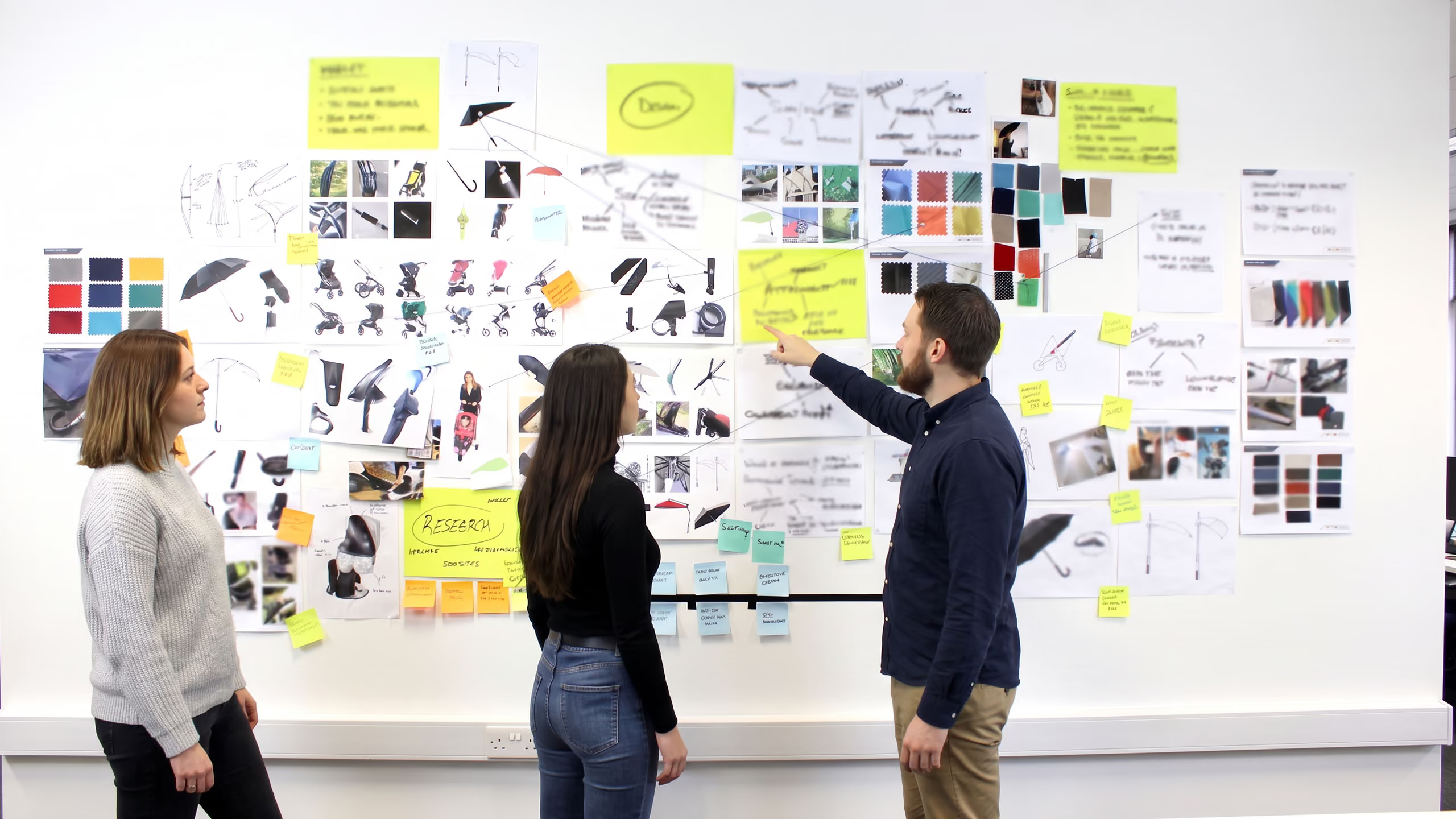
Early, to understand the problem. At the start, a focus group explores the problem space: where users are frustrated with existing products, the constraints of the environment they work in, and which features are genuinely must-haves rather than nice-to-haves. This is what grounds the design brief in reality rather than assumption, and it matters most for niche professional users, where first-hand knowledge is the difference between a product that fits and one that doesn't.
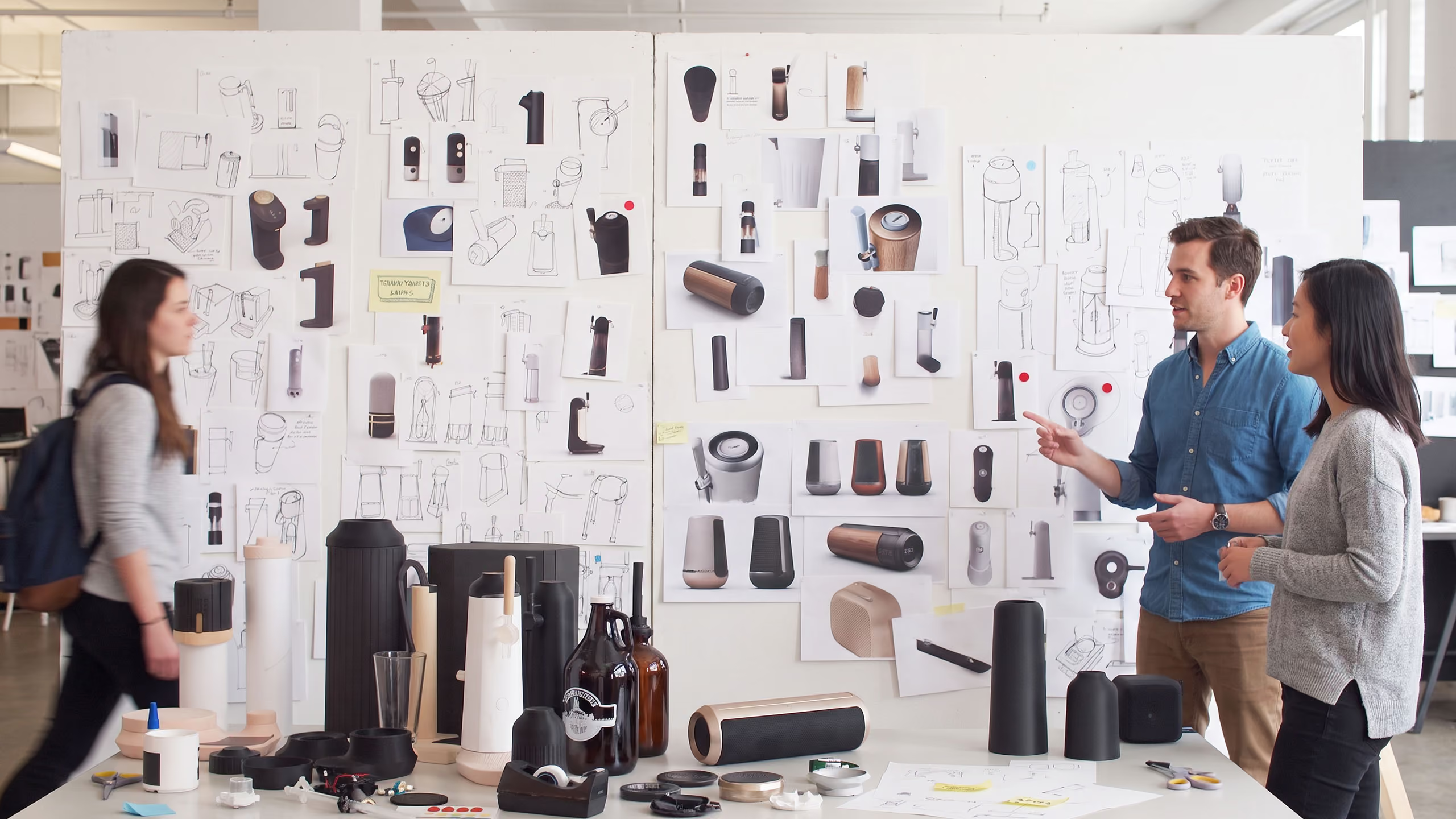
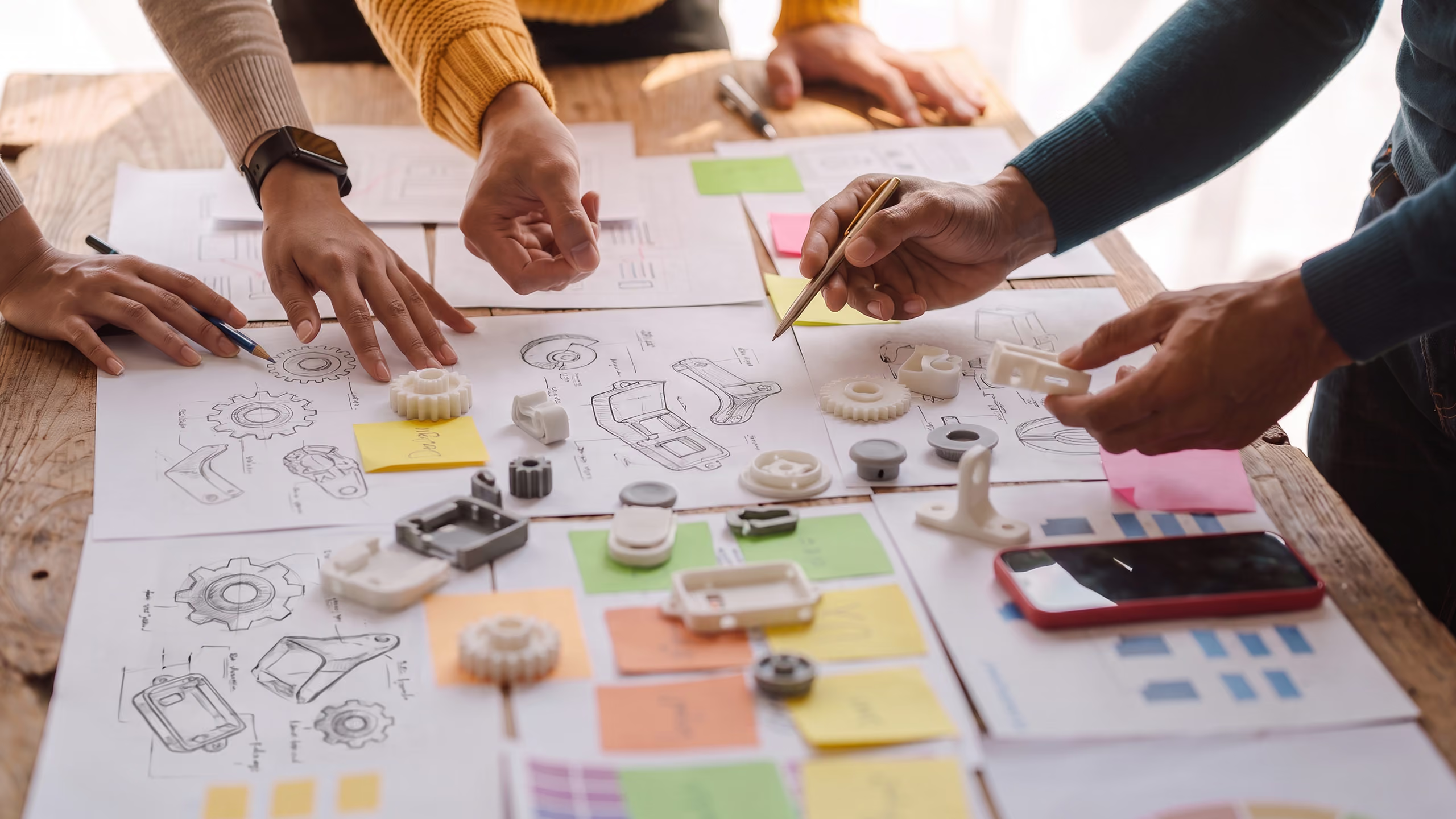
Later, to test and compare concepts. Once sketches, renders or early prototypes exist, a focus group can compare directions: reactions to look and feel, to size, weight and ergonomics, to perceived value, and ideas for improvement before final prototyping. These sessions are usually held under NDA to protect the concept, and they're a sensible checkpoint before committing to advanced prototypes or tooling.
We often run both in sequence: understand the problem first, then validate the solution.
How we conduct them
Every session is planned and run by facilitators who are themselves product designers. That combination matters, because it means the insight isn't just collected, it's interpreted in the context of ergonomics, materials and manufacturing reality.
- Participant selection. A session typically includes eight to ten participants chosen to represent the intended user base as closely as possible. We can manage recruitment to make sure the people in the room are the right ones.
- Session structure. Sessions are guided but conversational, with the facilitator drawing out experiences and frustrations while making sure every voice is heard, not just the loudest.
- Moderation. A designer leads the discussion, asking the questions that reveal both the functional and the emotional reactions to a product.
- Neutral setting. Sessions run in a neutral environment so the feedback is honest rather than shaped by what people think you want to hear.
Each session usually lasts sixty to ninety minutes, and can be paired with short pre- or post-session surveys to capture individual views alongside the group discussion.
The two types we use
Problem-focused sessions run at the very start, to explore context. A group of electricians, for instance, might surface overlooked frustrations around tool storage or cable management that reshape the brief.
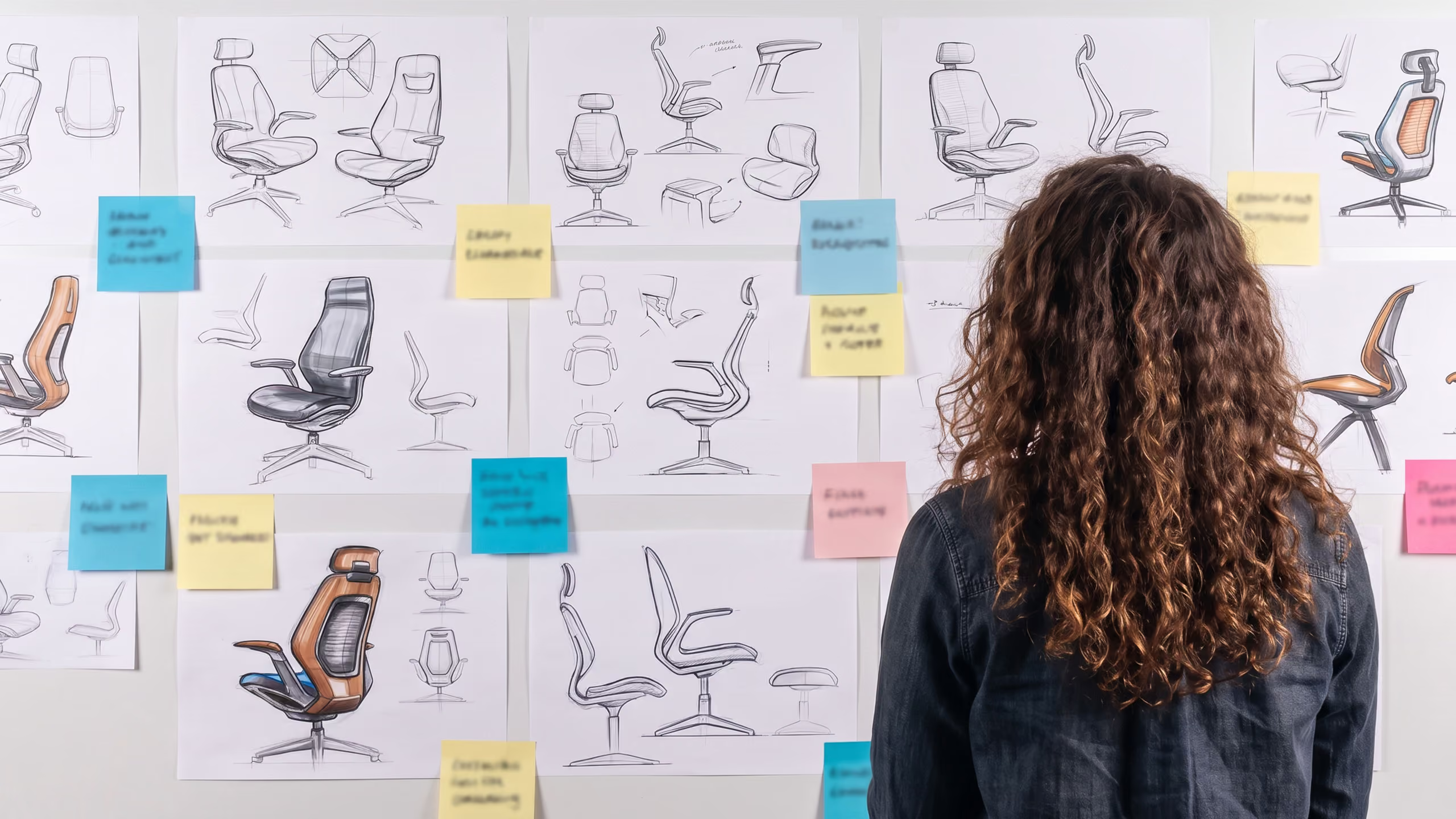
Solution-focused sessions run later, once there's something to react to, comparing concept options on aesthetics, usability and perceived value, and refining ergonomics, interface or packaging before production.
How involved you are
Sessions can be fully managed by us, recruitment, venue, incentives, NDAs, moderation and reporting, or run jointly, where you provide participants or a venue and we handle moderation and analysis. That flexibility means a start-up and an established brand can both reach the same quality of insight, scaled to the budget available.
What you get back
After each session we compile the findings into a clear, practical summary rather than an academic report, so it feeds straight into the next phase. That means the recurring themes, the design implications, and a prioritised set of next steps for concept refinement or prototype testing. Those insights then carry through into the design specification, material choices and manufacturing planning.
The benefits are consistent: they validate that a direction matches real user needs, reveal usability issues and overlooked features, highlight design flaws before prototyping, and give founders clear justification when pitching to investors and buyers. In several past projects, feedback from a focus group has redirected a design in a way that saved months of rework, which is the clearest argument for running them early.
Why design-led focus groups differ
What sets our approach apart is that the sessions are run by product designers, not traditional market researchers. Every question and observation ties back to design, ergonomics and manufacturing reality: the facilitators understand engineering constraints and materials, they read what users feel as well as what they say, and they interpret the findings in the context of price, positioning and brand. The result isn't just data, it's direction.
Related guides: Product Research a Step by Step Guide · Market Research Techniques · Market Research for Products
FAQ
How many people should be in a focus group? Usually eight to ten, chosen to represent the intended users as closely as possible. The aim is a group small enough for real discussion and diverse enough to show a genuine pattern.
When in a project should a focus group happen? Early to understand the problem, and again later to compare concepts. Many projects use both, in that order.
Why run focus groups with designers rather than market researchers? Because a designer interprets what they hear against ergonomics, materials and manufacturing reality, so the insight turns directly into design decisions rather than a report that still needs translating.
Are sessions confidential? Concept-stage sessions are normally held under NDA to protect the idea before it reaches the market.