Bringing a product to market means navigating many stages, and each one carries the chance of a costly misstep. Most failures trace back to a handful of avoidable mistakes. This guide sets out where the risk concentrates across the journey and the practical steps that reduce it.
Product development is inherently risky. From the first idea to manufacturing, there are points at which a wrong turn costs time, money and momentum. The good news is that the risk isn't evenly spread or mysterious, it clusters around a few recurring mistakes, and understanding them is most of the work of avoiding them.
Skipping or skimping on research
The most common and most expensive mistake is building without understanding the market, the user and the competition first. Without that foundation, it's nearly impossible to design a product that lands, and the discovery that it doesn't tends to arrive late. Sound research at the start is the single biggest reducer of downstream risk.
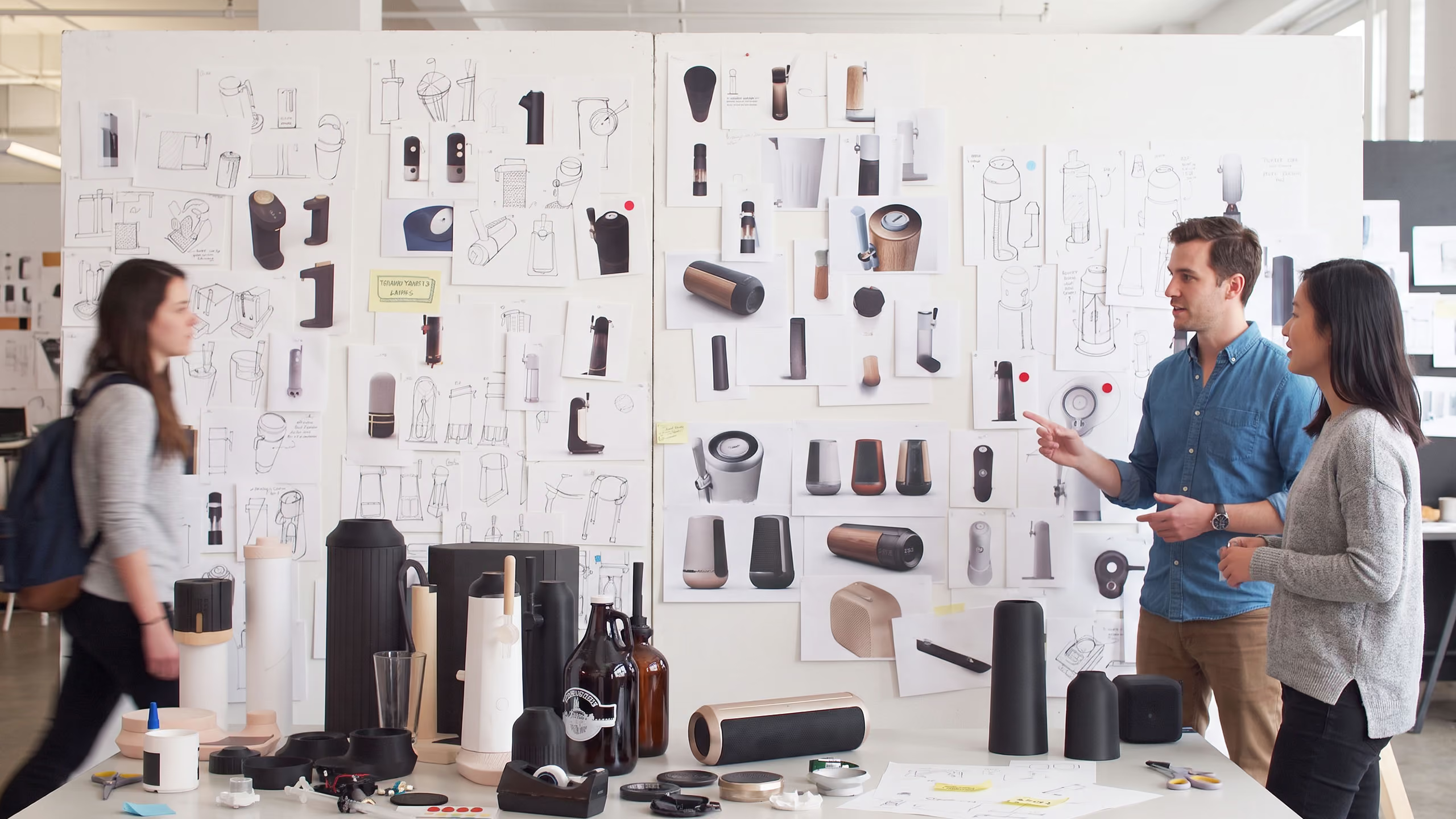
Rushing into high-cost prototyping too early
Jumping to an advanced prototype before the basics are proven means expensive tooling and builds reveal problems that cheap, early prototyping would have caught. Testing the riskiest part first, at the lowest fidelity that answers the question, keeps the cost of learning low. Our guide to prototype development covers this in depth.
Leaving the numbers until late
Designing without an eye on cost and price is how a genuinely good product ends up commercially unviable. Establishing an approximate unit cost and a realistic price the market will accept, early, lets the design and manufacturing route be shaped to hit them, rather than discovering the mismatch after commitment. This is the work of a commercial viability assessment.
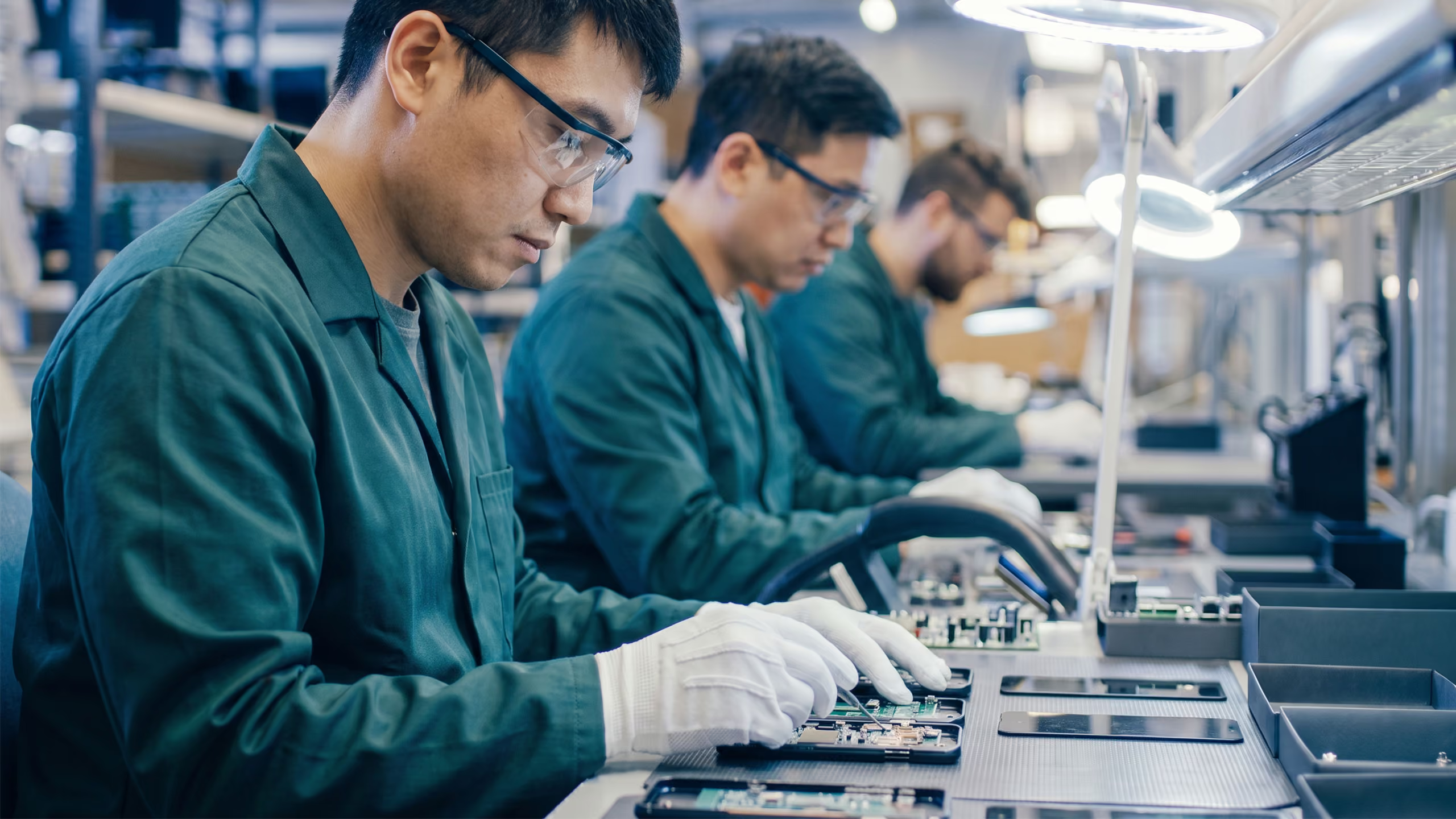
Treating manufacturing as an afterthought
A design that can't be made economically at the volume you need is a problem waiting to happen. Thinking about manufacturing early, how the product will actually be produced, at what cost and by whom, avoids late redesigns forced by production reality.
Overlooking intellectual property
Ignoring IP can leave a product exposed or, worse, infringing. It doesn't need to dominate the early stages, but a sensible check on freedom to operate and on what's worth protecting belongs in the plan rather than as a scramble later.
Not acting on feedback
Gathering user and market feedback and then ignoring it, usually because it complicates a decision already made, reintroduces the very risk the feedback was meant to remove. The discipline is to treat unwelcome feedback as the most valuable kind.
The common thread
Nearly every one of these risks is reduced by the same habit: testing assumptions early, while they're still cheap to act on, rather than defending them until they're expensive. That's what validation, prototyping and viability work all have in common, and it's why de-risking a product is less about caution than about sequencing the right questions before the big commitments.
Related guides: Idea Validation a Step by Step Guide · Commercial Viability Assessment · Prototype Development · How to Get a Product Manufactured
FAQ
What's the biggest source of risk in product development? Building without enough research into the market, user and competition. It undermines everything downstream and the consequences usually surface late.
How does prototyping reduce risk? By surfacing problems while they're cheap to fix. Testing the riskiest part first, at low fidelity, avoids discovering fundamental issues after expensive tooling.
When should I think about cost and manufacturing? Early. Leaving both until late is how a good design becomes unviable or needs redesigning to be made. Shaping the design around real cost and production from the start avoids that.