A functional prototype is a working model built to prove how a product operates, rather than how it looks. It puts the core mechanics, electronics or moving parts into a form you can test, so problems that stay hidden on screen show up while they are still cheap to fix. This guide explains what a functional prototype is, how it differs from visual and pre-production models, and where it sits in the development process.
A functional prototype is a working model of a product, built to demonstrate and test how it actually operates. Where a visual prototype is concerned with appearance, and a pre-production prototype is a near-final version used to confirm manufacture, a functional prototype is about operation: does the product do what it is meant to do, and does it do it reliably. It puts the essential components and mechanisms into a form you can put your hands on and test, before committing to full production.
To take an example, a functional prototype of a fitness tracker would carry the sensors, display and software needed to see how it actually records activity and responds to the user. The finish and the final materials are not the point at this stage. Proving the function is.
Why a functional prototype matters
A functional prototype bridges the gap between a design that works in theory and a product that works in reality, and that is where its value lies.
It validates the concept early, by letting you see whether the product performs the way it was designed to before significant resource is committed. It surfaces design flaws that a drawing or a CAD model will not reveal, at a point where they are still inexpensive to correct rather than costly to unpick later. And it gives you something real to refine against, so the adjustments that follow are based on how the product actually behaved, not on how it was expected to.
This is the same principle that runs through all good prototyping: the earlier a problem is found, the cheaper it is to fix. A functional prototype is simply the tool that finds the operational problems.
How it differs from other prototypes
It helps to be clear about where a functional prototype sits relative to the others, because the terms are often used loosely.
A visual prototype focuses on appearance. It is built to assess how a product looks and how people respond to it, and it says nothing about whether it works. A pre-production prototype sits at the other end of the process: a near-final model, closely aligned to the finished product, used to confirm the design with the factory before tooling. A functional prototype sits between the two in purpose, concentrating on operation rather than either appearance or manufacturing sign-off.
Functional prototypes also vary in fidelity, which describes how closely the model resembles the finished product. A low-fidelity version represents the basic functionality and is well suited to early testing and exploring approaches. A high-fidelity version is more detailed, mimicking the final look and feel as well as the function, and is used for deeper testing and user feedback. For the full picture of where each fits, see our guides to low fidelity prototypes and high fidelity prototypes.
What goes into one
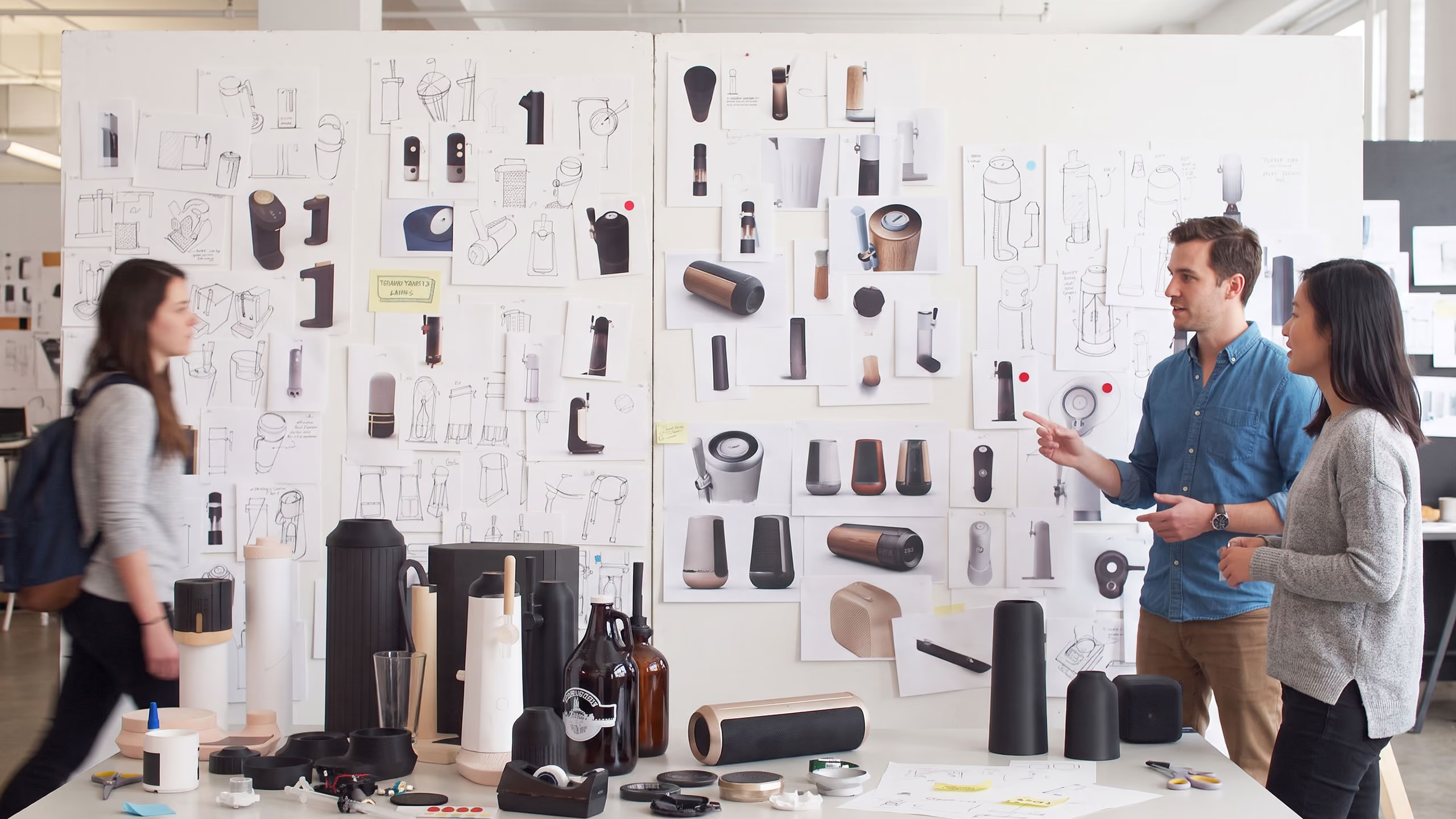
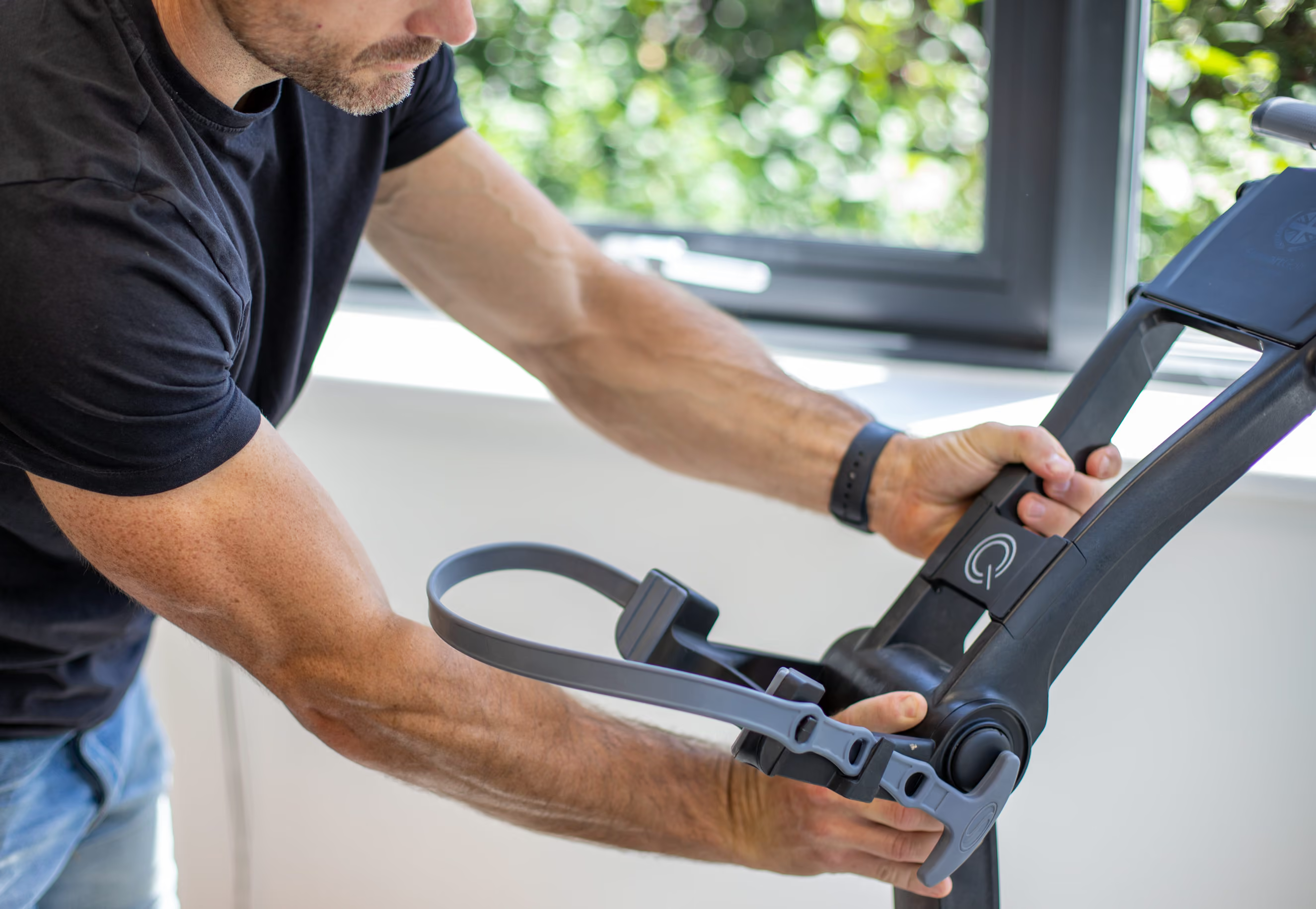
A functional prototype is defined by its working parts rather than its finish. It carries the core components the product needs to operate, whether those are sensors and controllers, a mechanism, or the electronics and software behind a connected device. It demonstrates the working mechanisms, the movements, operations or processes that make the product do its job. And it usually includes the interactive elements a user would engage with, since much of the value comes from watching real people use it.
The materials reflect that purpose. Plastics are common for casings and structural parts, being versatile and quick to shape. Metals are used where strength or durability is needed. Electronics such as circuit boards, sensors and displays are built in where the product depends on them. None of this needs to be production-grade; it needs to be good enough to test the function honestly.
How a functional prototype is developed
Developing one follows a clear sequence. It starts by defining what the prototype has to prove, and the requirements that flow from that. The design is then worked up into technical detail, with the drawings and models that specify the components, materials and assembly. The physical model is fabricated and assembled, commonly using techniques such as 3D printing or CNC machining. Then it is tested, and the feedback from that testing drives the refinements, usually across several rounds, until the prototype answers the questions it was built to answer.
For a fuller treatment of the methods behind each of these steps, see our guide to prototype manufacturing.
How D2M can help
Building a functional prototype well depends on knowing what it needs to prove and choosing the methods and materials to prove it, which is where our experience matters. We work closely with you to understand the product, then build a working model that reflects its intended function using the right combination of techniques for the job. Much of this work happens in our own workshop and 3D print room, which keeps it fast and lets us resolve problems as they arise, and our approach is iterative, so adjustments can be made quickly as testing reveals what needs to change. The aim throughout is to prove the function is sound before the expense of full production is committed.
In short
A functional prototype is a working model built to test how a product operates, not how it looks. It validates the concept, exposes design flaws early, and gives you something real to refine before committing to production. Used at the right point, it is one of the most effective ways to reduce the risk carried into manufacture. To see where it fits in the wider process, read our full guide to prototype development.
Related guides: Prototype Development · Low Fidelity Prototypes · High Fidelity Prototypes · Prototype Manufacturing