A low-fidelity prototype is a rough, early model built to test how a product works rather than how it looks, before any real resource is committed. Fidelity is a scale rather than a type, and at the low end sit volume models, proof-of-principle prototypes and basic prototypes. This guide explains what each is for and why working rough early is one of the cheapest ways to remove risk from a project.
Low fidelity refers to the rough end of the prototyping range. A low-fidelity prototype is an early, simplified model, usually built to test how a product (or a specific part of a product) works rather than how it looks. The term is used heavily in screen and software design, where it usually means a wireframe or a sketch of an interface. In physical product development it means something more tangible: a rough model, made quickly and cheaply, that lets you assess an idea before committing real resources to it.
The point of working at low fidelity is speed and cost. The model does not need a finished surface, the right material or a refined mechanism. It needs to answer a specific question, and it needs to be cheap enough that you can change it, or abandon it, whilst incurring minimal costs in order to establish the feasibility of a concept.
Fidelity is a scale, not a type
Fidelity describes how rough or how resolved a prototype is. It is not a type of prototype in itself. A foam block and a near-production model are both prototypes, sitting at opposite ends of the same scale.
This is why several different models can all be described as low fidelity. What they share is their position on that scale: rough, early and inexpensive, built to prove something specific rather than to resemble the finished product. In physical product development, D2M's low-fidelity work usually takes one of three forms.
Volume models
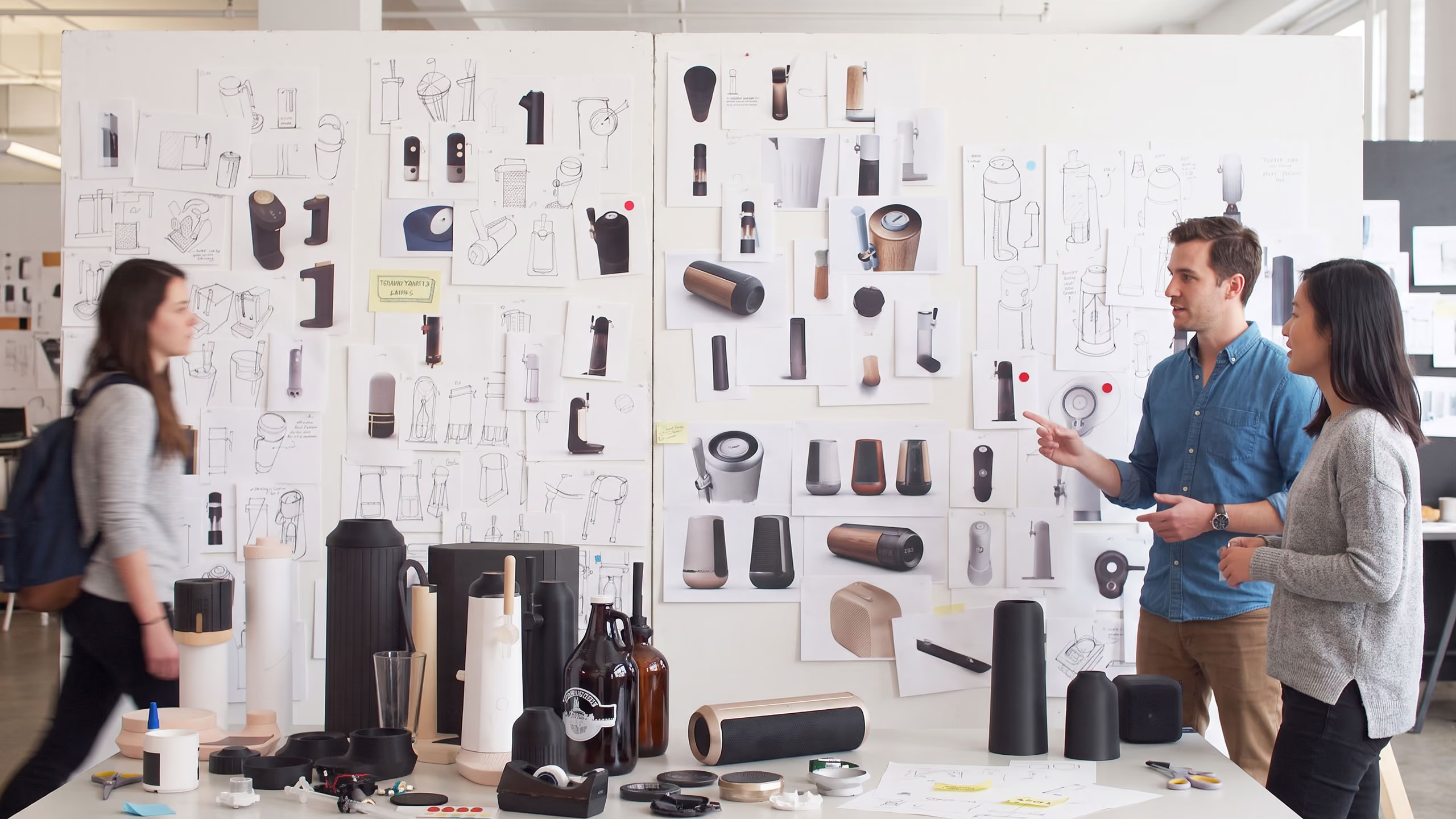
A volume model addresses form, size and proportion rather than function. These are often made during the concept development stages, where a simple physical model gives a far better understanding of how a product sits in the hand, or in the space it is intended for, than a screen can. They are often 3D printed and usually non-working, but they resolve questions of scale and proportion early, while the design is still taking shape.
Proof of principle prototypes
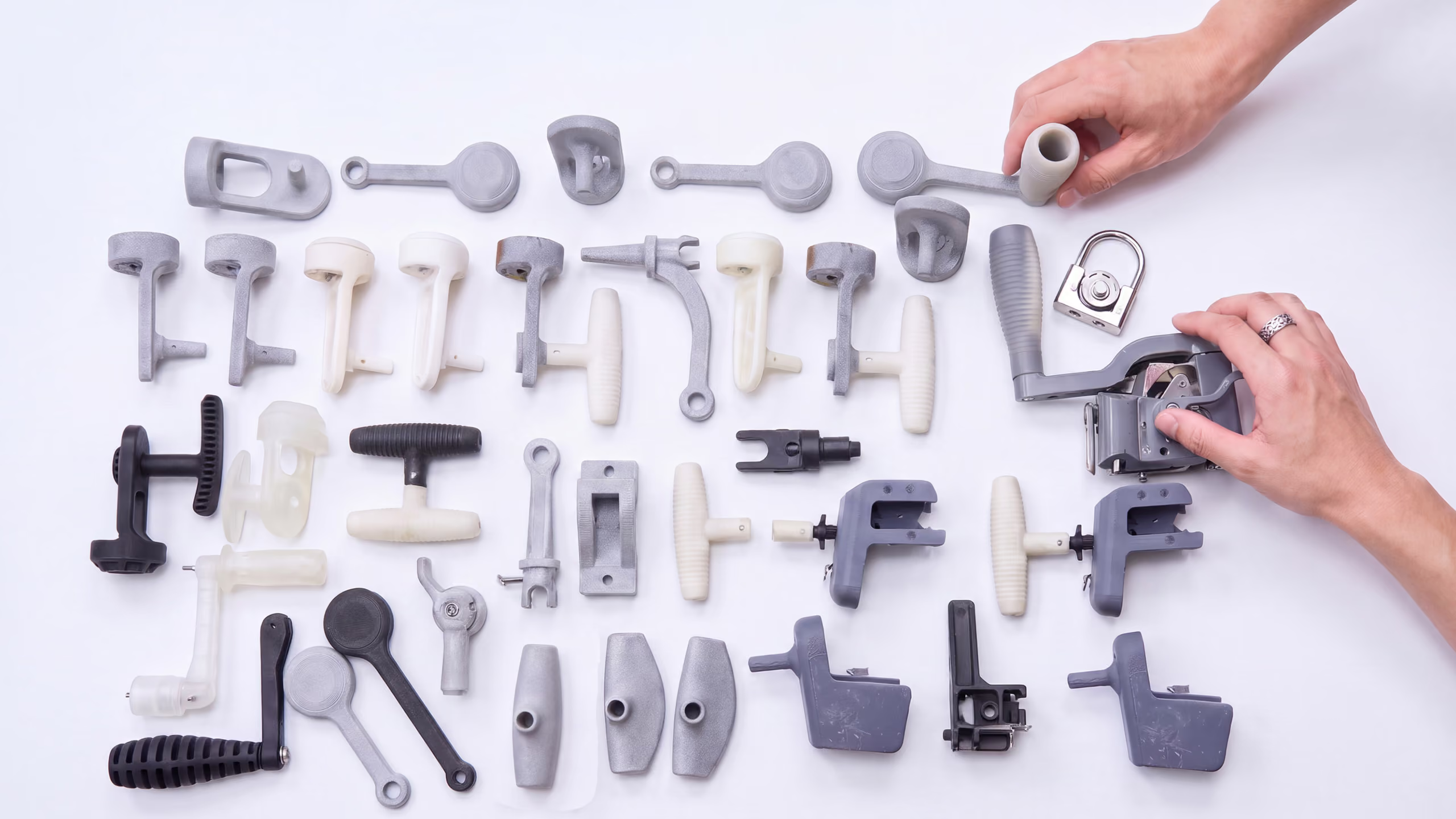
A proof of principle prototype tests the rough idea. Is it feasible, can it work in its intended environment, does it fit, is the proportion right? These are broad, crude questions. The model that answers them can be rough and ready, a basic physical build that proves the function, or a foam model that proves the ergonomics and the size. Once the principle is proved, the prototype has done its job. There is no value in refining it further.
Basic prototypes
A basic prototype carries slightly more resolution than a proof of principle, while staying inexpensive and quick to produce. It is well suited to early user testing and field testing, where the goal is to learn how people interact with the product, not to present a finished article. The insight that comes back from real people handling a rough model is one of the most useful things this stage produces.
Why low fidelity matters commercially
The value of working rough early is that it surfaces fundamental problems while they are still cheap to fix. A flaw caught in a foam model costs very little to correct. The same flaw caught in a high-fidelity prototype, or after tooling has been committed, costs a great deal more.
This is why skipping the low-fidelity stage tends to be a false economy. A project that moves straight to an advanced prototype, assuming the design is sound, often finds problems that a rough early model would have caught for a fraction of the cost. Low fidelity is not a lesser stage to be rushed through. It is where risk is removed at the lowest possible price.
How D2M approaches low fidelity
D2M values low-fidelity prototypes highly. They are fundamental to assessing proposed design solutions and often provide the most useful answers to the design challenges that arise across a project.
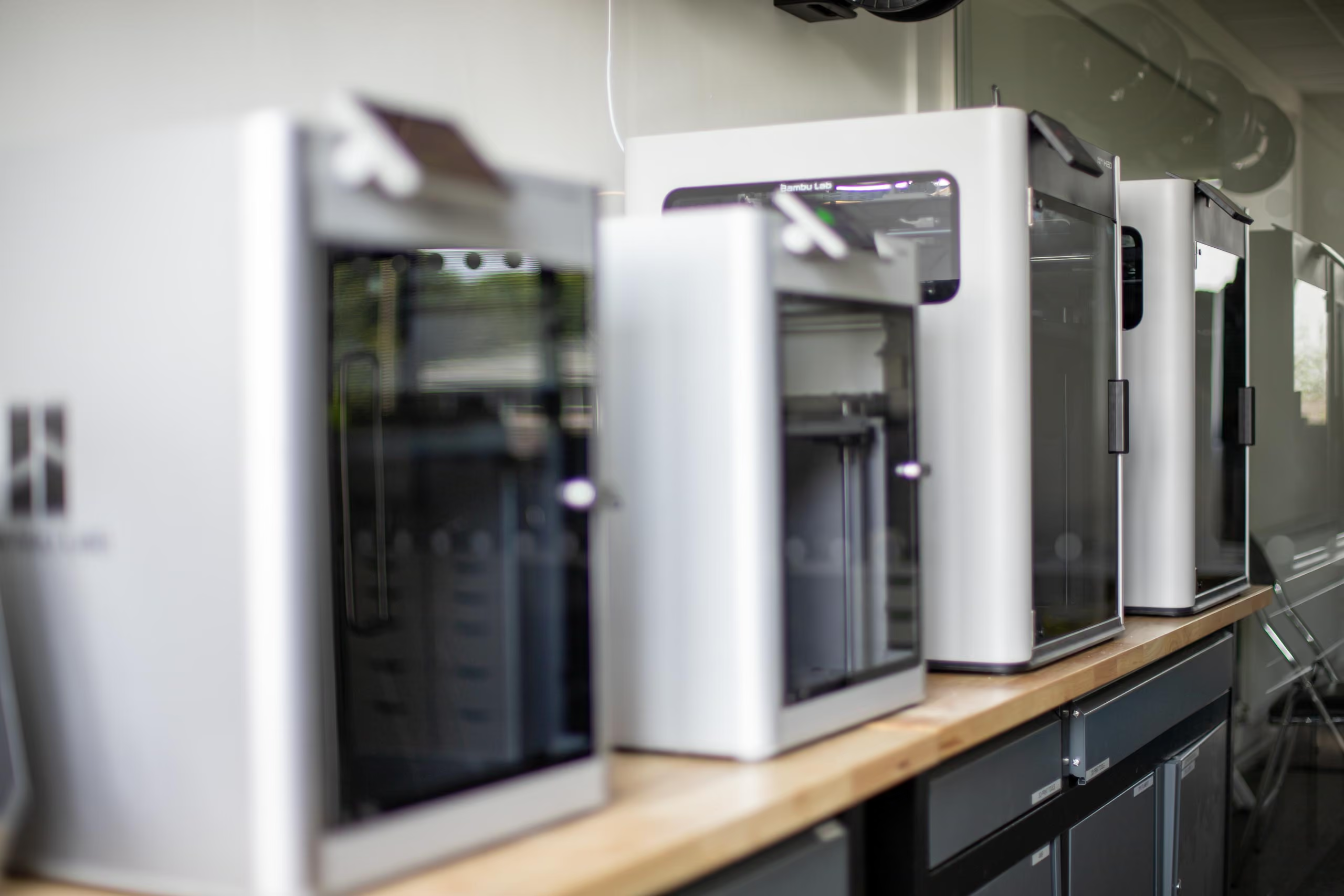
The need for low-fidelity models is usually identified by the design team during the design brief and concept development stages. Where they are needed, the team builds them in-house, in workshops equipped with 3D printers, laser cutters, CNC machines and other tools, keeping the work hands-on and close to the design.
FAQ
What is the difference between a low and high-fidelity prototype? Low-fidelity prototypes are rough, early and inexpensive, built to test broad questions about function, fit and proportion. High-fidelity prototypes are detailed and close to the finished product, built later to assess final appearance, material, finish and performance. They sit at opposite ends of the same scale and serve different purposes at different stages.
To see where low fidelity sits in the wider process, read our full guide to prototype development.
See it in practice: Omnio Stroller