A high-fidelity prototype is the most finished and refined prototype in development, built to mimic the final product on appearance and, where needed, on function. They are expensive, so they need a clear reason: validating a complex product, finalising an expensive design, or presenting something convincing to investors, buyers or backers. This guide explains when one is worth building and when a factory sample is the better route.
A high-fidelity prototype is one of the most developed and finished prototypes you can produce in the product development process. To understand where it sits, it helps to divide prototypes into three tiers.
The first tier is early prototypes: low fidelity, basic and proof of principle models, built to test rough ideas cheaply. The second tier is standard prototypes, also called Mark I. These are built for developed designs, to finalise the detail and to give factories what they need to complete their design for manufacture requirements. A standard prototype is usually the right choice when the design is planned to move directly toward manufacturing, because it resolves the technical detail and shows what the product is going to be.
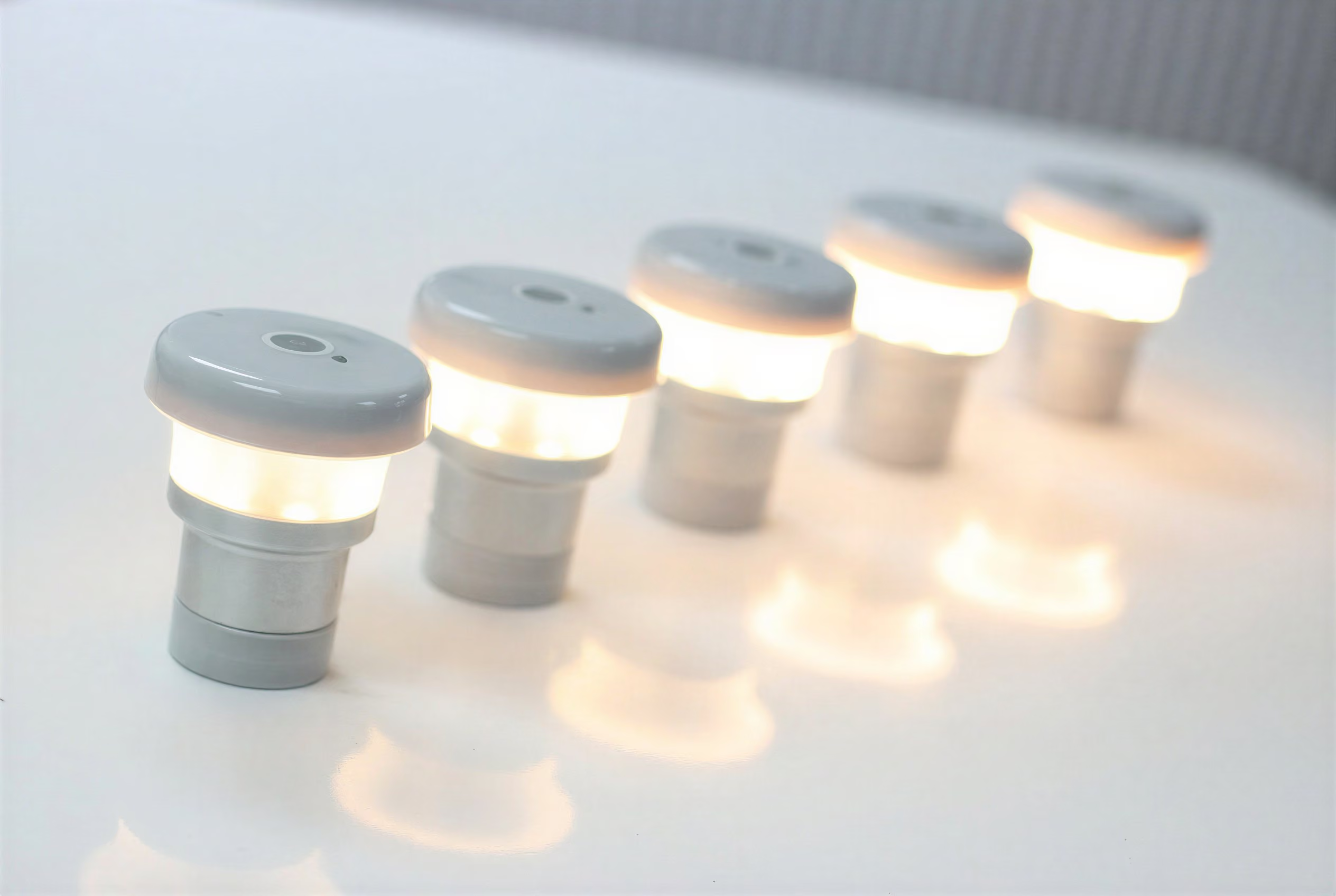
High fidelity prototypes sit one tier above. Their aim is to mimic the actual product. That can mean a build focused primarily on CMF (colour, material and finish) or a fully functional, factory-sample-like prototype, or both.
When to build one
It is unusual to move to a high-fidelity prototype straight from the concept stage. Every feature, design detail and technical detail must be resolved first. These prototypes usually require custom planning to execute, because they are often produced using different manufacturing techniques, frequently rapid prototyping methods, to obtain the parts. That means the traditional manufacturing specification you would send to a factory no longer applies, and every component has to be planned around the prototyping method instead.
To put it simply, you need to be at the point where the design is fully resolved, with a reliable prototype already in hand that defines the design in full, before you proceed with high-fidelity prototyping.
It is also worth being clear that these prototypes are expensive. In many cases it is more economical to move toward a factory sample, which gets the actual product into your hands faster and more reliably than developing a high-fidelity prototype would.
So if you are pursuing one, you are usually in one of three situations:
- You are dealing with a highly complex product that requires a lot of validation or robust testing.
- You are developing an expensive product where the details need to be finalised to within 99% before committing to the factory.
- Or you need a single, finished-looking product to showcase and pitch, to an investor, a crowdfunding audience or a grant board.
What is the purpose of a high-fidelity prototype?
A high-fidelity prototype is built to prove functionality and features, and above all to showcase the CMF detail. Keep the word mimic in mind. It aims to mimic the finished product and present some of its features, but it cannot function or deliver the exact properties of the final design in full.
You should not expect stress testing, durability or true product performance to match a factory sample. This comes down to the prototype being a one-off, produced with rapid prototyping techniques and other development methods. Even the electronics in a high fidelity prototype are often developed differently from those in the final product.
The commercial uses for high-fidelity prototypes
Because a high-fidelity prototype has to be justified against simply moving to a factory sample, it is worth being specific about the reasons that support building one.
For investor pitches, there is little more convincing than presenting something that works and looks finished. It shows how far the product has been developed and helps an investor visualise the timeframe for the return on their investment. A high-fidelity prototype signals that development is nearing completion and the key questions have been answered.
For B2B businesses seeking the attention of retail buyers, a high-fidelity prototype is a strong artefact to present, particularly ahead of trade shows. The same applies to crowdfunding. If you are building a campaign and need an effective pitch, a high-fidelity prototype carries far more weight than AI-supported renders and video. In fact, most crowd-funding platforms will reject projects that don't have a high-level prototype and aren't nearing production.
If you want to remove the risk around CMF and give the factory a sample to follow exactly, to avoid confusion and repeated pre-production samples, a high-fidelity prototype provides that accuracy.
How we decide whether to build a high-fidelity prototype
Every project has different needs and context. When the goal is launching a product and building a business around it, product development is only one part of the picture, and using resources effectively matters. We develop commercially viable products for the real world, and our design team is trained to stay practical, moving as directly as the project allows.
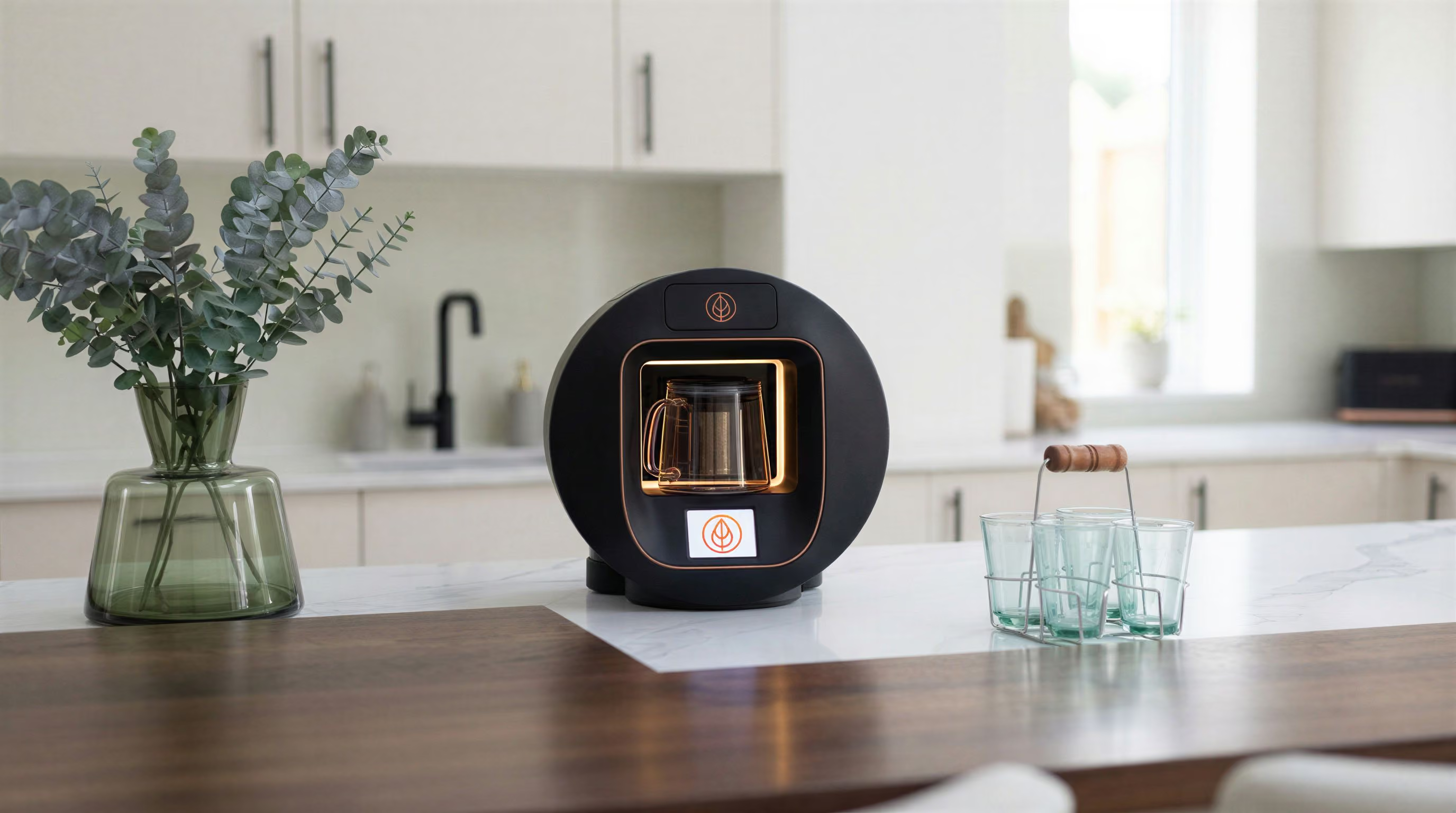
Our general approach is to develop a standard prototype to resolve the detail, then move to the factory for samples as quickly as we can. In cases that call for full CMF detail or specific functional requirements to be presented, the team will suggest the high-fidelity route, to provide clarity and deliver an outstanding result. One of our recent projects involving a high-fidelity prototype was Dostea, where the team developed a fully functional chai tea-brewing product for a successful Kickstarter campaign. The development journey then continued to factory level for further development and production.
In summary
A high-fidelity prototype is the most finished and refined prototype in the development process, built to mimic the final product on appearance, and where needed, on function. They are expensive and costly to build, so it's important to have a clear reason for embarking on developing one, whether that is validating a complex product, finalising an expensive design, or presenting a compelling product to investors, buyers or backers. Used at the right moment, they remove risk and communicate a product better than anything short of the finished article.
To understand where high fidelity sits in the wider process, and which prototype is right at each stage, read our full guide to prototype development. For the other end of the scale, see low fidelity prototypes in product design.