Kitchen products have specific requirements that most product categories don't: food contact safety, hygiene, and daily contact with heat, water and detergent. This guide covers what these requirements mean at each stage of development, from initial design through to getting a kitchen product made and sold. We've included a case study of a kitchen product D2M has developed, for reference.
Kitchen products live a harder life than most consumer goods. They get wet, hot, dropped, scrubbed and put through a dishwasher hundreds of times, often while also touching food directly. This changes what "good design" means for this category specifically. The stages of development are the same as any physical product, design, prototype, manufacture, sell, but each one carries kitchen-specific constraints worth knowing before you start.
Designing a kitchen product
Two things decide most of the early design decisions on a kitchen product: what it touches, and how it will be used.
Any product that will come into contact with food needs to be specified in food-safe materials from the outset, not as a late substitution. That constrains material choice earlier than with most products, because a material that looks and feels right in a concept model isn't necessarily one you can specify for the finished product. Hygiene has to be designed in as well, not as an afterthought: seams, joints and crevices that trap food residue are a recurring failure point, so the geometry itself needs to support easy cleaning, ideally a dishwasher cycle, rather than relying on the user to scrub it by hand. This gets more complex when electronics are involved, which make submerging the product difficult; removable, washable containers or parts can be crucial to maintaining hygiene in that case.
Another constraint is the kitchen itself. Countertop space is limited and visible, so a kitchen product is judged on how it sits, stores and looks alongside everything else on the worktop, in a way a product used in a cupboard or a garage isn't. Aesthetic and footprint decisions have to be part of the brief from day one, not a finishing layer applied once the function works.
For the wider development process, everything in our product design process applies here too. The kitchen-specific work is in the material and hygiene constraints above.
Prototyping a kitchen product
The prototyping principles are the same as for any product; our guide to prototype development covers what each level of prototype is for and when to use it. What's different for kitchen products is what the prototype has to prove.
A kitchen prototype needs to be tested with the conditions it will actually face: hot liquid, repeated washing, contact with food, and handling with wet hands. A mechanism or seal that performs perfectly dry can fail once it's wet or warm, so this is one category where testing in the real environment early, not just on the bench, catches problems that would otherwise surface after tooling. Handle and grip ergonomics also need testing under those same wet-hand conditions, since a grip that works dry can become a safety issue once it doesn't. Building prototypes from materials as close as possible to the final product, then testing them in those real-world conditions, is what surfaces these issues early enough to refine the design before tooling.
Manufacturing a kitchen product
Kitchen products bring two commercial pressures together: they need to be priced for a competitive retail category, and they carry compliance requirements, largely around food contact materials, that can't be designed around after the fact. Getting the material specification signed off against food-safe standards before committing to tooling avoids the most expensive kind of correction: a compliant part that also has to be re-tooled.
For sourcing and location decisions, the considerations are the same as for any product; see our guides to choosing a manufacturing location and manufacturing in China.
Selling a kitchen product
Getting a kitchen product in front of retailers and customers follows the same route as any consumer product: a strong prototype or sample, a clear commercial story, and the right route to market for the category, whether that's retail, a kitchenware specialist, or direct. Our guide to step-by-step product commercialisation covers this in more detail.
A real example: Degono
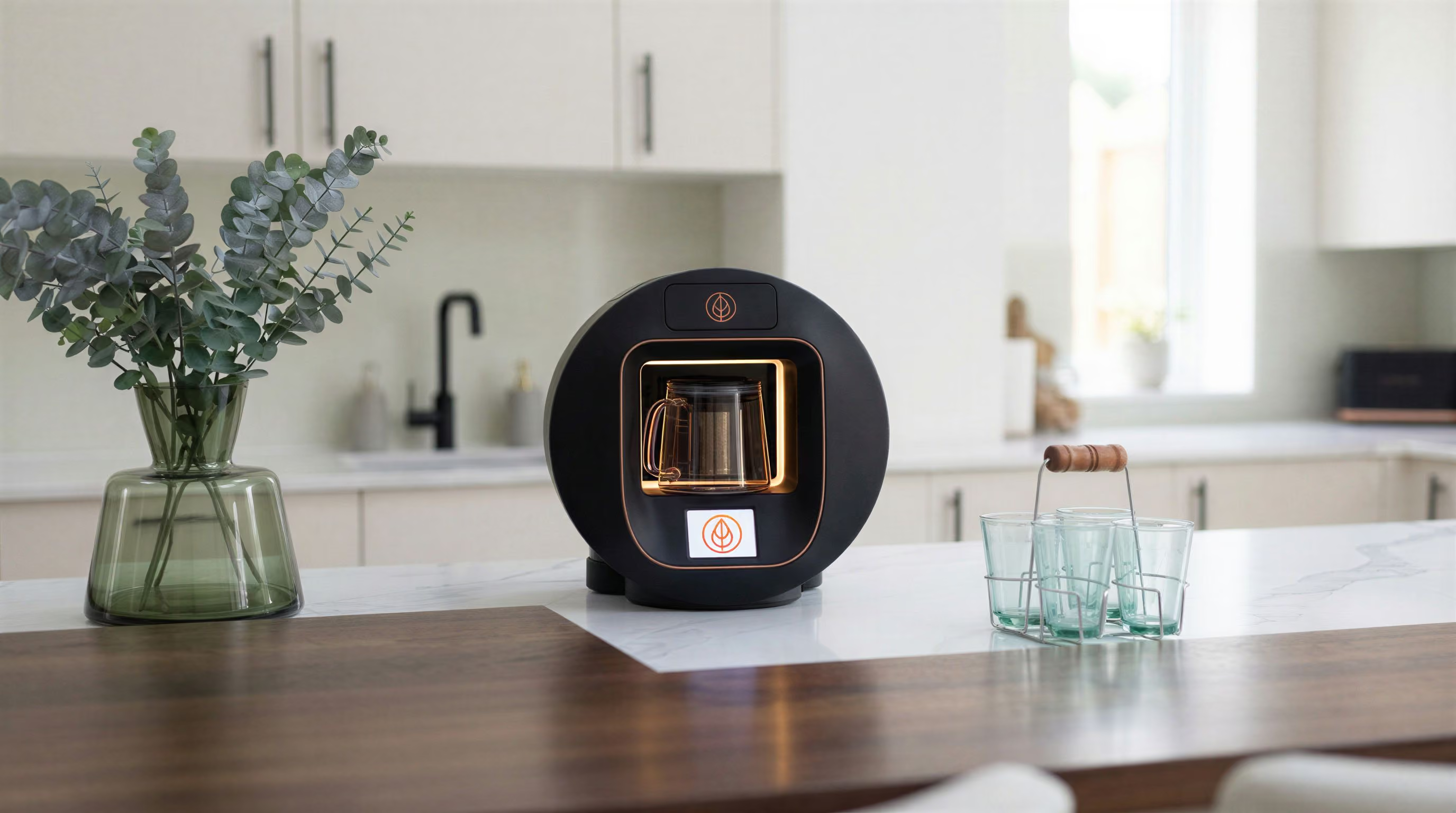
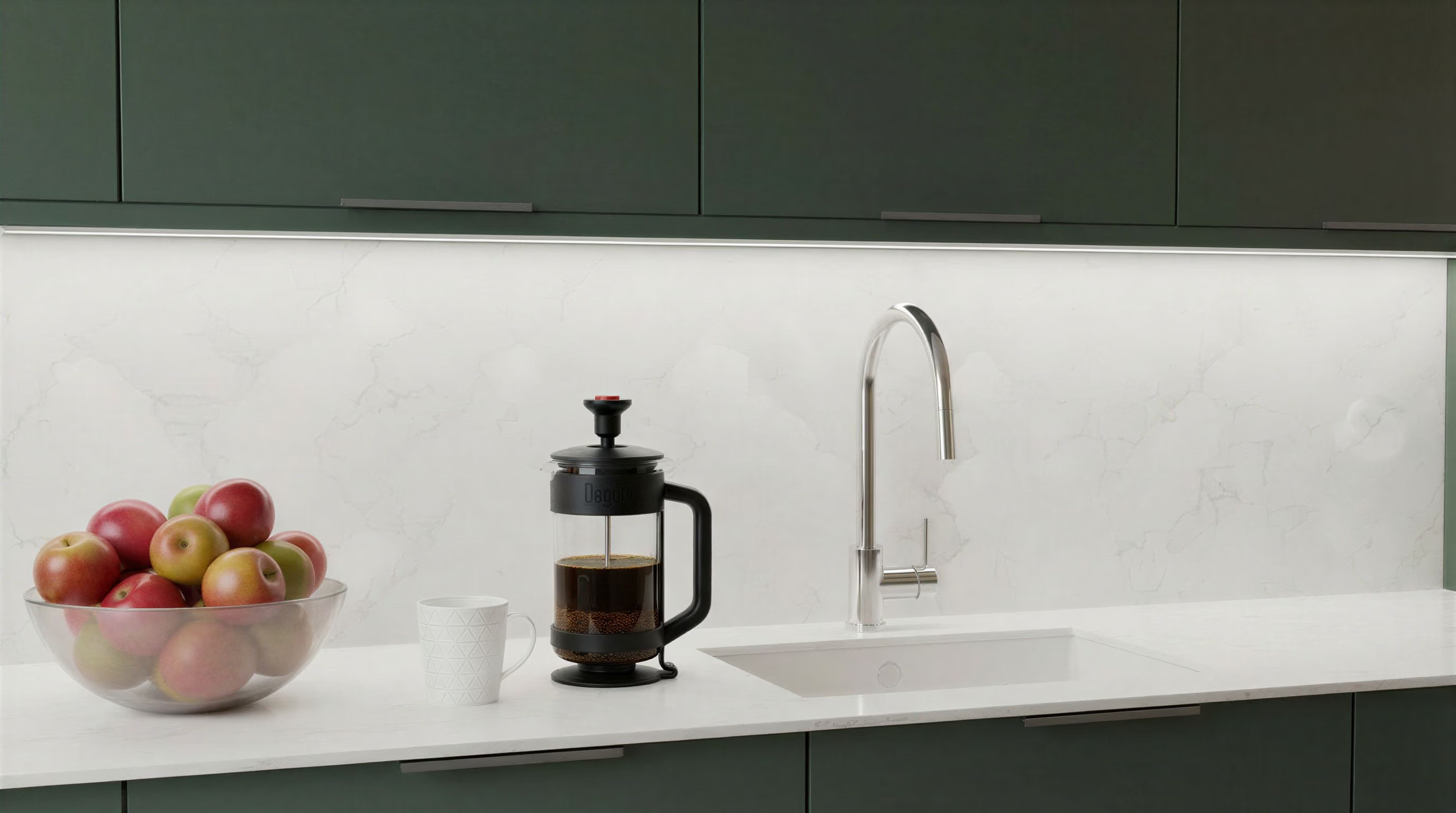
Degono is a good illustration of what kitchen-specific design work actually looks like in practice. The brief was a cafetiere that solved three long-standing problems with the format: grounds ending up in the cup, continued extraction after brewing, and difficult cleanup. D2M's senior team designed a dual fine-mesh filter system that traps the grounds between two filters, so they can be lifted out immediately after brewing rather than settling in the cup, stopping extraction from continuing and leaving a compact, compostable disc rather than a mess to clean. The product is built from ABS plastic, borosilicate glass and stainless steel, and doubles as a tea brewer using a different colour option to distinguish the two uses. It's manufactured in the UK and available to buy across the country.
It's a straightforward brief on paper, stop the grounds, stop the over-extraction, make it easy to clean, but each of those is exactly the kind of hygiene-and-material problem that sits at the centre of good kitchen product design. Read more about Degono in our case study.
Developing a new kitchen product with D2M
Do you have a kitchen product idea? Or require kitchen product concepts to be prototyped? D2M has an efficient and extremely knowledgeable team to provide the necessary assistance with developing kitchen products. Contact us today to get started.