Turning an idea into a physical product is achievable without an engineering background, but it helps enormously to see the whole route before you start. This guide maps out the journey end to end, roughly what it takes and costs, and how to decide how much of it to do yourself versus bring in help, with a link to the detailed guide for each stage along the way.
Most people who've never done this before don't actually need convincing that it's possible, plenty of everyday products started as somebody's idea. What they're missing is the shape of the journey: what happens first, what happens later, and where the expensive mistakes tend to sit. This guide is that map.
You don't need to be technical to do this
The core reassurance is a genuine one: you don't need to be an engineer to get a product made, you need the right process and, usually, the right people around you for the parts you can't do yourself. Most first-time founders aren't designers, engineers or manufacturing specialists, and that's normal rather than a barrier. The process exists precisely to carry an idea through the parts that do need that expertise.
The journey, mapped out
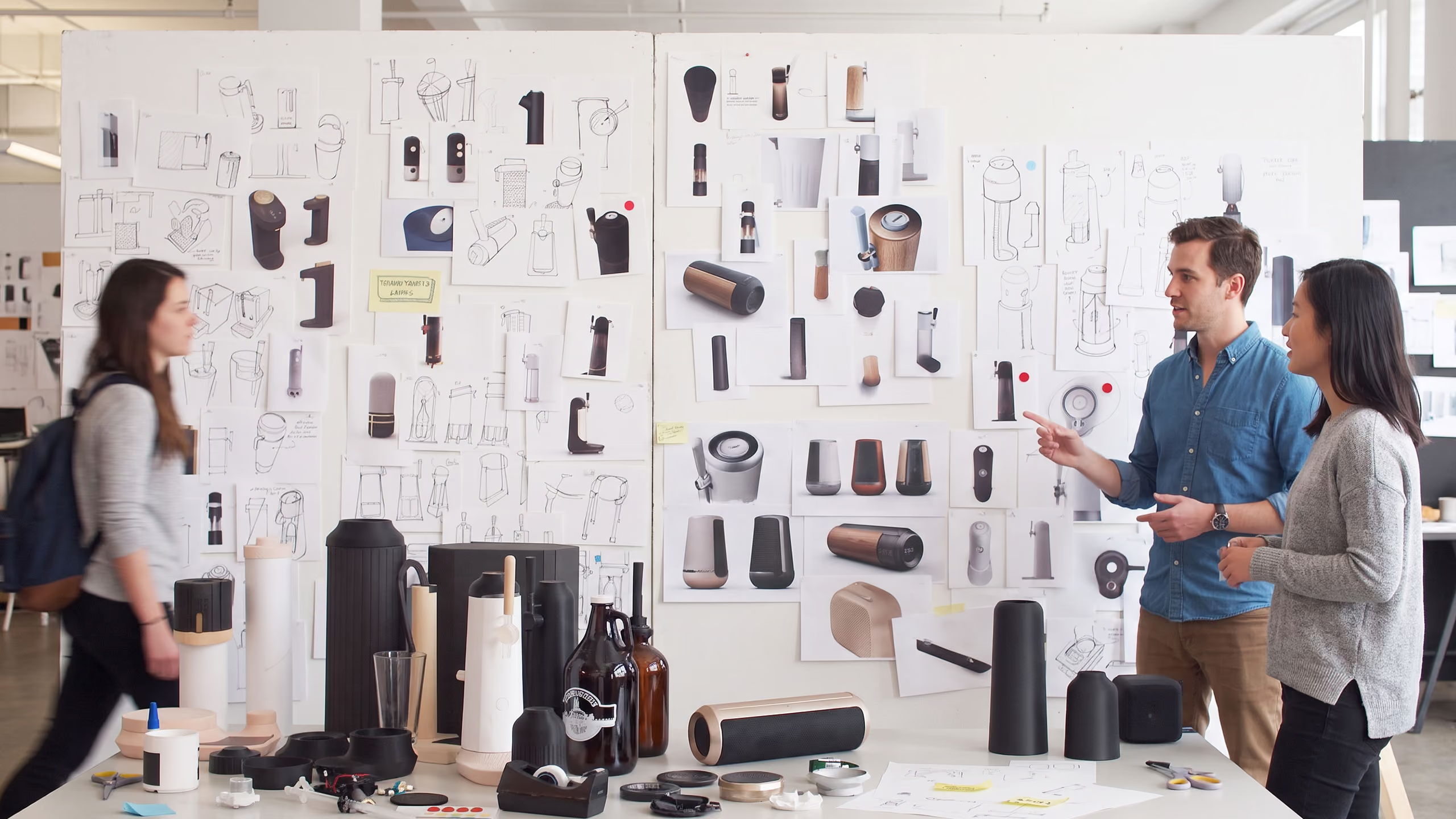
Roughly, the path runs in this order: prove the idea is worth pursuing and get IP protection timed correctly, design and prototype the product, prepare it for manufacture and choose a factory, sort packaging and compliance, and then get it in front of customers. Each of those has its own detailed guide, and this article doesn't repeat them, it connects them.
Validating demand and finding your unique selling point is covered in our guide to product strategy, and the design and prototyping stages are covered in full in designing a product and prototype development. Protecting your idea, and getting the timing right so you're not disclosing it unprotected, is covered in how to patent an idea. Getting the design ready for a factory and choosing where to make it is covered in manufacturing a new product, and packaging and compliance in product packaging design. Once the product itself is ready, step-by-step product commercialisation covers getting it to customers.
Realistically, the whole path runs six to eighteen months depending on the product's complexity, and cost varies hugely on the same basis, driven mainly by how much engineering and tooling the product needs. Our guide to what it costs to develop a product goes into that in detail.
Deciding how much to do yourself
Some of this you can genuinely do on your own: rough sketches, early conversations with people in the industry, and a first pass at understanding who else is already selling something similar. Talking to other entrepreneurs and people already in the space is worth doing early, and it costs nothing beyond the conversation itself, most people are more willing to talk than first-time founders expect, particularly if you keep the detail you share to a minimum until anything sensitive is protected by an NDA (non-disclosure agreement). Where it's worth bringing in help is everything that needs specific expertise to get right the first time: engineering the design so it can actually be manufactured, producing a prototype that proves the concept rather than just looking like it, ensuring that the design is manufacturable and suitable for cost-effective tooling, and managing a factory relationship. Getting this wrong isn't usually fatal on its own, but it's expensive to unwind once you've committed money to it. If you're not sure whether you need that kind of help yet, we offer a free idea review as a low-commitment way to find out. Our guide to UK product design companies covers what to look for if you're choosing one.
Getting from idea to finished product, with the right partner
Every stage in this map is a subject in its own right, and few businesses have all of it in house, the design and engineering, the manufacturing relationships, the compliance knowledge, and the commercial judgement to sequence it correctly. That's exactly the gap a design consultancy exists to close. We work with clients from the earliest sketch through to a market-ready product, and having the whole route in view from the start, rather than solving each stage in isolation, is usually what keeps a project on time and on budget.
Related guides: Designing a Product: A Step by Step Guide · Manufacturing a New Product Idea to Production · Prototype Development · How to Patent an Idea · Step-by-Step Product Commercialisation
FAQ
Do I need to be technical to get a product made? No. Most first-time founders aren't engineers or designers. You need the right process and the right people for the parts that need specific expertise.
How long does it take? Roughly six to eighteen months, depending on the product's complexity and how much engineering and tooling it needs.
What can I do myself, and what should I bring help in for? You can do early sketches, industry conversations and a competitor scan yourself. Bring in help for engineering the design for manufacture, producing a prototype that proves the concept, tooling suitability and managing the factory, the parts that are expensive to unwind if they're wrong.
When should I protect the idea? Before disclosing anything sensitive. Keep shared detail minimal and use an NDA early, and get IP protection timed correctly, covered in our patent guide.