Finding a manufacturer is less about searching and more about qualifying. Before you approach anyone, your design needs to be production-ready, because a factory quotes what it is given and cannot price a sketch. From there the task is choosing between the UK and overseas, matching a factory to your volume, vetting its capability before you commit to tooling, and understanding what actually drives the price you get back. This guide is the overview; the linked guides beneath it go deeper on each step.
There is no shortage of factories. Yet finding a manufacturer is where a lot of product projects stall, because most people approach the task in a way that gets them ignored, or worse, commits them to tooling with a factory that was never capable of making the product properly. The difference between those two outcomes is rarely luck. It is qualification, done in the right order, before the point where money becomes hard to recover.
This guide sets out that order: what to have ready before you make contact, how to decide where to make your product, how to match a factory to what you actually need, how to vet capability before you commit, and how to read what comes back. Each step has a more detailed guide beneath it, and this article is the map that connects them.
Get production-ready before you approach anyone
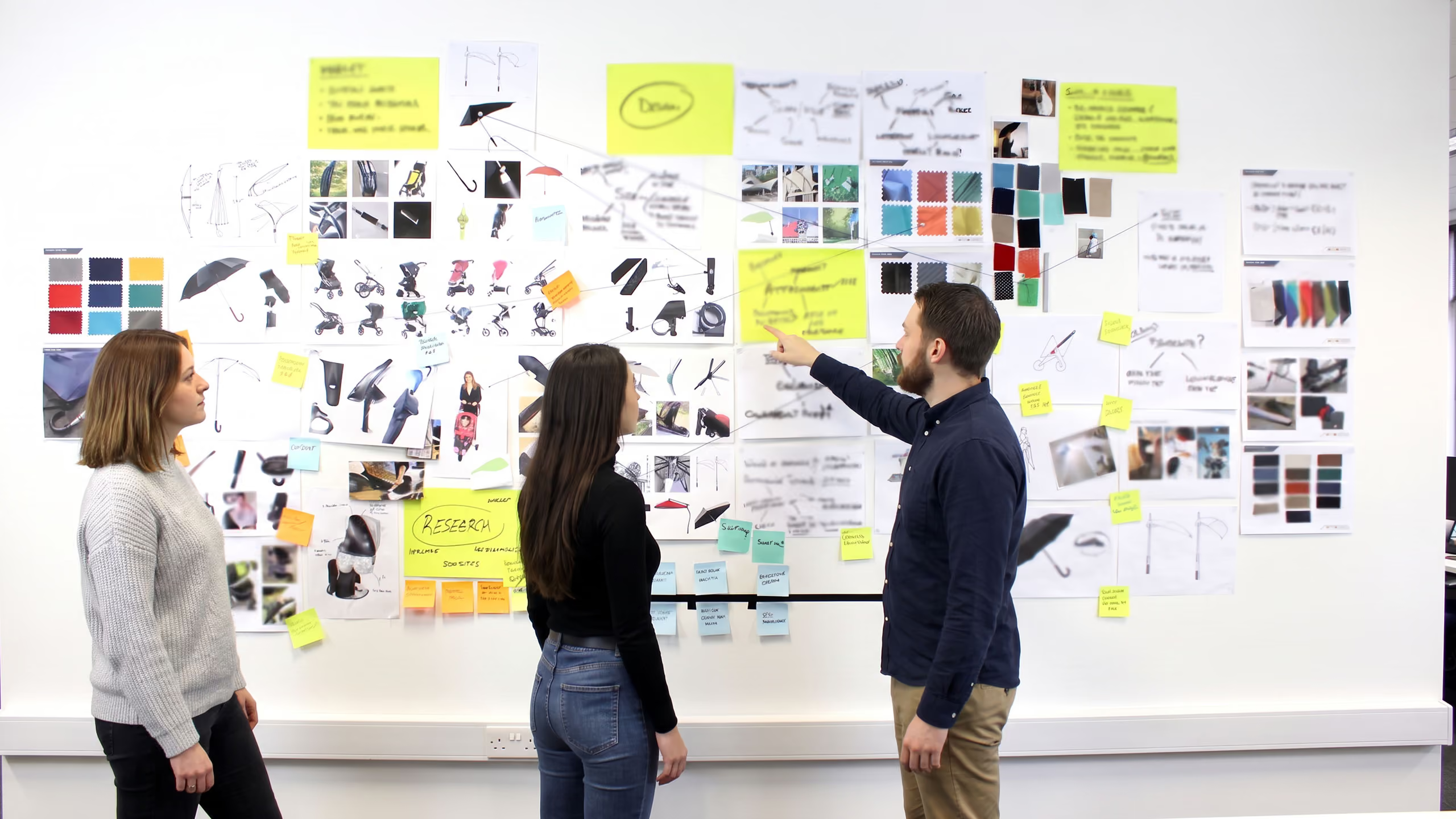
A factory cannot quote a sketch. Before you approach anyone, you need fully developed CAD files, technical drawings, complete specifications and material details, because that is what allows a manufacturer to understand the parts, the assembly and the materials well enough to build a price. Sending anything less puts you at the back of the queue, because you are effectively asking the factory to do your development work before you have given it any commitment.
The document that pulls this together is the manufacturing specification, written for the factory rather than for your design team. It is what turns a vague quotation exercise into an accurate one, and getting it right is what makes the whole conversation with a factory shorter. Our guide to the manufacturing specification covers what it needs to contain and when to produce it.
Decide where to make your product
Once your design is ready, the next decision is domestic or overseas, and it is a genuine decision rather than a default. The right answer depends on your product and your priorities rather than on the map.
For mass production of relatively straightforward products, the UK tends to be more expensive, because labour and material costs make it so. Overseas manufacture, and China in particular, still offers capability, materials and speed that the alternatives have not displaced. But where your product carries important intellectual property, needs advanced engineering to be manufacturable at all, or has a high component count that demands hands-on access during production, manufacturing closer to home is often the better answer despite the cost.
This is a decision worth taking on its own terms, and we cover it in full in Choosing a Manufaccturing Location and Manufacturing in China.
Match the factory to your product and volume
A great deal of frustration at this stage comes from approaching the wrong factories, and there is a straightforward reason most enquiries go unanswered. A factory has to operate continuously, bill hours and output product, so time is its constraint. If you arrive with a complex task, ask for hours of engineering effort just to produce a quotation, and then tell them you want a very low production quantity, they will not reply, because they cannot charge for that effort and the order will not deliver enough profit to justify it.
Two things fix this. First, match the factory to your volume: understand what quantities a factory is set up for before you contact it, and if it is built for mass production while you need low batches, find one that handles low batches. Second, adapt to their production line rather than asking them to adapt to you. Most factories have an established system with real limitations, and a factory that can see it will make your product within its existing setup, without altering its line, will engage with you. Alterations are the sticking point, because once a factory changes its supply line it affects every other project running through it, and it will only do that for an order significant enough to justify the disruption.
Minimum order quantities follow the same logic. They exist because of the factory's own economics, and while they can sometimes be moved for a genuinely high-value product or a committed larger order, in most cases the MOQ applies and the factory will hold to it.
Vet a manufacturer before you commit to tooling
This is the genuinely difficult part, because in most cases you won't know how capable a factory really is until you see the factory sample, and by then you've already paid for the tool. There are ways to get an indication earlier, and they're worth the effort.
Ask the factory to send recent production samples of parts similar to your product, because their existing work is a reasonable proxy for the quality you will receive. You can also test them directly by sending a deliberately flawed model and seeing whether they flag the issue or simply quote for it, because a factory that quotes a flawed part without questioning it has told you what you need to know. The warning signs show up in how a factory handles technical detail. One that says yes to everything but cannot engage when you ask a deep technical question is a problem, because it is agreeing to something it does not understand. Small unilateral decisions during tooling are another signal, particularly if the tool is not being built with the material and technique described in the proposal.
Because sourcing and vetting take real time and knowledge built over years of placed projects, this is also where a design partner or a manufacturing agent earns their fee. We cover who does what, and when each is worth bringing in, in Who Can Help You Find and Manage a Manufacturer.
Protect your design before you share it
If your design carries intellectual property worth protecting, file the application before you communicate with any factory, particularly overseas. Have the protection in place, or at least submitted, before you share anything, and sign an NDA with everyone including the factory. Most factories respect them, but an NDA is not a bulletproof plan, so if your product carries real leverage in the market the filing should come first. On first contact, and once an NDA is in place, send a simplified model that holds back the detail which makes your product distinctive. It is enough for the factory to demonstrate how it thinks, and it gives you a read on capability before you have exposed anything valuable.
On tooling ownership the position is simple. You pay for the moulds, so you own them, regardless of where the tool physically sits. In practice the factory houses and safeguards the tooling and manufactures against your ongoing requirements, which is usually the right arrangement, because moving tools around carries a genuine risk of damage.
Understand what drives the quote
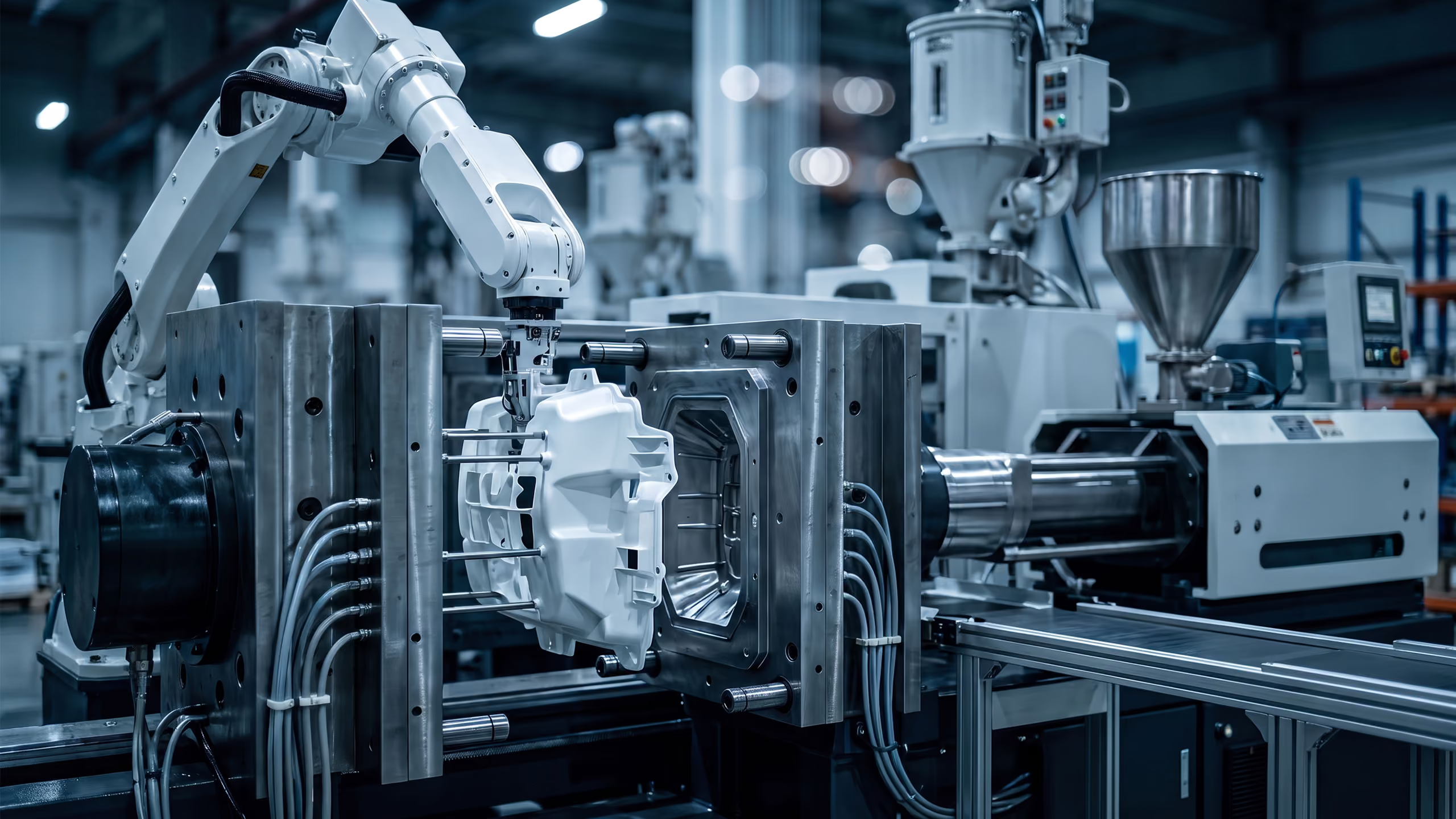
When quotes come back, the most important discipline is refusing to compare price until you have confirmed you are comparing the same thing. Manufacturing technique and tooling approach change cost dramatically: the same product can be injection moulded in several different ways, with hot runners or cold runners, with few inserts or many, with sliders or without, and each choice moves the tooling cost significantly. So confirm the manufacturing method, the tooling material, the tooling technique and the descriptions match across every quote before you look at the number. Only then does the comparison mean anything.
Price itself has some flexibility, though no factory signals it clearly, and the real leverage comes from simplifying or speeding up the production process rather than from haggling. Understanding what genuinely drives manufacturing cost is a subject in its own right, and our guide to Manufacturing Cost Considerations covers it in full.
The mistake to avoid
The most common and most costly error is forgetting that you are talking to a manufacturer. People lose the empathy for how a factory makes money, ask for a significant amount of work up front, and at the same time signal that the order will fall below the factory's minimum quantity. That combination guarantees the enquiry is ignored. Understand how a factory operates, match your project to it, arrive with a complete design and a clear specification, and you will get a very different response.
In short
Finding a manufacturer is less about searching and more about qualifying. Get your CAD, drawings and specification complete before you approach anyone. Decide where to make your product on its own terms. Match the factory to your volume and adapt to its production line. Vet capability before you commit to tooling, protect your IP before you share anything, and compare quotes on method before price. Do it in that order and the search stops being a gamble.
Related guides: How to Find a Manufacturer in the UK · Who Can Help You Find and Manage a Manufacturer · Manufacturing in China · Manufacturing Specification · Manufacturing Cost Considerations