What it costs to make your product decides whether it can sell at a profit, which makes manufacturing cost a design and commercial decision rather than an accounting afterthought. This guide breaks down the real components of manufacturing cost — materials, labour, overhead and tooling — and explains how they interact, so a change in one is understood in terms of its effect on the others. It also covers how to estimate cost early and reduce it without cutting corners.
Manufacturing cost is the number that decides whether a product works commercially. A product can be beautifully designed and genuinely useful, but if it cannot be made at a cost that leaves a margin at its market price, it does not have a business behind it. That is why cost is best understood early, while the design can still respond to it, rather than discovered late when the options for changing it have narrowed.
This guide sets out what actually drives manufacturing cost, how the factors interact, and where the levers for reducing it sit. It is the overview; the more detailed costing and cost-reduction guides sit beneath it.
The components of manufacturing cost
Manufacturing cost is built from a few core elements, and understanding them separately is what allows you to see where a cost is really coming from.
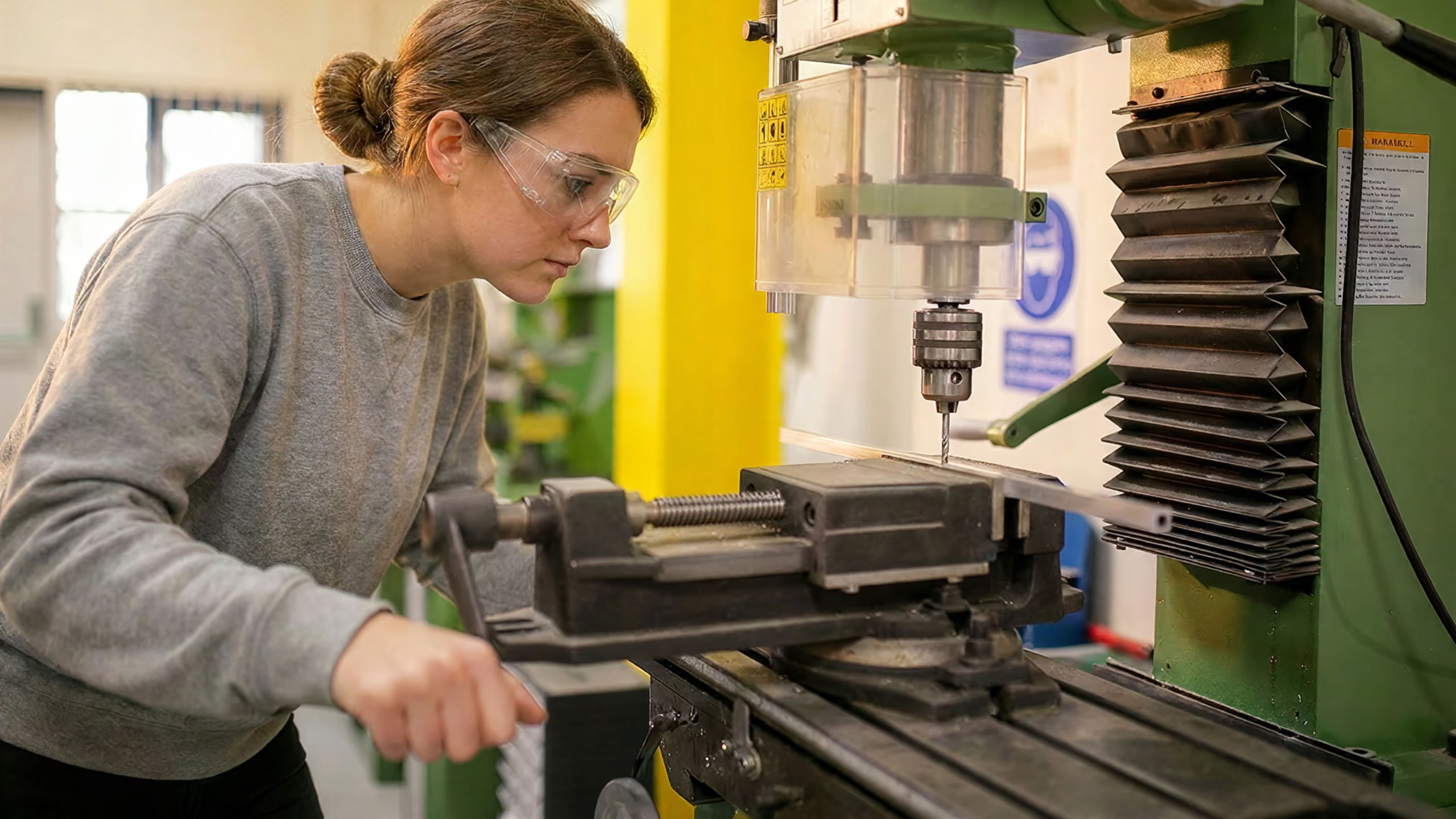
Direct materials are the raw materials and components that go into the product itself. Direct labour is the work of making and assembling it. Manufacturing overhead covers the costs that support production without being part of any single unit, from factory maintenance to administration. Together these make up the manufacturing cost per unit, and a proper cost analysis breaks a product down into them, because that is what tells you whether it can be produced within a financially sustainable framework rather than merely whether it can be produced at all.
Tooling and unit cost: the two numbers that matter most
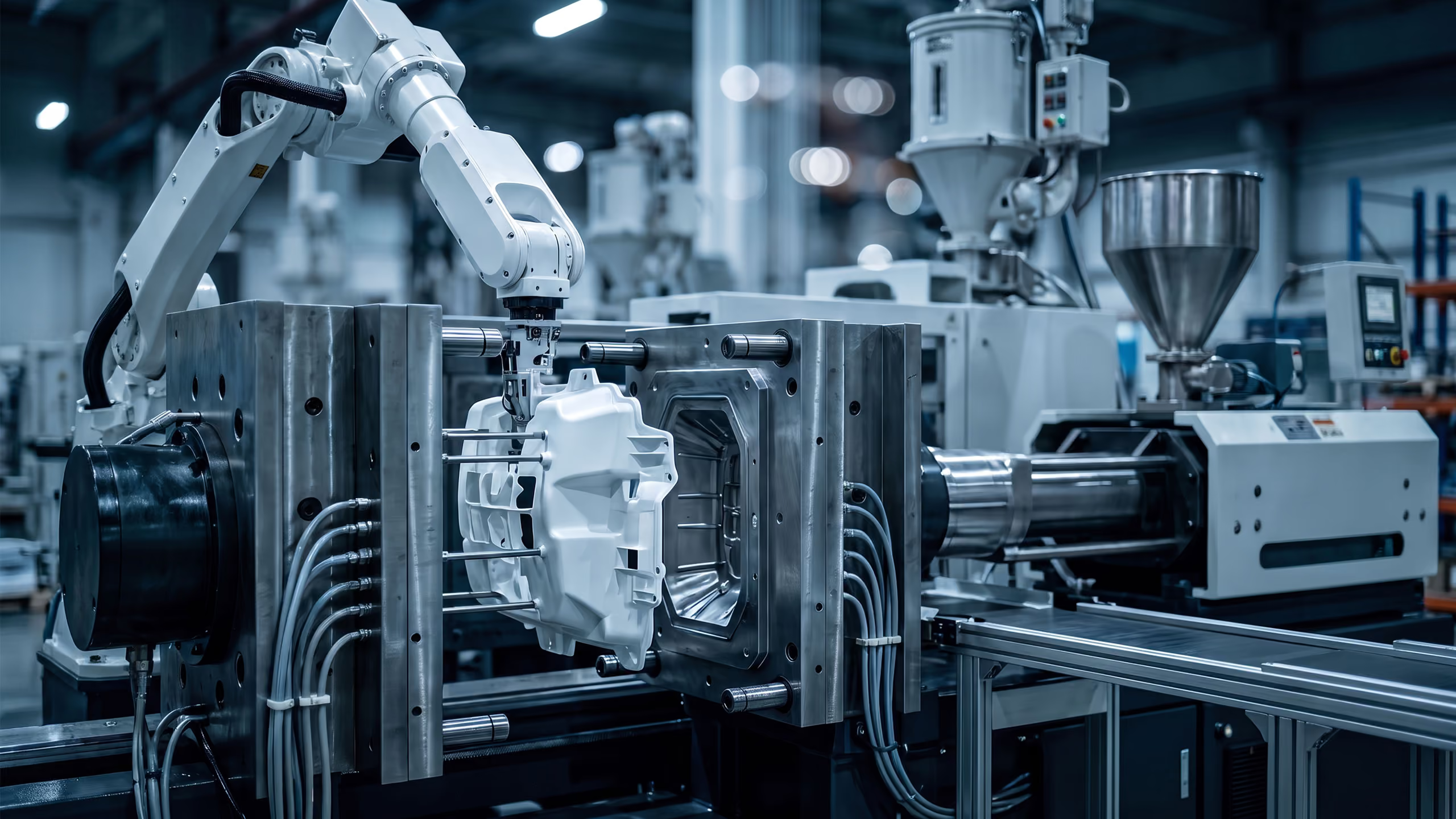
Two costs tend to dominate, and they behave very differently. Unit cost is what each item costs to produce, and it falls as volume rises. Tooling is the upfront cost of the moulds and equipment needed to make the product at all, and it is paid before a single sellable unit exists. Tooling is often the largest single cost in bringing a product to manufacture, alongside the first production batch, and because minimum order quantities can be high, the combination of tooling and a first run is where much of the early capital goes. Understanding both, and how they trade off against each other across different volumes, is central to any realistic cost plan.
How the factors interact
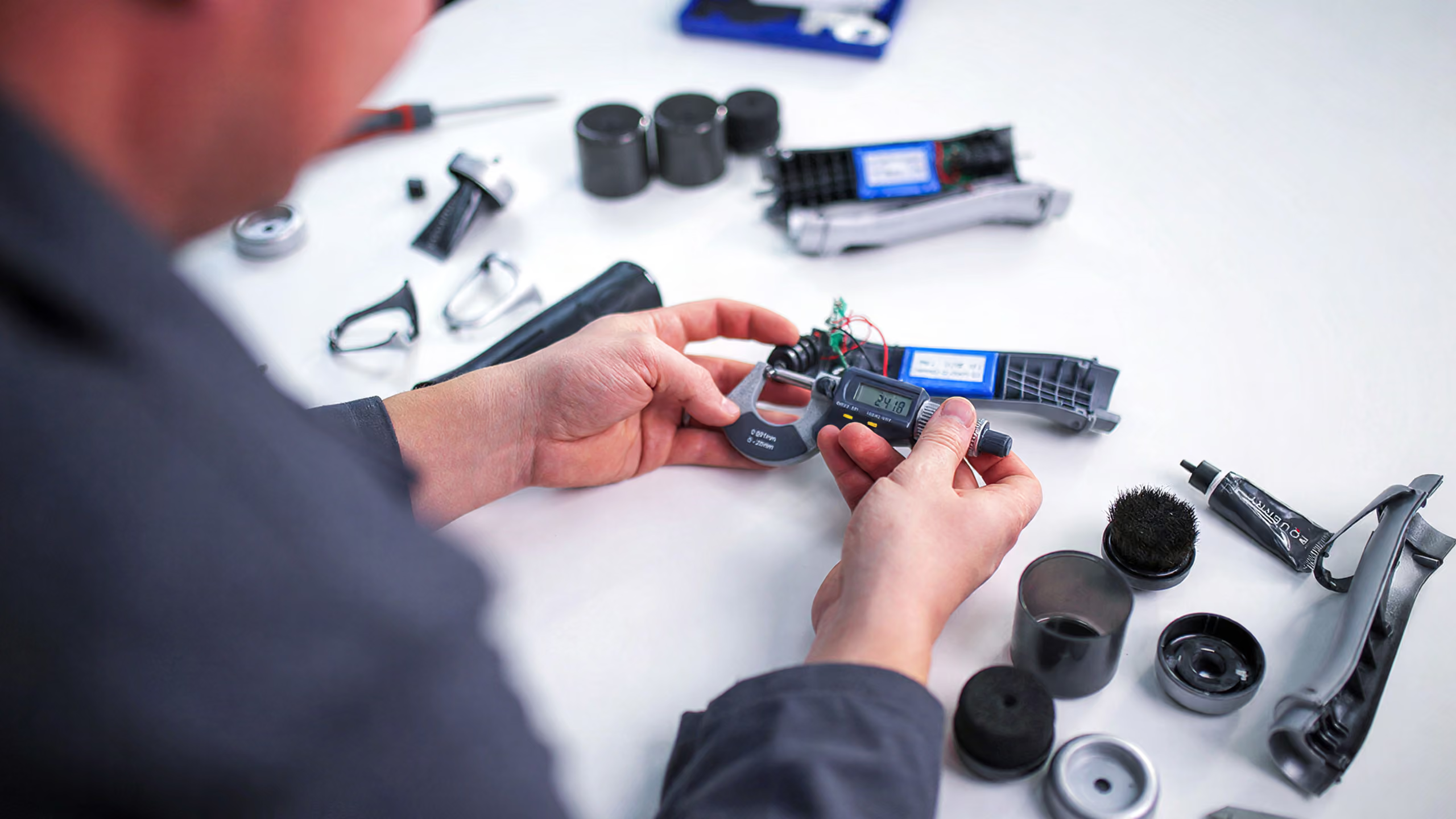
Manufacturing cost is rarely one-size-fits-all, and its elements pull on each other rather than adding up independently. Part count is the clearest example: more parts mean more material, more assembly labour, more tolerances to hold and more tooling, so complexity at the design stage compounds through every cost that follows. Material choice interacts with the manufacturing method, which interacts with volume, which interacts with tooling. The practical consequence is that cost is a design question as much as a production one, because the decisions that set the cost are largely made while the product is being designed, not after.
The costs beyond the unit price
The unit price is only part of the true cost of a product, and the costs around it are the ones most often underestimated. Packaging, professional product photography or CGI, logistics, compliance testing and certification all add to what it really costs to get a product to market, and they can erode a margin that looked healthy on the factory quote alone. Understanding the full picture, rather than the ex-works unit price in isolation, is what makes a cost plan realistic. Our guide to how much it costs to manufacture a product works through these costs in practical detail, including the hidden ones.
Estimating cost early
You do not need a factory quote to start estimating, and estimating early is what keeps a design honest. A rough working figure can be derived from the target retail price, because the price the market will pay sets a ceiling that the cost of goods has to fit within. Working backwards from that ceiling tells you roughly what the product can cost to make while still leaving a margin, which in turn tells you how many parts, what materials and what level of complexity the design can afford. Our costing guide sets out the practical rules of thumb for this, and the broader question of what it costs to develop a product in the first place is covered in how much it costs to develop a new physical product in the UK.
Reducing cost without cutting corners
There is a difference between reducing cost and cheapening a product, and the difference is method. Cost is reduced well by simplifying the design, reducing part count, choosing materials and processes that suit the production method, and engineering the product so it is efficient to make, all without compromising what the product does or how it feels to the user. This discipline is called value engineering, and it is one of the most effective levers available, because it lowers cost at the design stage where the cost is actually set. Our guide to value engineering covers how it works and where it delivers the most.
Where you manufacture also shapes cost significantly, and that decision is covered in choosing a manufacturing location.
How D2M helps
We are a product design consultancy with fifteen years of experience, and we consider cost throughout the design process rather than treating it as something to work out at the end. Because the decisions that set manufacturing cost are largely design decisions, the point of greatest influence is early, while the product is still taking shape, and that is where we apply it. Working through our commercial-viability lens, we help clients design products that can be made at a cost the market supports, weighing materials, part count, tooling and method against the price the product needs to sell at. Reducing cost without cutting corners, through value engineering and sound design for manufacture, is one of the most valuable things a design partner brings to a project.
In short
Manufacturing cost decides whether a product is commercially viable, and it is largely set at the design stage. Understand its components, materials, labour, overhead and tooling, and how they interact rather than add up. Account for the costs beyond the unit price, estimate early from the retail price down, and reduce cost through value engineering rather than by cutting corners. Get the cost right while the design can still respond to it, and the product has a business behind it rather than just a market.
Related guides: How Much Does It Cost to Manufacture a Product · Value Engineering · Choosing a Manufacturing Location · How Much Does It Cost to Develop a New Physical Product in the UK