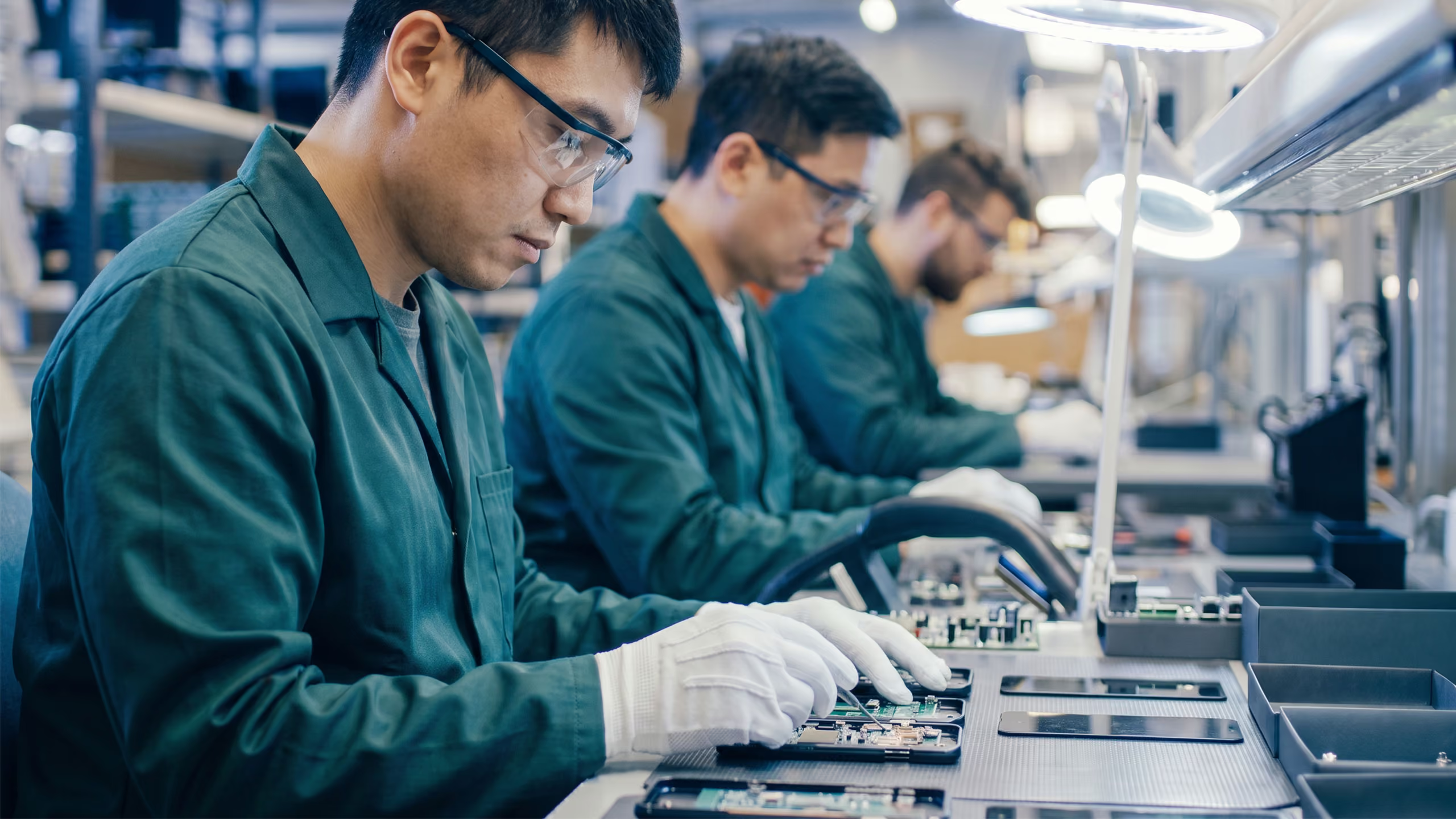
Commercialising a product isn't really one stage, it's doing the stages you already know about, design, prototyping, manufacturing, in the right order, and protecting and validating the idea at the points that matter. This guide covers that sequencing, and the part that's easy to underprepare for: actually getting the finished product into someone's hands, whether that's direct to customers or into retail.
Most of what commercialisation involves already has its own guide on this site. What decides whether a good product actually reaches the market isn't any single one of those stages, it's the order you tackle them in, and what you do once the product itself is ready to sell.
The stages, in the right order
Roughly, the path runs: validate the idea and protect it before you discuss it with anyone outside the business, develop and prototype the design, resolve it for manufacture, sort packaging and compliance, and then get it in front of customers. Each of those has its own guide (see related articles section at the end of the article). This guide doesn't repeat them, it's about what connects them.
The two points worth being deliberate about are protection and validation. Secure IP protection, and use an NDA for any external conversation, before you talk to a manufacturer, an agent or a potential retailer about the idea in detail. And validate demand before you commit real money to tooling: a prototype that customers respond well to is worth far more at this stage than a factory-ready design nobody's asked for yet.
Sequencing it this way also protects the budget, because each stage is a natural point to assess and, if needed, redirect before the larger commitments of tooling and production are made.
Realistically, the whole path from idea to a market-ready product runs six to eighteen months, depending on the product's complexity and how long suppliers need.
Getting the finished product to customers
Once the product itself is ready, there are two broad routes: sell it yourself, direct or through crowdfunding, or get it into retail. Most projects end up doing some of both, in sequence.
A useful way to check readiness for either route is whether the product is desirable, solving a need someone will actually pay for, viable, capable of being made profitably, compliant with the regulations that apply to it, and visible, backed by branding and marketing that gets it noticed. Missing any one of those tends to surface as a launch that undersells a genuinely good product.
Magnetips, a magnetic pen set D2M developed from concept through to manufacture, is a useful illustration of what a well-sequenced launch looks like: crowdfunded past £250,000, launched internationally, and still selling through Amazon and stationery retailers nearly a decade later.
Selling into retail
Getting a retailer or distributor to place an order is a different skill from designing and making the product, and it's usually underestimated. Before approaching retail, a business needs a professionally produced product presentation, a clear understanding of its own manufacturing costs so it can hold a sensible margin, and ideally a sample or two, though a finished production run isn't a prerequisite to start those conversations. IP protection is also worth having in place before those conversations start, for the same reason it matters earlier in the process.
Retailers and distributors are different relationships and move at different speeds, and either way, orders are typically placed months ahead of when stock is actually needed, so starting those conversations early matters more than most people expect.
For the marketing plan behind a launch, audience, channels, messaging and how to measure it, see our guide to product marketing plan strategies.
Where projects most often go wrong
The recurring mistakes are the same regardless of product category: launching before testing is properly finished, committing to tooling before demand is validated, leaving IP protection too late, and underestimating how much groundwork the marketing and retail side needs relative to the design and manufacturing side. Most of these come down to the same root cause: treating commercialisation as something that starts once the product is finished, rather than something to plan for from the start.
Getting the sequencing right, with an experienced partner
Few businesses have all of this in house: the design and engineering, the manufacturing relationships, the compliance knowledge, and the commercial judgement to sequence it all correctly. That combination is exactly what tends to be missing when a good product stalls before it reaches the market. A defined, staged process is also what gives investors and retailers confidence, because it shows the challenges have been thought through rather than left to chance. We work with clients across the whole path, from early concept through to a market-ready product, bringing design, prototyping and manufacturing expertise together with a commercial view on when to protect an idea, when to validate it, and when it's genuinely ready to sell. Fifteen years and more than 1,600 projects have shown us where that sequence usually breaks down, which is exactly where we're most useful.
Related guides: Designing a Product: A Step by Step Guide · Manufacturing a New Product Idea to Production · How to Patent an Idea · Product Packaging Design · Product Marketing Plan Strategies
FAQ
What does commercialisation actually involve? The stages you already know, validation, IP protection, design, prototyping, manufacture, packaging, compliance and launch, done in the right order. This guide is about that sequencing rather than the individual stages.
How long does it take? Realistically six to eighteen months from idea to a market-ready product, depending on complexity and supplier lead times.
What's the most underestimated part? Getting the finished product into customers' hands, especially retail. Winning a retailer or distributor order is a different skill from designing and making the product, and orders are placed months ahead of when stock is needed.
What's the most common mistake? Treating commercialisation as something that starts once the product is finished, rather than planning for it from the start, which is what leads to launching before testing is done or tooling before demand is validated.