Two decades of developing products for start-ups and SMEs teaches a few things worth passing on. These twenty lessons cover the decisions that most often decide whether a product succeeds or stalls: the problem you choose to solve, how you price and position it, how you validate it before spending, and how you plan its route to market. None are complicated, but each is easy to get wrong.
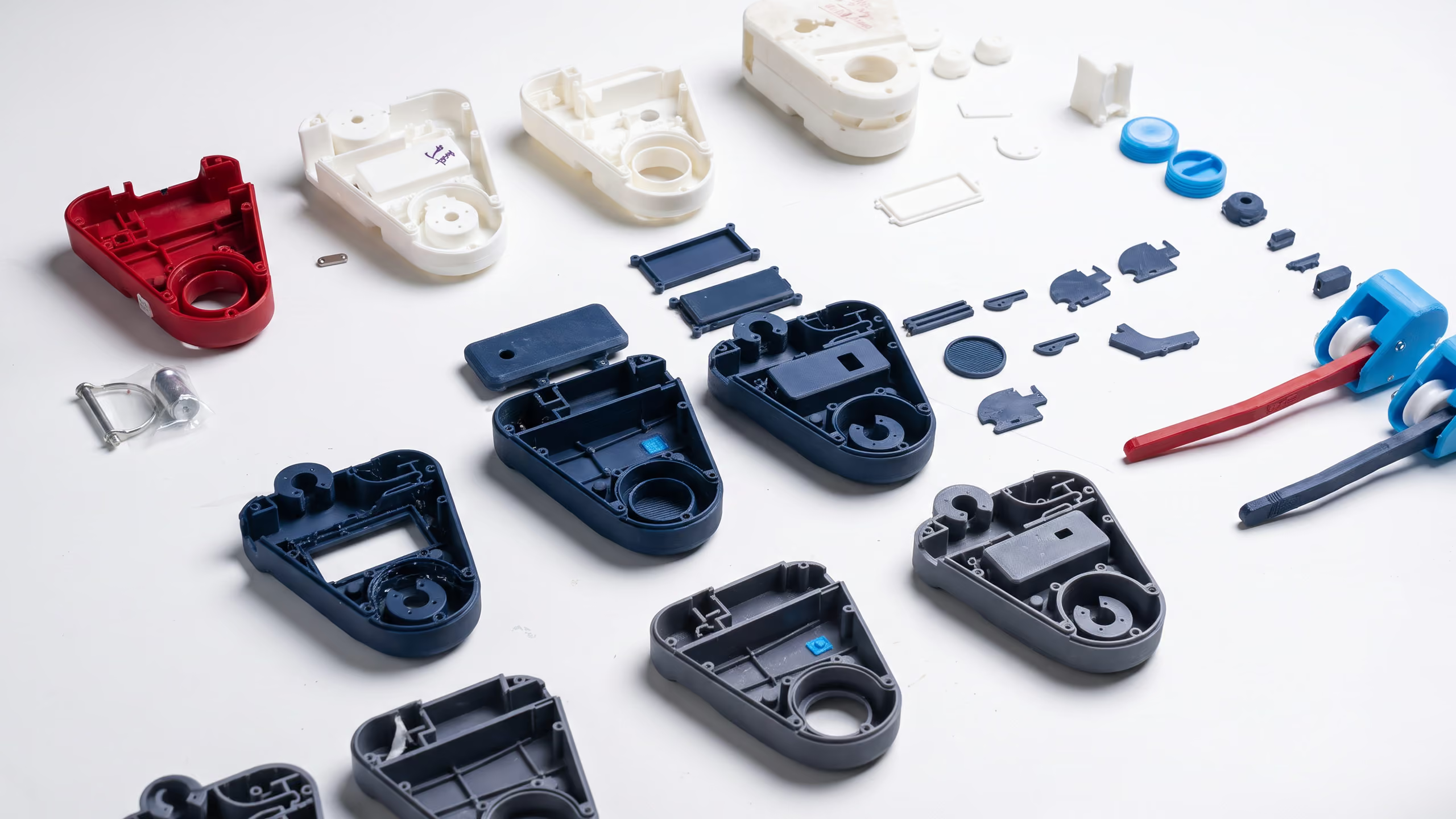
Product design is a vital part of product development. Done well, it makes the whole business easier down the line, and it lets you refine and change a product before committing to the expense of production. Here are twenty lessons from twenty years of doing exactly that.
1. Solve a high-intensity or high-frequency problem
The best products solve a problem people genuinely feel. A high-intensity problem affects relatively few people but matters enormously when it occurs, think of anything life-or-death. A high-frequency problem affects a great many people a little, and often. If your idea does not solve one or the other, demand will be thin. Solving a problem competitors have ignored also gives you an edge when it comes to marketing and sales.
2. Get the timing right
Timing matters as much as the idea. The best moment to launch is when there is real demand and room to grow. Look at the state of the market, its trends and how it has changed, before deciding whether now is the right time to bring your product to it.
3. Design a minimum viable product
An MVP reduces risk and cost by launching with just enough functionality to be useful and sellable, no more. It gets you to market faster and, crucially, teaches you about your customers before you have committed serious money. It also shows you which features actually matter, so you can prioritise them in later development.
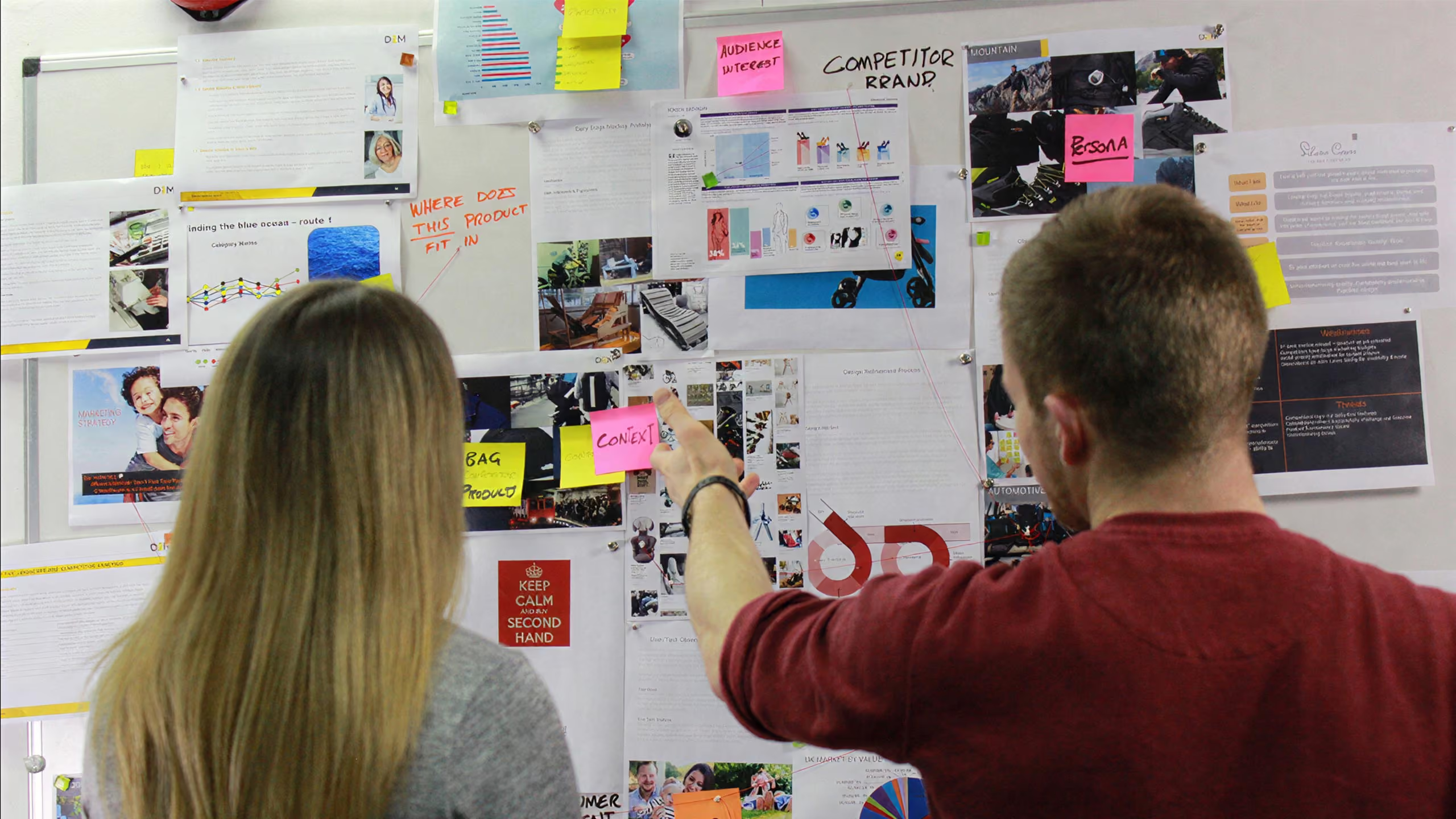
4. Develop, test and confirm your key marketing message
Marketing messages are too often complex, forgettable or unclear. Developing a sharp message early makes the product itself easier to develop, because it forces clarity about who it is for. Start with the target market, what they want and how they see you, and test the message with them as early as you can. It should be concise, memorable and unmistakable.
5. Ask your target market if they would pay more
Pricing is hard to judge in the abstract. One of the most useful questions you can ask your target market is whether they would pay more, because money is where people give you their real answer rather than a polite one. Ask it openly and you will learn a great deal about perceived value.
6. Don't be greedy with margins at first
Your first production batch will always carry a higher unit cost, because volumes are low. But early on you have no brand and no reviews, and reach matters more than margin. A lower initial price is easier to gain a foothold with. Once you have customers who value the product, and economies of scale, you can raise prices, provided the demand is there.
7. Get everything with suppliers in writing
Do not rely on suppliers, manufacturers, agencies, agents or distributors to do what they say on trust alone. Put it in a written contract. A clear agreement is what lets you hold each party to their obligations, and protects you if they fall short.
8. Check you are in a growing market
A rising tide lifts all boats. Understanding how your market is changing helps you decide which features matter and how customers want to use the product. A growing market gives your product more room to grow with it. A simple early check is search demand: if the numbers of people looking for and buying what you offer are rising, the opportunity is real.
9. Price below branded competitors at first
When you are starting out it is tempting to price high, but there is a case for pricing below established competitors initially. It gives you leverage to build on: if people like the product, they will pay more for it later, and a lower entry price attracts customers who might otherwise default to a known brand. It buys you room to grow and to earn trust.
10. Be cautious about borrowing to start up
Borrowing to launch is tempting when there is no income yet, but repaying loans at the very moment the business needs every penny can cripple it before it finds its feet, and can deter future investors who see no return in sight. Borrowing is not always wrong, but go in clear-eyed: work out how much you need and look hard for ways to fund it without loading the young business with debt.
11. Get your product price right
The right price attracts the right buyers, and that does not mean competing on price alone. Price too high and you narrow your market sharply; price too low and you risk signalling that the product is cheap or worthless. Be realistic about what your target market will pay, and find the balance between price and value. Testing different price points, including against competitors, is the surest way to find it.
12. Stay focused on your cost price
Your cost price is what makes the right selling price possible, so know it precisely. It must be low enough to leave a margin at a price the market will accept. If you do not yet know what your product costs to make, find out before setting a retail price, and adjust the retail price if the manufacturing cost comes in higher than expected, rather than quietly selling at a loss.
13. Don't underestimate what working with a major retailer takes
Getting into a major retailer can be a genuine game-changer, but it demands more than most expect. Every retailer has its own processes, from how inventory is tracked to how returns are handled, and that knowledge comes from experience rather than a book. If you are not already working with one, start small, and be ready for a steeper learning curve than you anticipate.
14. Present your idea effectively
The best way to present an idea is to think first about the person you are presenting to, and lead with the benefit to them. People want to know what your product means for them and how it makes their situation better. Tailor the pitch to their needs, be honest, and make them feel in control of the decision rather than sold to.
15. Choose the right product development partner
The right partner makes an enormous difference, and choosing one takes some due diligence. Ask whether they have developed a product like yours, whether they have the relevant expertise and a team behind them, and whether they understand your business and industry. It also helps to get on well with your designer, since that shapes how well they grasp how you want the product to look and feel. Smaller specialists are often more responsive and flexible than large firms.
16. Give the product an eye-catching aesthetic, a USP and a competitive price
Three things worth insisting on: a design that catches the eye, a clear unique selling point, and a price that undercuts branded competitors. The product needs something that makes people say they want it, something that sets it apart from what is already on the shelf. If you cannot achieve all three, it is worth asking hard whether to take it forward at all.
17. Fail early, and validate the concept
It is far better to fail early, cheaply, than to discover a flaw after spending heavily. You will not get everything right first time, so focus on testing the concept with real users rather than perfecting it in private. Validation need not be expensive: talking to potential users, and putting rough versions in front of them, teaches you what works before launch, when it is cheapest to act on.
18. Take the first step
An idea achieves nothing while it stays on the drawing board. The questions that hold people back, whether it will work, whether it is too big a risk, only get answered once you begin. Fear and procrastination are the quiet killers of good ideas. If there is something worth doing, the first practical step is what turns it from an idea into a project.
19. Choose a cost-effective design partner, not just an impressive one
Be wary of design that looks striking but is not feasible or affordable to make. A cost-effective consultancy delivers the best product design achievable within your budget and timeline, and understands manufacturability, not just aesthetics. Check portfolios, ask for references, and make sure they have worked on projects similar to yours. Start by asking yourself why you are designing the product; if the answer is only to show off ideas, it will waste time and money.
20. Sort out your route to market early
It is easy to assume e-commerce means you can simply start selling, but success needs a strategy. Decide early whether you will sell through retail, through distributors, or direct to customers, and recognise those channels may shift as the market changes. List every way a customer could get hold of your product, work out which offer the best room for growth, and start building those relationships. Your route to market is one of the most important decisions you will make.
How D2M can help
We have worked with hundreds of start-ups and SMEs, and much of what is above comes from getting projects off to the right start, and occasionally the wrong one. We help you choose the right problem to solve, validate it before committing serious money, design for cost-effective manufacture, and plan a realistic route to market, so that the lessons here are built into the project rather than learned the hard way.
In short
Twenty years of product development keeps returning to the same handful of truths: solve a real problem, get the timing and pricing right, validate early and cheaply, be careful who you trust, and plan your route to market from the start. None are complicated. Getting them right is what separates products that reach the market from those that stall on the way.
Related guides: Product Design Process · Five Lessons From Apple's Product Design Process · Value Engineering