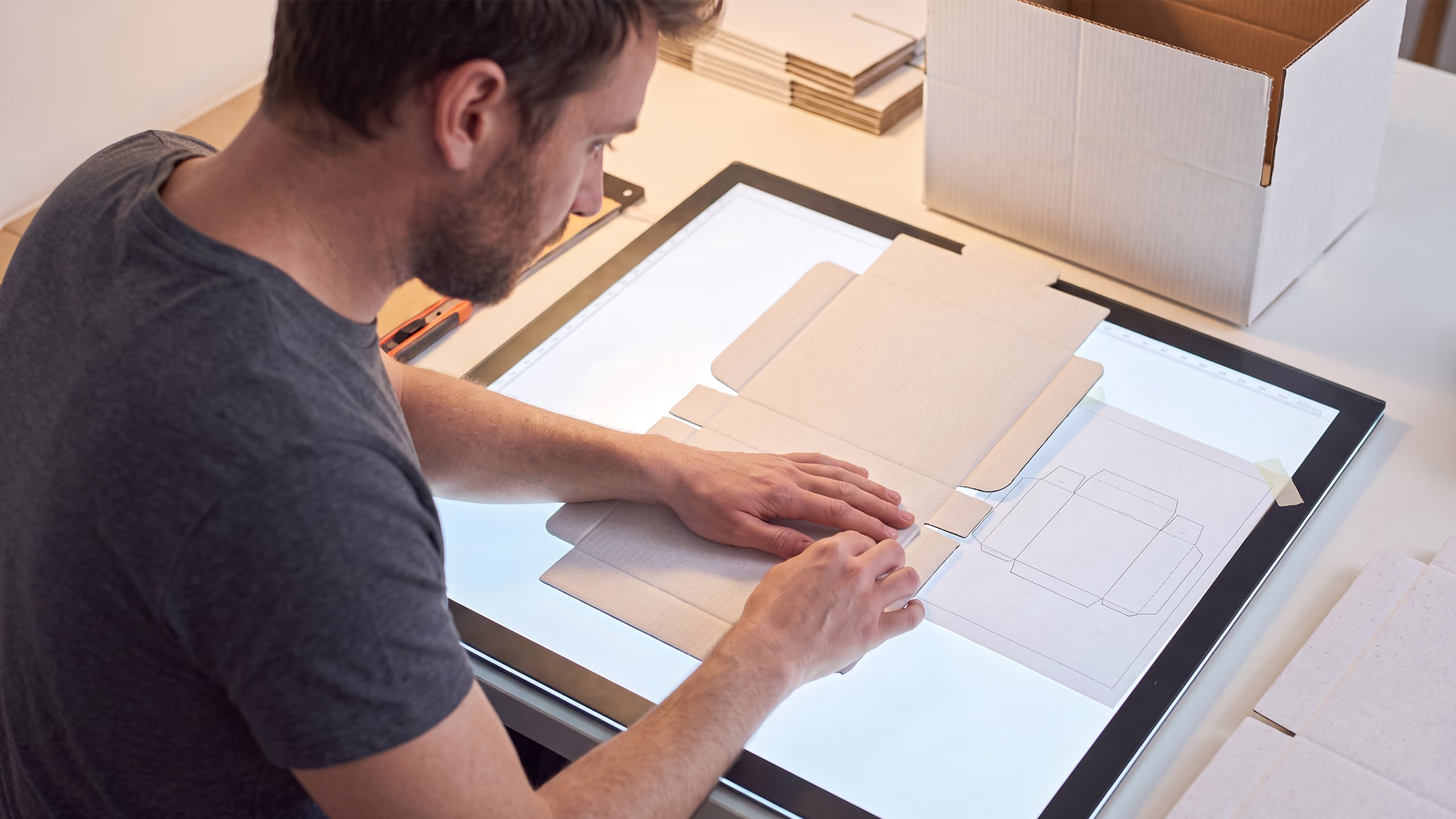
Packaging is the first point of contact a customer has with a product, and it often does the selling before anyone has handled what's inside. It's where the brand and the product physically meet. This guide covers how packaging design works, when it happens in development, what it needs from you, and how it turns a brand into something people pick up.
Good packaging does two jobs at once: it has to look right, appeal to the consumer and clearly display the product, and at the same time it has to actually work, surviving shipping, the warehouse, the delivery van and the shelf before a customer ever opens it. Treating those as one decision instead of two is where projects usually go wrong. This guide covers them in the order they should actually happen.
When packaging design happens
Packaging is usually tackled after the Mark I prototype, once the product's dimensions are settled, because the pack has to fit what it holds. It runs closely alongside the branding stage, since the pack is where brand identity becomes physical. It draws on three inputs: the product's specifications, its size, weight and materials, the brand guidelines that give it its look and voice, and a clear sense of the target market the pack has to appeal to.
Direction before design
Packaging direction and packaging design are often used interchangeably, but they're different jobs. Direction is the structural and functional foundation: the format, the way it opens and closes, how it protects the product, and how it behaves in shipping and on display. Design is what goes on top of that foundation, the graphics, the branding and the messaging, which is where our Product Branding guide picks up.
Getting the direction right first matters because a structural problem found late is expensive to fix. On one project, a nightlight brief called for a pyramid-shaped box that looked distinctive on the page but turned out to be impractical to manufacture and inefficient to ship, wasted space in every case, and was awkward to palletise. Rather than force the original idea through, we developed three alternative directions built around stackability and shipping efficiency, and the client chose the one that kept the visual distinction without the logistics problem. That's the balance the direction stage exists to strike, before graphic design work is committed to a shape that can't support it.
The other factor that shapes packaging direction is the route to market. Selling through Amazon or a similar online marketplace can call for different packaging than a product that will sit on a retail shelf. For a lean start-up selling mainly online, where the pack's main job is protecting the product in transit rather than standing out on a shelf, it can be worth keeping the design simple and cost-effective. Explore the options with your designer and weigh up the implications before speaking to a manufacturer.
Balancing looks against manufacturability
The tension in every packaging brief is the same: what looks striking on a rendered mock-up has to also be produced at cost, at volume, and to a tolerance a factory can actually deliver. A design that ignores these factors usually surfaces the problem at the worst possible time, once a manufacturer has quoted and the numbers don't work, or the material specified turns out not to run on the production line intended for it.
The fix is bringing manufacturing thinking in early, just as you would for the product itself. Understanding the product, its size, weight, fragility and any special handling it needs, shapes what the pack can realistically be. Talking to a manufacturer about feasibility and cost before a direction is locked catches problems while they're still cheap to change. Sustainability sits in the same bracket: eco-friendly materials and lighter structures are increasingly what clients and their customers expect, but they still have to be checked against what's actually available and mouldable at the volumes involved, rather than specified as an aspiration and discovered unworkable later.
Testing before you commit
A pack that hasn't been physically tested is a guess. Prototyping and mocking up the pack, then testing it the way it will actually be handled, dropped, compressed in transit, exposed to damp, surfaces problems no render or spec sheet will show. The same applies to the finishing and print techniques used on the surface: embossing, foil stamping and similar treatments look very different at full scale and on the actual substrate than they do on screen, so a physical sample is what confirms the choice rather than the concept. Packaging prototypes are usually sampled by the factory, as they have all the machinery and expertise to make them accurately. Design changes can be quickly implemented once the sample has been reviewed, alongside the sample of the product itself.
Labelling and compliance need checking at the same stage, not as an afterthought once the artwork is finished. What has to appear on a pack varies by product and market, and it's far cheaper to build the space and format for it into the structure now than to redesign around it later. The factory can often advise on what information is required on the packaging. This is particularly important for electronic and baby products, where compliance and certification is crucial.
What good packaging does to the price
Handled well, packaging has a significant effect on perceived value, and through it on the price a product can command. The same product in considered packaging reads as worth more than one in an afterthought of a box, and that difference goes straight to the margin. Neglect it and you risk letting a product go for less than it's worth, leaving value on the table that the packaging could have captured. It's one of the clearest examples of design paying for itself.
From packaging to sales material
Once a pack's direction is resolved, the same photography, structure and brand assets are often the starting point for the material a client needs to actually sell the product, a one-page summary for a retail buyer, an investor, or a trade show stand, built around the product's benefits rather than a plain feature list. It's a smaller, separate piece of work from the packaging itself, and it draws on what's already been resolved rather than starting from scratch. For the wider commercial process around getting a product to market, see our guide to step-by-step product commercialisation. For a great example of packaging design, take a look at the Fab Bricks Bauble case study.
Related guides: Product Branding a Step by Step Guide · Step by Step Product Commercialisation · Product Styling
FAQ
What's the difference between packaging direction and packaging design? Direction is the structural and functional foundation, the format, how it opens, how it protects the product and behaves in shipping. Design is the graphics, branding and messaging that go on top.
When is packaging designed? Usually after the Mark I prototype, once the product's dimensions are fixed, and closely alongside the branding stage.
Does packaging really affect price? Yes. It strongly influences perceived value, and neglecting it tends to leave a product selling for less than it could.
Does the sales channel change the packaging? It shapes the direction: a pack sold mainly online has different priorities (protection in transit) from one that has to stand out on a retail shelf, so the route to market is worth settling before the direction is locked.