Bags live under more physical stress than most product categories: straps, zips and pockets get pulled, dropped and loaded daily, and the whole thing is usually built from fabric rather than a rigid material. This guide covers what's different at each stage of developing one, from material choice through to getting it made, with a real D2M project as proof.
A bag isn't judged the way a rigid product is. There's no single moment of failure to design around, it's cumulative wear: a strap that's fine for a month and frays by six, a zip that catches on the tenth use rather than the first. That changes what "getting the design right" means, and it's the thread running through design, prototyping and manufacture for this category specifically.
Designing a bag
Material and hardware choices matter earlier here than on most products, because they're doing structural work as well as aesthetic work. Fabric has to suit the bag's actual use, ripstop nylon and similar technical fabrics for durability, water-resistant treatments and zips where the bag needs to handle weather, and the hardware, clips, buckles, zip pulls, has to be specified for the strain it will actually see rather than picked for looks. Weight distribution and ergonomics need thinking through early too, particularly for anything worn on the body, since a bag that's comfortable empty can be uncomfortable loaded.
The other early decision is which of the fairly distinct bag types you're actually designing for, a structured laptop bag, a roll-top daypack, a modular rucksack with adjustable capacity, and a changing bag all carry different priorities. Conflating them tends to produce a compromise that serves none of them well.
For the wider design process, everything in our product strategy and designing a product guides applies here too. The bag-specific work is in the material, hardware and use-case decisions above.
Prototyping a bag
The general principles are the same as for any product, our guide to prototype development covers what each level of prototype is for. What's different for bags is that a lot of the real prototyping work is a sewing and pattern-making process rather than a CAD or 3D-print one, and testing has to include the kind of repeated, real-use stress a bag actually takes: loaded and worn rather than just handled, so strap stitching, zip pulls and seam strength get proven under the conditions they'll actually face, not just in a single test.
Manufacturing a bag
There's a practical reality worth knowing early: if your bag is genuinely textile-based, you're unlikely to find a UK manufacturer for it, most volume textile and soft-goods production sits overseas, and it's worth factoring that into any expectation of manufacturing close to home. Deciding whether to buy through a supplier or go direct to a manufacturer is its own decision with real cost and control trade-offs. Once you're into production, quality control is where bags most often go wrong, because construction detail, strap stitching, pocket seams, zip placement, is what separates a bag that holds up from one that doesn't, and it's hard to catch from a spec sheet alone. Iterative sampling, followed by a "gold sample," an approved physical reference every production unit is checked against, is the practical way to hold a factory to the standard you actually want rather than the one on paper and ensure that they fully understand the design intent. Going straight to sampling with a factory, using the tech pack, is an option, but be aware that this is likely to result in a more involved sampling process.
Selling a bag
Getting a bag in front of customers follows the same route as most consumer products, a strong prototype, a clear commercial story and the right channel for the category. Our guide to step-by-step product commercialisation covers that ground in full.
A real example: Baxley Bags
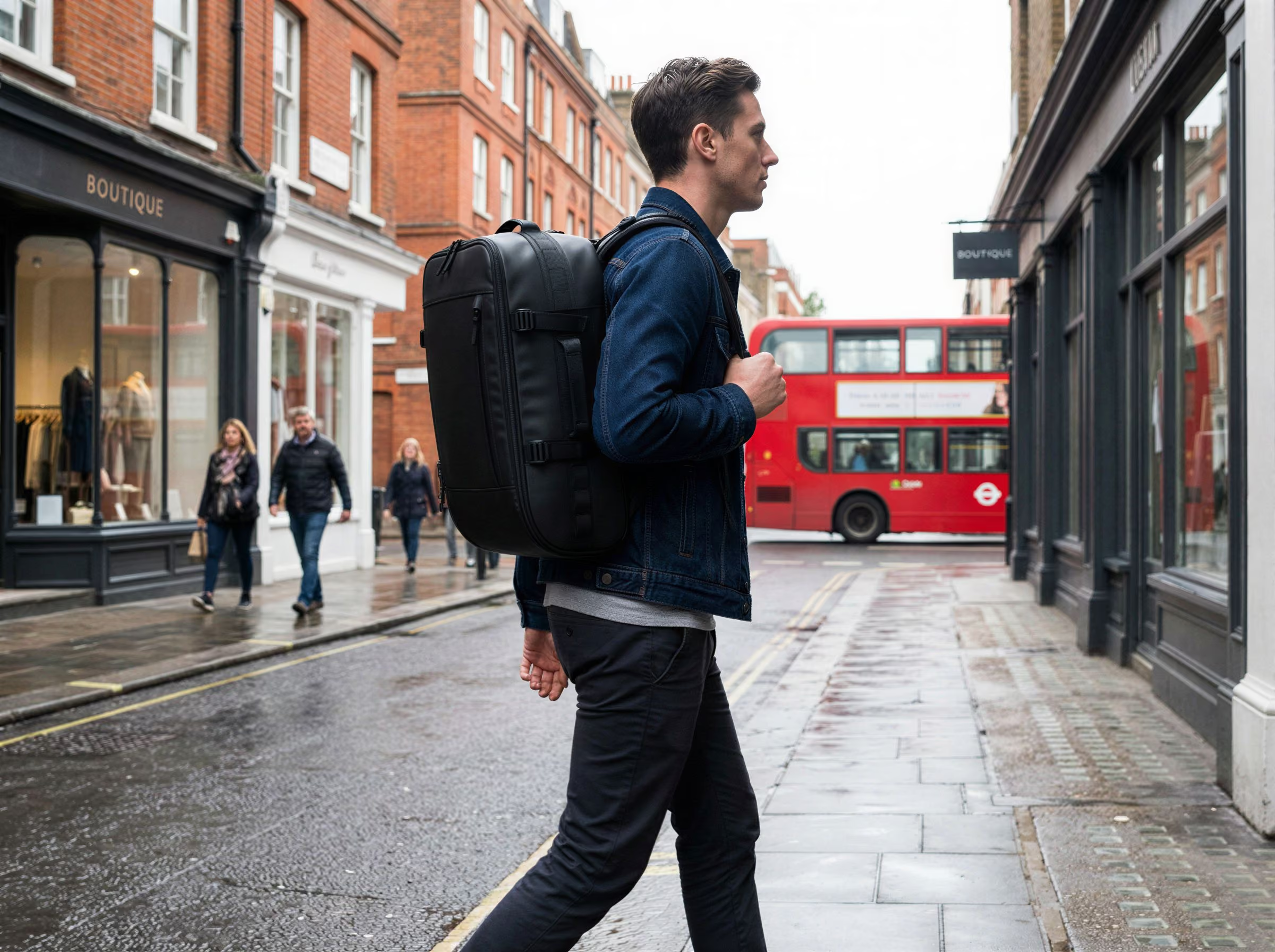
Baxley Bags is a good illustration of what bag-specific design work looks like in practice. The founder had a clear concept and real momentum but needed professional support to finalise the design and prepare it for production. D2M developed the interchangeable strap mechanism, completed the final prototype and produced the full manufacturing specification, with material and factory sourcing that kept every component EU-sourced and production in the UK.
Baxley launched with a collection of over seven backpack designs, each manufactured in the UK in small, limited batches, an approach that keeps waste low while each new batch sells out quickly. It's a useful reminder that UK bag manufacture is possible, it was the right fit here given the brand's sustainability priorities and the small batch sizes involved, just less common than the overseas default described above.
Getting the textile detail right, from strap to factory
Bags reward the kind of detail that's easy to skip under time pressure, the stitching that holds under load, the hardware that survives daily use, the sourcing decision that matches how the product actually gets made. We work with clients through exactly that detail, from the design and prototyping through to sourcing a manufacturer that fits the product and the volumes involved, so the gap between a bag that looks right and one that holds up over years of use gets closed early, not discovered by a customer.