Once a product is selling and the question shifts from "can we make this?" to "how do we make more of this, reliably, as we grow?", the location decision changes character. It stops being a one-off choice about a single production run and becomes a strategic one, with consequences for cost, delivery, quality and how well the business can absorb a shock. This guide is written for that moment: for SMEs and scaling brands deciding where and how to produce as the business grows, rather than for a first prototype.
The factors to consider when locating a production unit
For a single product run, a poor location choice is an inconvenience. For a business producing at volume, it compounds. The same factors that were manageable one-offs, freight cost, lead time, quality oversight, become recurring drains or recurring advantages, month after month. A location that looked cheap on the unit price can quietly erode margin through shipping, duties and the cost of managing quality at a distance, while a slightly more expensive but better-connected location can pay for itself in speed and reliability. Choosing a location for growth is about building resilience and responsiveness, not just cutting cost.
Proximity to your suppliers and materials
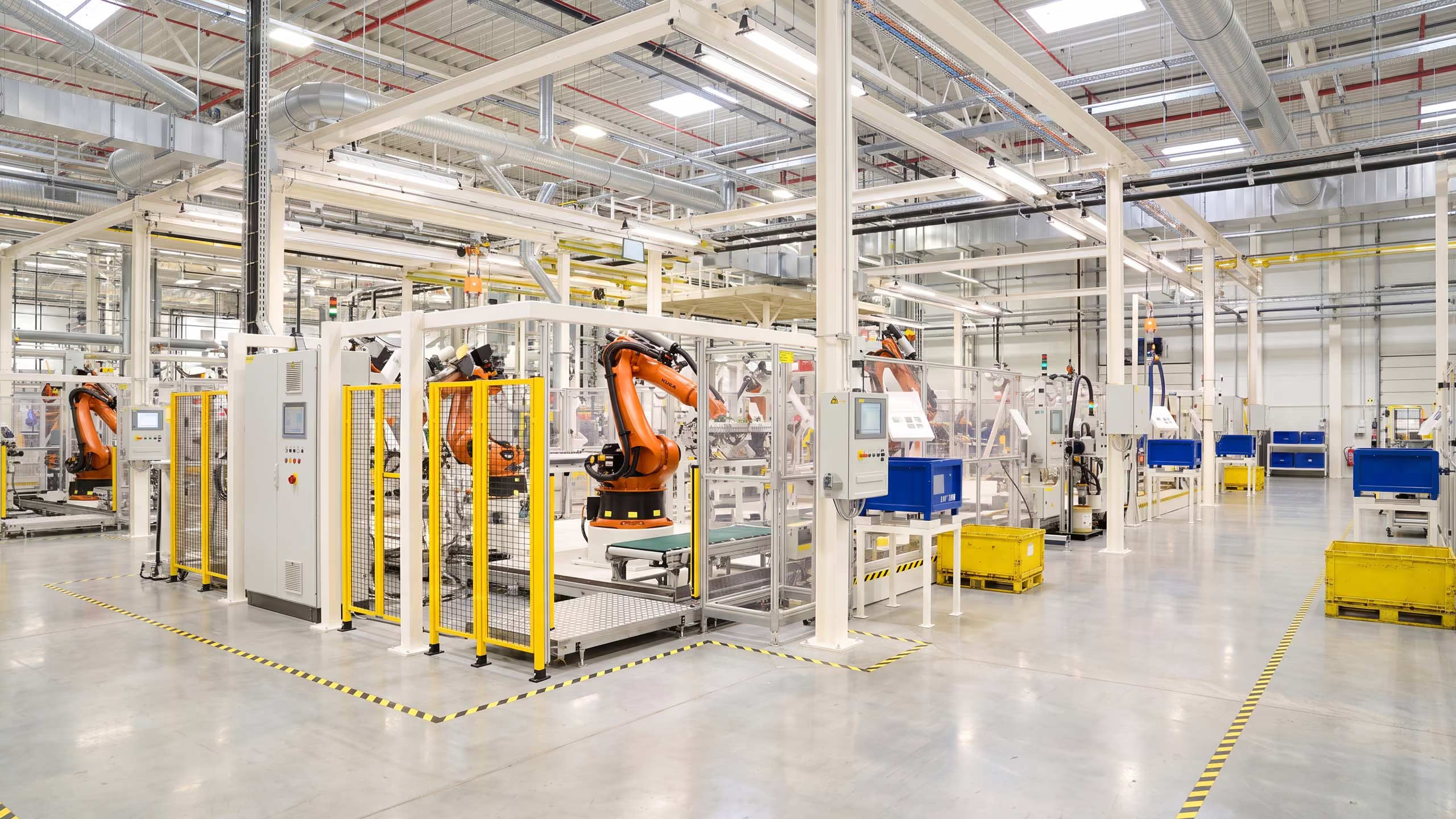
For a physical product, being close to the right component and material suppliers improves efficiency and reduces cost in ways that repeat with every batch. Shorter transport distances lower freight costs, shorten lead times and reduce the risk of supply-chain disruption, and they make the in-person collaboration that matters during production far easier. This is why manufacturing ecosystems cluster: electronics near component hubs, soft goods near textile centres. Producing inside the right ecosystem gives you access to materials, tooling and assembly expertise that a more isolated location cannot match, and for a scaling business that access is often worth more than a lower headline rate.
Real capability, not just cost
As volumes grow, the specific capability of a location matters more than its wage rates. A factory or region that can hold your tolerances, work in your materials and scale with your demand is worth more than a cheaper one that cannot, because the cost of quality failures and capacity ceilings at volume dwarfs the saving on unit price. The question to ask is not only "what does this cost?" but "can this location still make my product well when I need ten times as many?"
Logistics, lead time and proximity to market
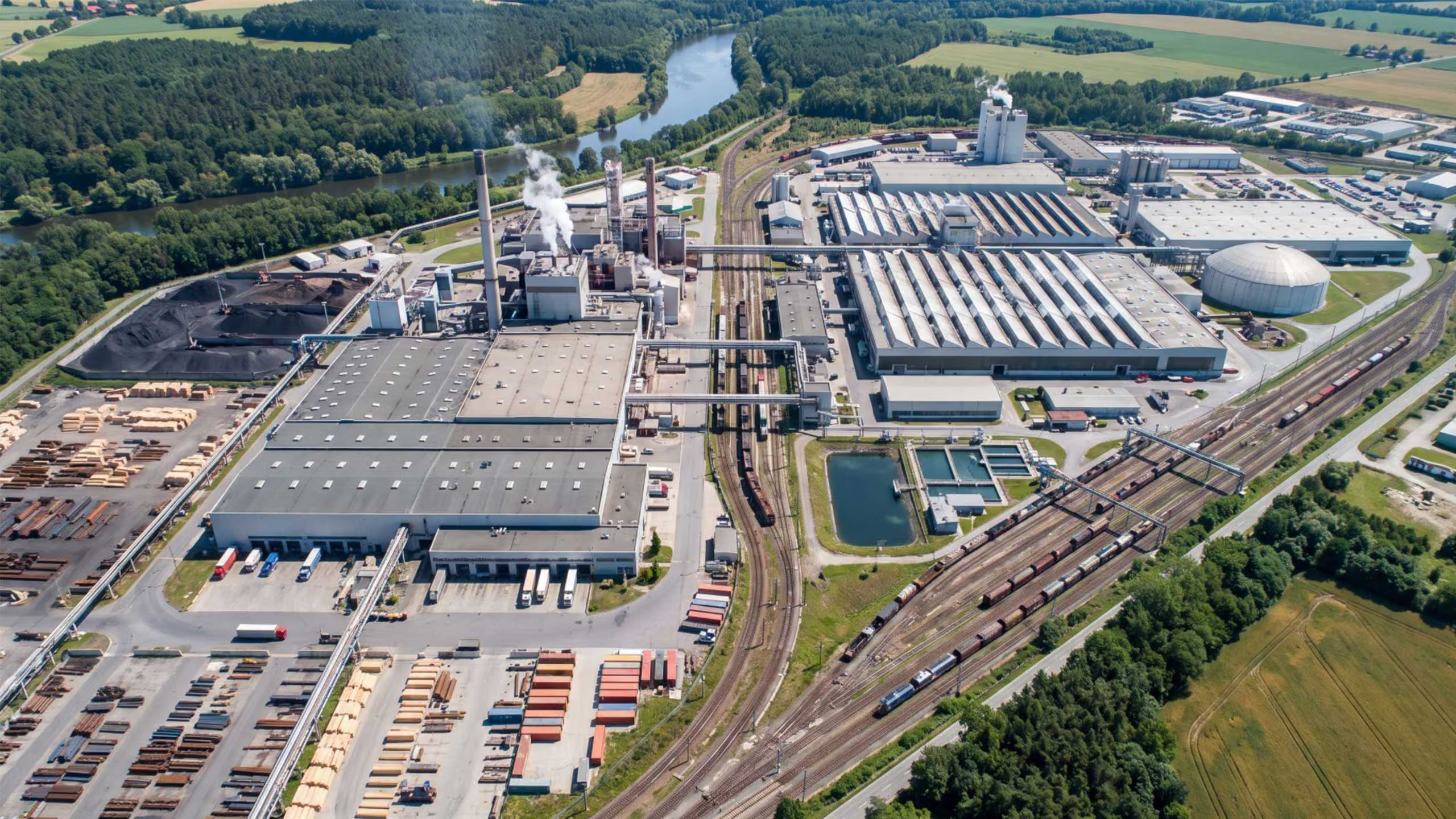
Where you produce relative to where you sell affects logistics cost, delivery speed and your ability to respond to demand. For products with short shelf lives, or those frequently customised, proximity to market becomes critical, and for businesses selling across regions it can be more effective to spread production across local hubs than to centralise in a distant, low-cost site. Access to ports, freight lanes and reliable distribution matters as much as the factory gate price, because a cost saving at the factory is easily lost to a slow or unreliable route to your customers.
Risk and resilience
Risk is the factor most often underweighted until something goes wrong. Concentrating all production in a single site, however cheap, leaves a business exposed to disruption, whether from supply-chain shocks, currency movement or a problem at that one location. Building some resilience into where and how you produce, through a second source, a more robust location, or a route that is not a single point of failure, is part of a mature production strategy. A low-cost site that limits your ability to pivot can cost far more over time than it saves.
Trade policy and shifting conditions
The conditions underneath these decisions are moving, and they belong in any current location strategy. Tariff exposure and shifting trade policy are reshaping where it makes sense to produce, and the reshoring trend, driven more by automation than by cheaper labour, is changing the maths for some products. Businesses selling into multiple markets increasingly weigh production location against tariff schedules and certification requirements as much as against unit cost. These are not reasons to panic, but they are reasons to treat a location decision as something to revisit as conditions change rather than settle once and forget.
Where D2M fits: location as strategy
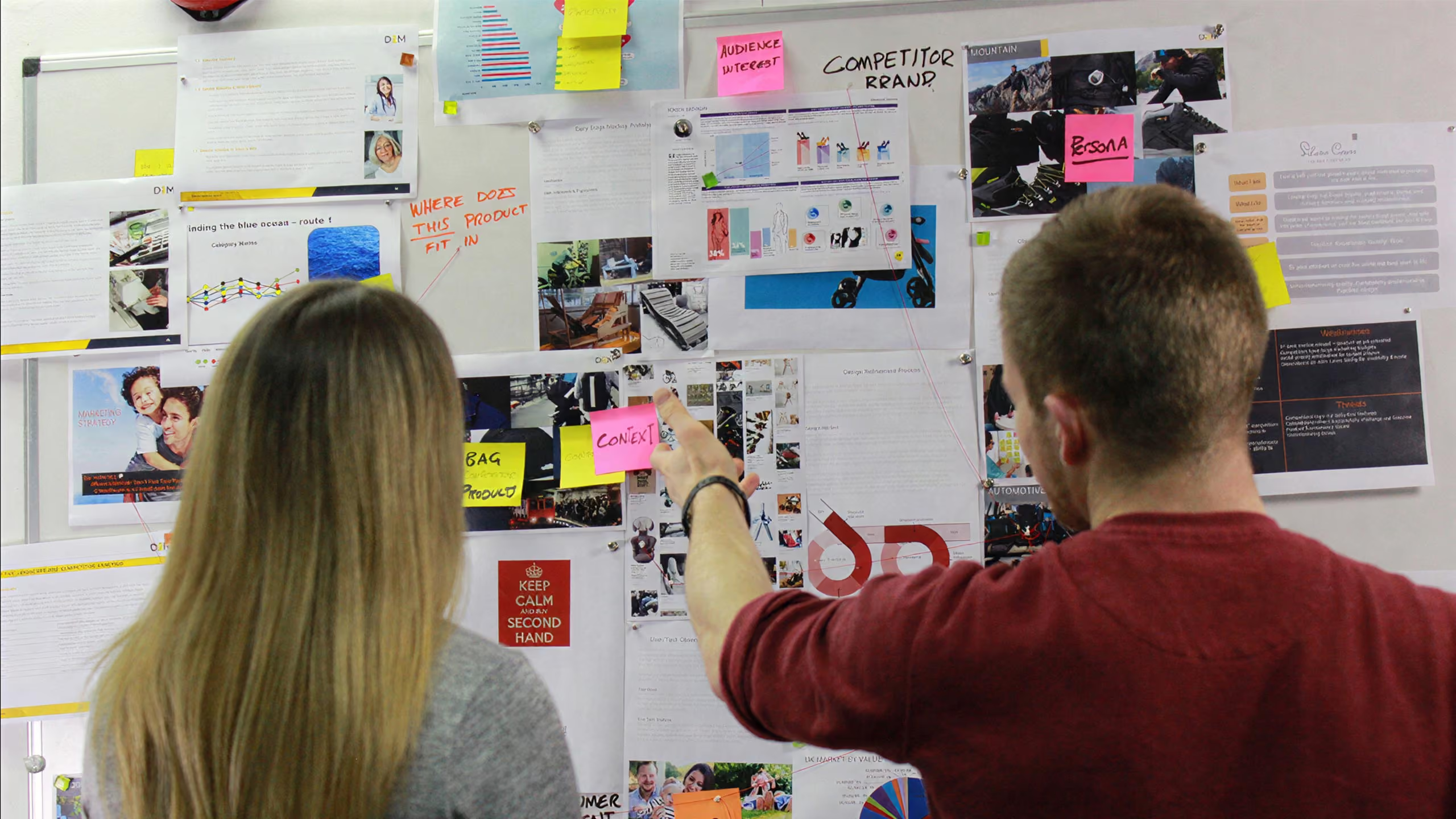
Deciding where and how to produce as you scale is a strategic question, and it is one we advise on directly as part of our research and strategy work. The same senior designers who understand how your product is made are well placed to advise on where it should be made, because the two questions are connected: a location's capability, its material access and its cost structure all feed back into whether the product is commercially viable at the volume and price you are targeting.
We approach this through the commercial-viability lens that runs through everything we do, weighing location against margin, risk and growth rather than treating it as a standalone operations decision. For a scaling product business, that advice can be the difference between a production setup that supports growth and one that quietly caps it. Our research and strategy work is where that thinking sits, and it connects directly to the broader question of choosing a manufacturing location.
In short
For a growing business, where you produce is a strategic decision, not a search for the lowest quote. Weigh supplier proximity, genuine capability, logistics and risk together, and treat resilience as worth paying for. Keep an eye on shifting trade conditions rather than settling the question once. And treat the whole decision as part of your product's commercial viability, because at volume, where you make something shapes whether the business can grow on it.
Related guides: Choosincg a Manufacturing Location · Manufacturing in China · Manufacturing Cost Considerations · Product Strategy