Design research is how you understand the people a product is for, the context it will be used in, and the need it has to answer, so that the concepts are built on evidence rather than assumption. This guide sets out what it covers, when it happens, how much of it is enough, and what it protects you from. It is the qualitative, user-facing side of research; the commercial, market-facing side is covered in our guide to market research for product development.
Design research is one of the most valuable stages in developing a new product, and one of the most misunderstood. It is easy to treat it as a box to tick before the real work starts, but done properly it is what gives the real work a foundation. It generates the insights that concepts are built on, and it keeps contributing as the design develops. This guide covers the qualitative, user-centred side of research: understanding the user and the need. The market-facing questions, size, demand, competitors, pricing, sit alongside it and are covered separately in our guide to market research.
What design research covers
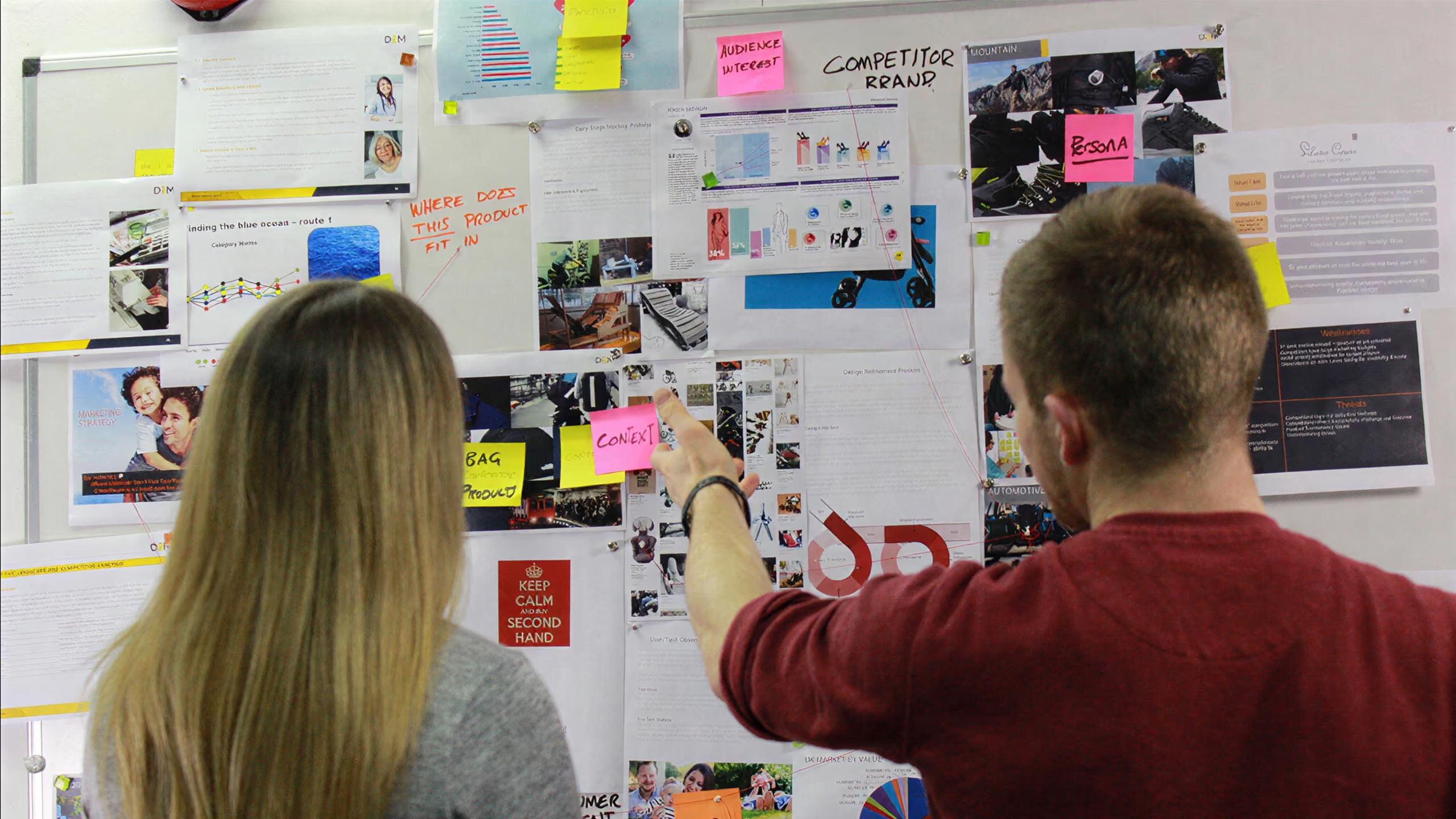
At D2M, research spans a few distinct areas, and it helps to keep them separate. Some of it is market-facing: understanding the market value, the mechanics of the market and the commercial position of the product. That is the subject of a separate guide. This guide is about the other side: contextual and design research, the work of understanding the need of the user, where the product will be used, and the context around it. This is where users are understood properly and insights are generated that guide what the product should be, or how an existing product should be improved.
What happens without it
If no proper research is done and a project moves through concept development into the later stages, the discovery that the product is not embraced by its users tends to arrive abruptly and expensively. Worse, you can find that the product does not actually solve the problem, or fill the need, that you believed you had a solution for. The biggest impact is that the product becomes purposeless: everything built after that point rests on an assumption that was never tested.
When research happens
Design research happens mostly at the beginning, before the concepts, where it generates the foundational insights the concepts are then built on. But it does not stop there. Through concept development, basic prototyping, later prototype stages and CAD, we continue to run small batches of research, sample testing and user testing with the product, to refine the design solutions and develop the features further. Research does most of its work at the start, but it keeps contributing to the outcome throughout the design process.
In practice we most often integrate design research into the concept development stage itself, expanding that stage to cover initial research followed by concept development. Where the brief arrives with no research background behind it, we usually propose a research stage before concept development begins. Folding the two together is more efficient and produces considerably more detailed documentation for the client.
How long it takes
A typical research stage takes around two to six weeks depending on complexity. Secondary or desk research usually takes about a week. Contextual research and ethnographic practice takes longer, because understanding users and their context can require a change of location, finding the right people with the right expertise, and recruiting the right users before any data can be gathered.
Research can tell you to stop
Research can tell you to stop a project early, and sometimes it should. If the idea does not really match the user, or the product would be considerably more expensive than what is already in the market, or the approach is not feasible, research gives you those cues at the outset, before significant money has been committed. Being told to stop cheaply is a far better outcome than discovering the same thing after tooling.
Crafting a research strategy
As with everything, the research stage is about scope. What are we trying to do: validate an idea, gather more information about it, or nourish it by exploring different technologies, materials and approaches? That has to be defined first. Once you are clear on what you are trying to achieve and what you need to gather, everything downstream runs better.
Finding the gap
Genuine needs and gaps are found mostly through contextual research and the filtering that follows it. That is where the greatest value lies when developing a new product. Practical sources matter too, trend reports, bestseller analysis, B2B marketplaces and niche forums are all useful data to take into account, but they support the finding rather than producing it. They do not reveal the gap by themselves.
Reconciling user needs with product reality
Concept selection runs two sets of criteria alongside each other: what the user actually needs and will pay for, and whether the product is technically feasible, manufacturable and scalable. These can conflict. This is where an experienced senior team matters. The reason we ask a lot of questions at the brief stage, work to understand the bigger picture, and offer additional stages to establish a strong foundation, is that it lets us develop products through a commercial viability lens. Concepts are addressed with the end price point and the manufacturing reality in mind from the outset, so a high proportion of projects produce feasible concepts that match the client's needs first time. Where a genuine conflict does occur, which is rare, it can require concept work to be redone; it stays rare precisely because the senior team runs the project throughout.
How much research is enough
You need to be able to observe a pattern. If a common behavioural pattern emerges among the users you are researching, you are reaching the saturation point where you have enough data to move on. How you select your users matters enormously: aim for diversity within the relevant background you have defined, and if a pattern emerges despite that diversity, and the insights point dominantly in the same direction, you can generally treat the result as reliable. Depending on complexity, that is typically somewhere around twenty to fifty people. The same principle answers when to stop. Once the insights form a pattern that begins to suggest the solution or the definition of the product, that is the point to conclude research and move to concept development. There is no value in further populating the same result.
Turning insights into design decisions
Once the research is done and the foundational insights are established, we hold on to them, use them, share them with the client and emphasise them throughout. They become product must-haves, or statements of what the product must answer to. Concept development then explores how to tackle that need and solve that problem through the product. That is how research gets integrated into concept development, rather than sitting in a report alongside it.
Which methods give the deepest insight
Observation, by a distance, because of the contextual approach. What people say is not what they actually do. When you ask a user a question, you receive an answer filtered through their own mind; observing behaviour, watching someone interact with a product, reveals something quite different, and the difference between a standard interview and observational research is dramatic. Once the product is developed and specific features need testing, surveys become very useful for creating a factual point to guide direction, but observation and contextual practice consistently produce the richer insight. There are many established techniques within contextual research, developed specifically to extract insight without being distorted by what the user chooses to report. We cover the full set in our guide to research techniques, and note there which are design research tools for understanding the user and which, like surveys, also yield quantitative data.
Designers doing the research
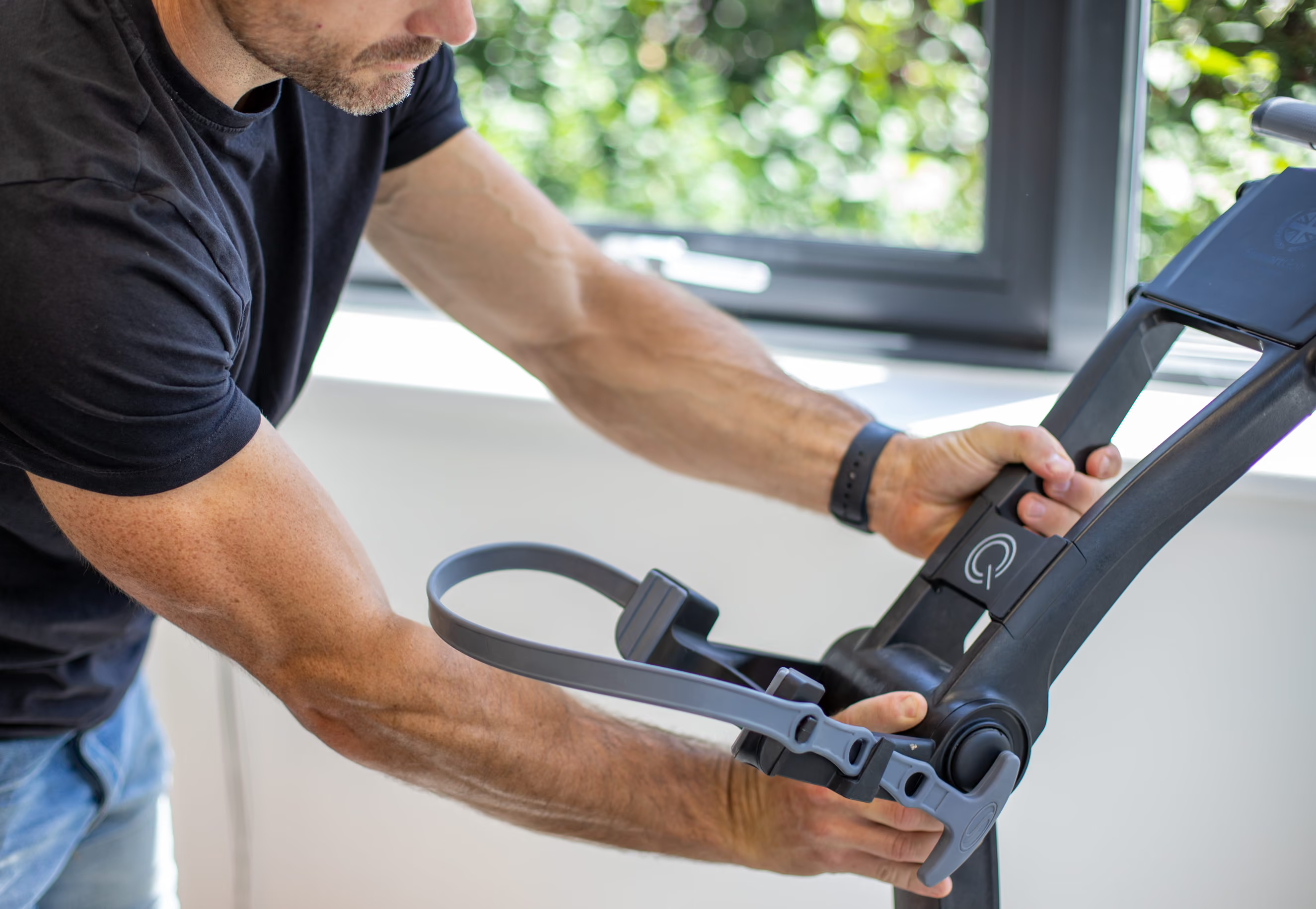
D2M's research is not always carried out by designers; depending on complexity we also work with dedicated design researchers. Where designers are involved directly, the advantage is speed of insight. Rather than building a formal structure to position the research and lay out the findings, a designer can apply critical observation and contextual methods in the moment and be far more efficient at understanding what the product's functions should be and what the user needs. A well-documented package from a dedicated design researcher is perfectly workable, and a designer reading it will understand the process, but when a designer conducts the research directly, their perspective on the project is amplified.
The research services
Contextual research and ethnography. Ethnography is a scientific discipline; contextual research draws on it, but what matters in product development is the contextual observation of users rather than the broader academic practice.
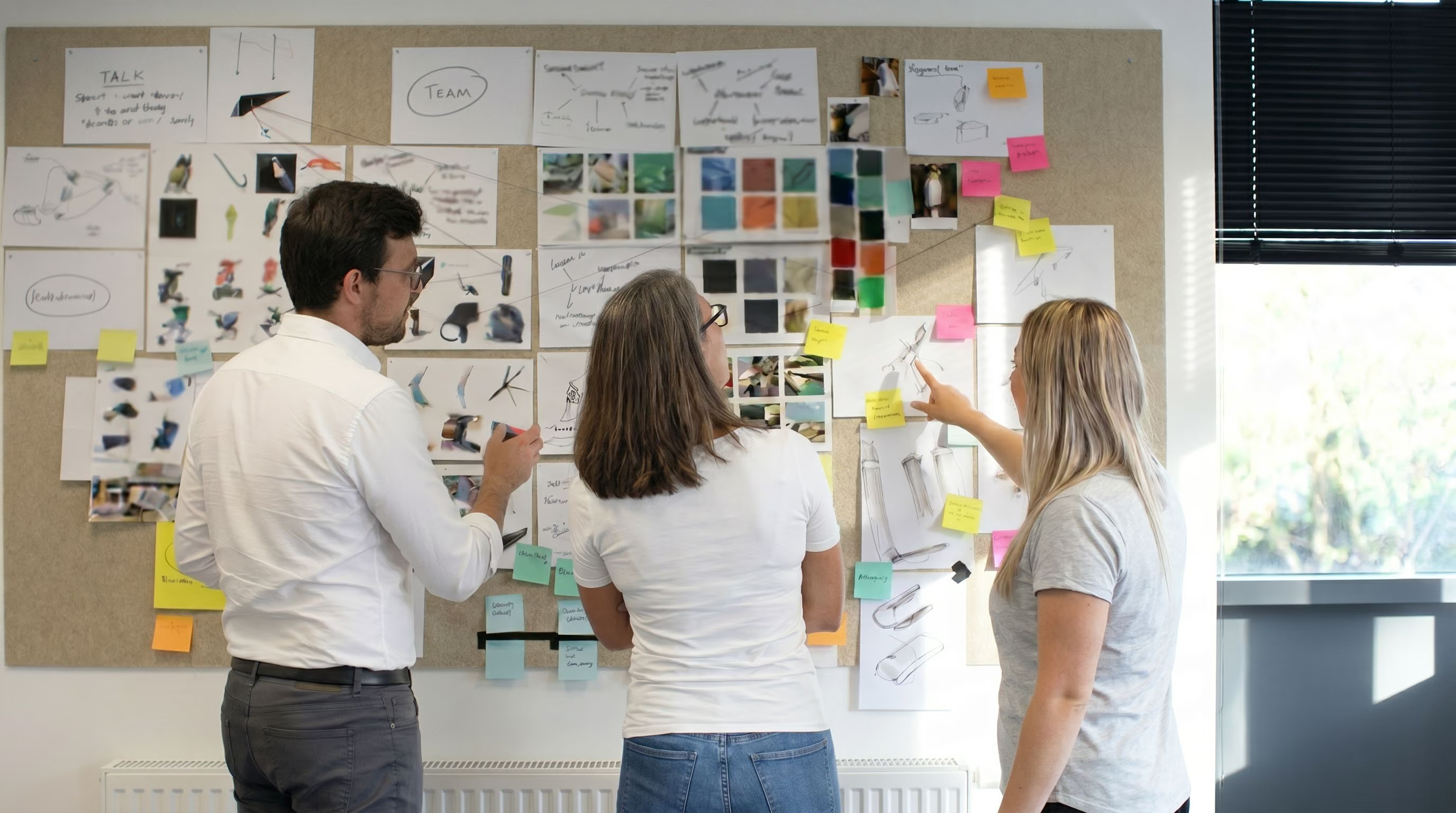
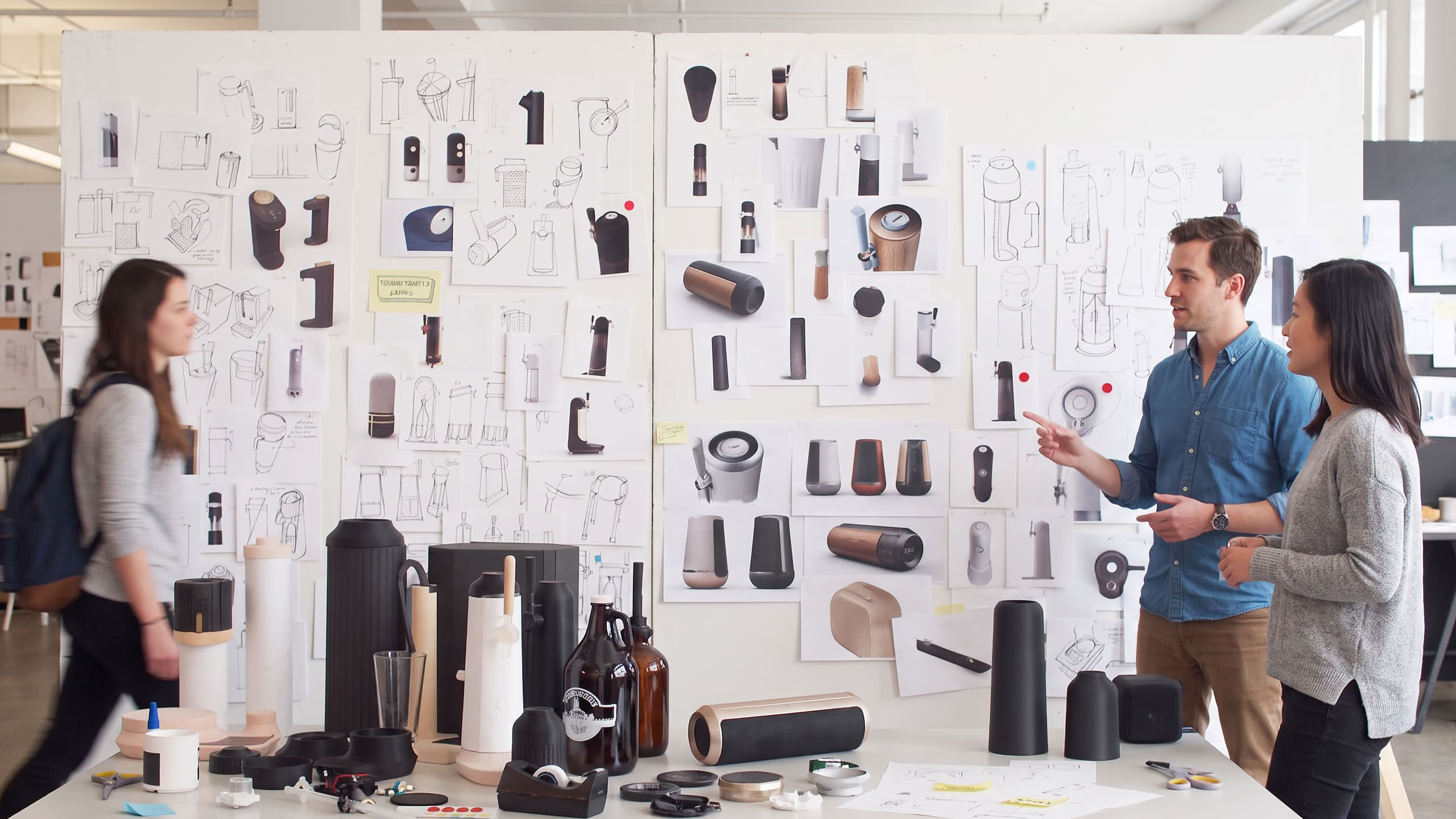
Innovation workshops. A session, usually with two senior designers alongside the client, that tackles a subject or an idea and explores it in the room. Concepts get drawn, artefacts get shown, and the designers explore emerging technologies, new materials and new techniques to develop the product and identify the opportunities available. It is an innovation development process, not a presentation.
Focus groups. Small groups of carefully selected users, run by designers rather than market researchers, to understand the problem space and, later, to test and compare concept directions. Because they are run by designers, the questions and the interpretation stay tied to design, ergonomics and manufacturing reality. We cover them fully in our guide to focus groups.
Bespoke surveys. Generally used to assess or eliminate an idea, and most often to refine or eliminate features by understanding what matters most to the user. They have to be crafted carefully: broad or generalised surveys waste time and return the wrong information. A good survey is asked of the right user groups, in the right context.
The biggest mistake
Assuming your customer thinks exactly as you do. It is a basic human instinct, people assume others are like them, and avoiding it requires genuinely understanding how your product might be used by others and how your idea will be perceived. It is a high-level empathy requirement, and it is difficult precisely because it runs against instinct. This is why we hold to a simple principle: design for the customer, not for yourself. It is easy to design to your own opinions, but the better route is to learn your market and their needs and use that as the north star, then to work out which features customers are actually drawn to and which are simply adding cost. Over-designing leads to a high price and more features than you can communicate. One of our largest clients was notably disciplined about this, running extensive focus groups and refusing to add cost unless customers wanted the feature and would pay for it. It was a lesson in keeping the customer at the heart of every decision.
Other mistakes matter too. Shaping data toward a desired outcome, ignoring competitive analysis and overlooking feedback can all end a project, overlooking crucial feedback especially. One more is worth naming, particularly for start-ups: under pressure on budget, they often look only at quantitative data and ignore the qualitative, which causes dramatic pushbacks later in the cycle and can end the project entirely.
Delivering unwelcome findings
We are frank in this situation. It is better to know than to make a bigger mistake, and better to pivot than to lose more. Up to that point the loss is not significant; it is simply another way of finding out that this is not the right route, which means the right route is somewhere else. We inform the client as soon as we spot it, without delay. Research findings sometimes redirect a project entirely rather than stopping it: a concept that does not work in its first intended market can prove valuable in another, which is one reason early research pays for itself. Our guide to when to conduct market analysis covers an example of exactly this kind of pivot.
What research costs, and what it removes
Research should account for around ten to fifteen percent of the overall product development budget. It removes a great deal of risk, because it strengthens the foundation and the reasoning behind the idea and gives the design team strong patterns to develop concepts against. It also projects forward, indicating what the product could become and how it might develop in future. Research does not only validate an idea; it strengthens and improves it.
When budget is tight, this is a difficult judgement, but our position is that quick, practical contextual research should not be cut. How much you can lighten it depends on how strong the idea already is: a strong idea allows a reduced research stage, but conducting research before concept development remains important, because it is what gives the project a strong foundation.
How reliable are the findings
You are rarely surprised. Where research is done properly and thoroughly, the result after manufacture matches expectations closely. Volatile or changing market conditions can delay or amplify results, but in most cases research produces predictions that hold up at around eighty to eighty-five percent.
The one thing that matters most
Validate and test the idea through a practical lens. Understand and explore the idea quickly, widen that perspective to gather more data around it, then validate it by finding the right user and the right context where your product genuinely solves the problem or fills the need. That is the most important part of research.
Related guides: Market Research for Product Development · Market Research Techniques · Focus Groups · Idea Validation · Designing a Product: A Step by Step Guide
FAQ
What is the difference between design research and market research? Design research is qualitative and user-facing: understanding the user, the context and the need, mostly through observation and contextual work, to guide what the product should be. Market research is commercial: market size, demand, competitors, pricing and positioning. They sit alongside each other and are covered in separate guides.
When should design research happen? Mostly at the start, before the concepts, where it generates the foundational insights. It then continues in smaller batches through concept development, prototyping and CAD, refining the design as it goes.
How much research is enough? Enough to observe a clear pattern. When insights from a suitably diverse group of users point dominantly in the same direction, you have a reliable result, typically somewhere around twenty to fifty people depending on complexity.
Which research method is most useful? Observation tends to give the deepest insight, because what people say is not always what they do. Surveys are valuable later for testing specific features. The right method depends on what you are trying to learn.