Turning an idea into a manufactured product is a journey rather than a single leap, and the projects that run over budget are almost always the ones that skipped a step early on. This guide walks through the whole path in order: validating the idea, turning it into a manufacturable design, preparing the documents and protection you need before you approach a factory, and moving through sampling and quality control into full production. Each step has a more detailed guide beneath it, and this article is the map that connects them.
Bringing a new product to life takes more than a good idea. It takes a clear path from concept, through design and prototyping, to a product that a factory can make reliably and at a price the market will pay. Most of the cost and delay that surprises people on the way to production traces back to a step taken out of order, or skipped altogether, earlier in that path.
This guide sets out the manufacturing journey step by step, from the first reality check on the idea to scaling a product once it sells. It is written as an overview, with each stage linking to a more detailed guide, so you can see the whole route before going deep on any one part of it.
Start by validating the idea
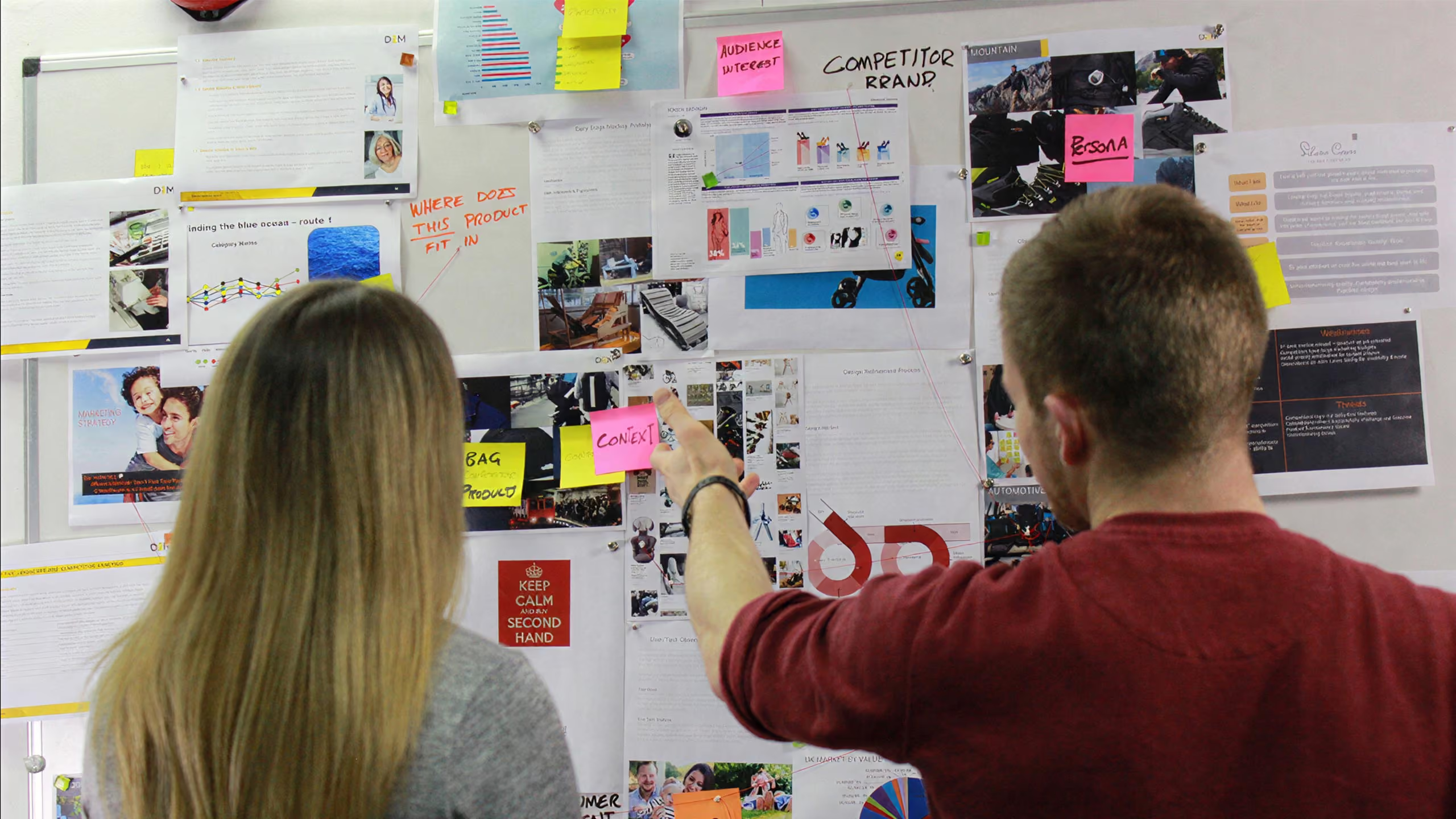
Before any design or manufacturing work begins, the first step is to validate the idea, because market validation is the reality check that protects everything spent after it. It answers the questions that decide whether a product has a place at all. Is there genuine demand? Will customers pay for it? Can it be made at a cost those customers will accept? Without that check, you risk investing time and money into a product the market was never going to want.
Validation is not a single yes or no. It is an iterative process that either confirms a product's fit or tells you to adjust course while adjusting is still cheap, and it lays the foundation the rest of the project is built on. We cover it in full in our guides to idea validation and commercial viability assessment.
Turn the idea into a manufacturable design
Once the idea holds up, it has to become a design that can actually be made. This is where an idea becomes a product, and it runs through several stages.
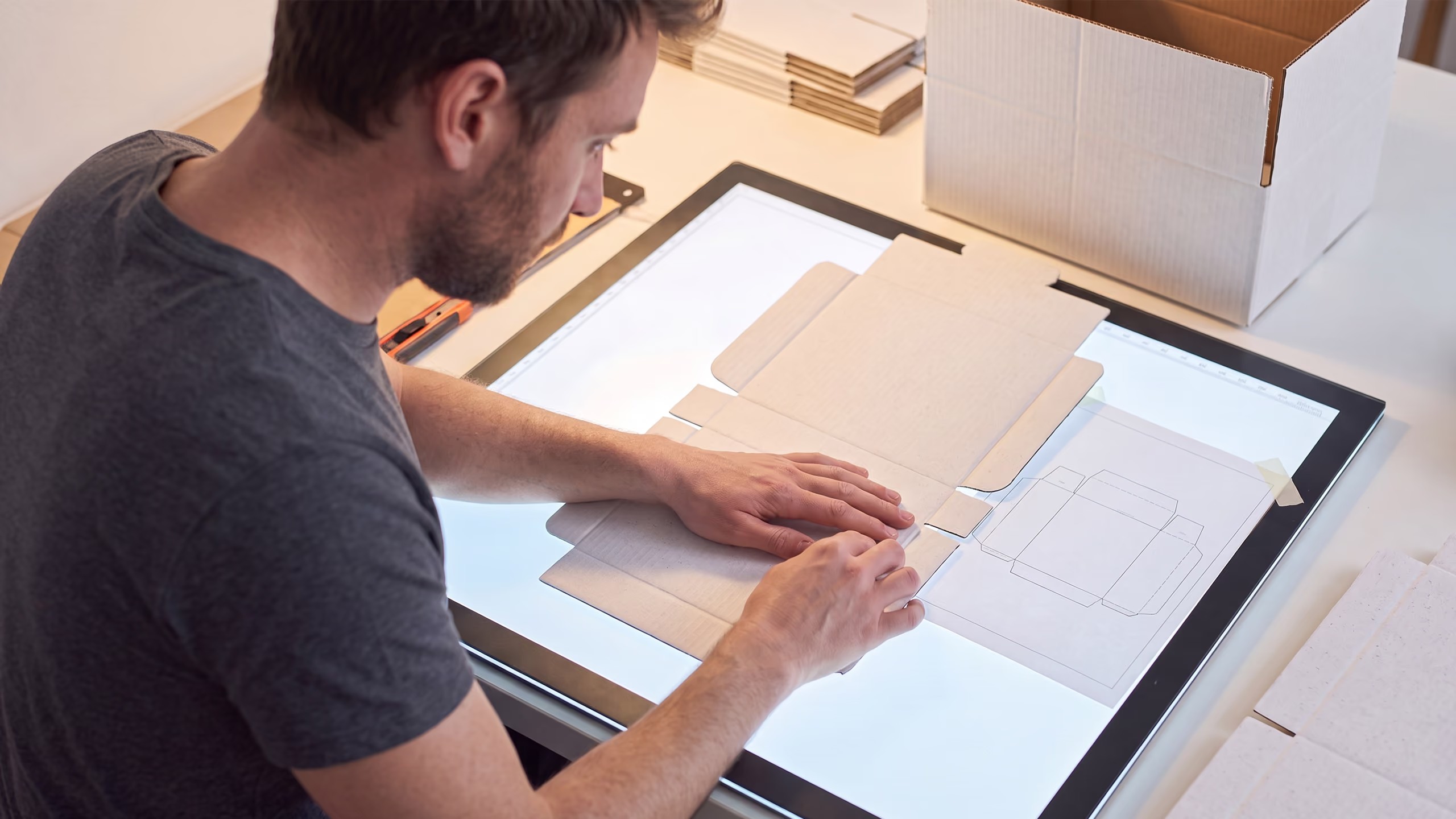
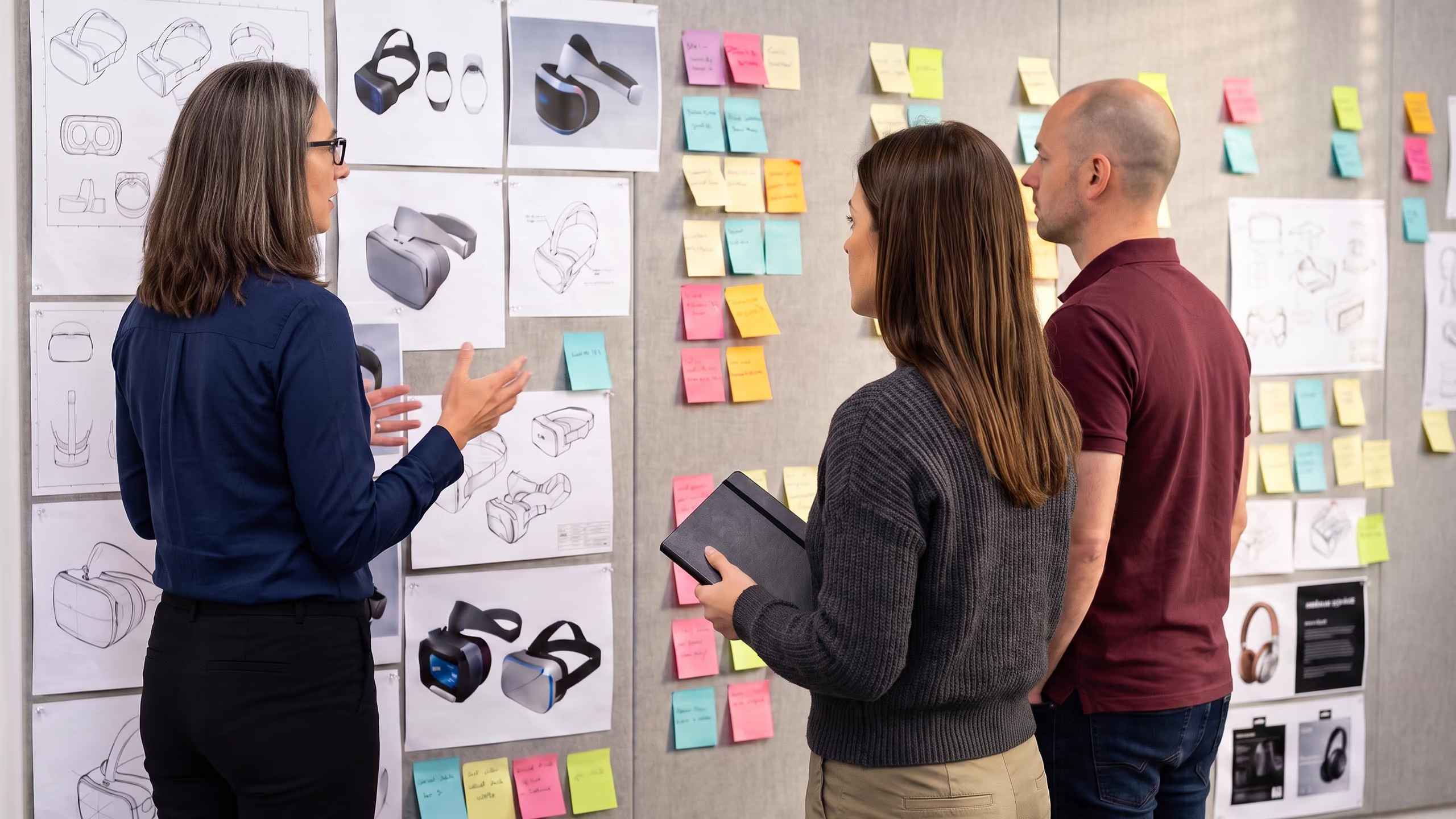
Conceptual design translates the idea into a visual concept, mapping out the form, features and functionality. Prototyping then tests that concept in the real world, and it is one of the most important steps in the whole process, because it reveals what a screen cannot. Prototypes range from basic models that check form and fit through to high-fidelity versions that closely resemble the finished product. Detailed design and engineering follows, refining every dimension, material and technical specification so the product is not only appealing but practical to manufacture. Designing for manufacture at this stage, rather than treating it as an afterthought, is what avoids the expensive corrections that surface later on the factory floor. Our guide to prototype development covers the testing side of this stage in detail.
Prepare to manufacture
A resolved design still needs the right groundwork before it goes anywhere near a factory. Two things matter most here.
The first is the manufacturing specification, the document written for the factory so it can quote accurately and plan how to build your product. It is what turns a vague quotation exercise into an accurate one, and our guide to the manufacturing specification covers what it contains and when to produce it. The second is protection. If your design carries intellectual property worth protecting, the application should be filed, or at least submitted, before you share anything, and an NDA should be signed with everyone including the factory. You own the tooling you pay for, regardless of where it physically sits, though in practice the factory houses and maintains it while manufacturing on your behalf.
Finding and vetting the right factory is a significant step in its own right, and rather than repeat it here we cover it fully in How to Find the Right Manufacturer.
Move into production
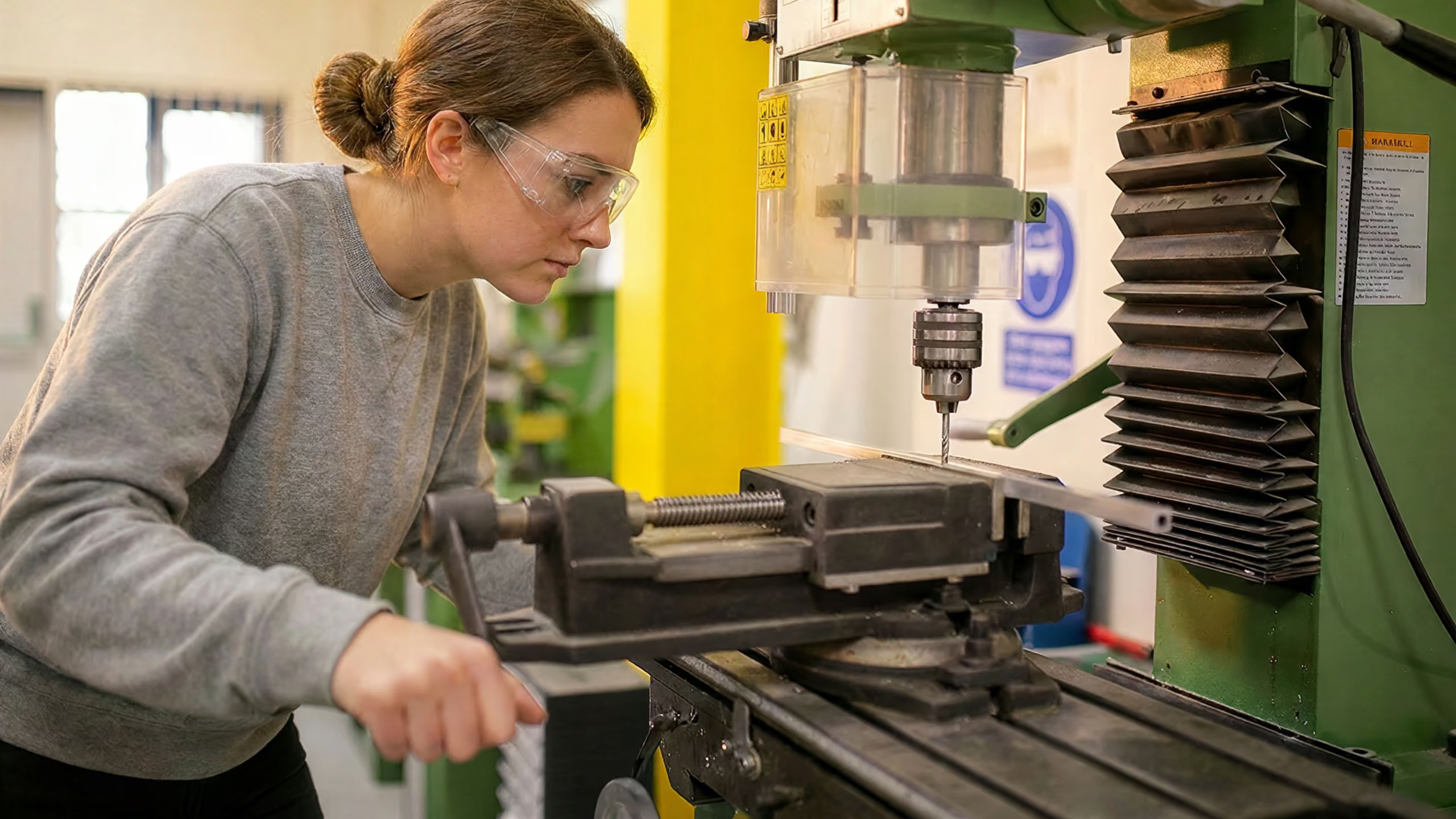
With a factory chosen, the product moves into sampling and production, and this is where quality control and certification move to the front of the process. They are not box-ticking exercises. Quality control protects the reputation of the product, and certification ensures it meets the legal and consumer expectations of the market it is entering. The factory produces initial samples against the specification, those samples are reviewed against the design intent, and corrections at this stage are normal rather than a sign something has gone wrong. Several rounds of sampling are common, and a budget that assumes a single perfect sample is a budget that will overrun.
A product that went the full journey
The value of taking these steps in order shows most clearly in a finished product. EquerryShine, an electric shoe polisher, came to us after its founders had worked with another design company that produced attractive images of the product but without any real consideration of how it would function. Faced with that gap, they approached us to make it work.
We took a pragmatic approach and built a quick proof-of-concept prototype first, to confirm the essentials, motor torque, power requirement and battery life, before committing to anything more expensive. Proving the technical side early, in our own workshop, meant the later stages could proceed with confidence: detailed 3D CAD, high-fidelity prototypes, and the material needed for a successful crowdfunding campaign. The product went on to launch on Amazon and was met with real enthusiasm. It is a clear example of the journey this guide describes, an idea validated, proven early, designed for manufacture, and carried through to a product on the market.
The mistakes that cost the most
Most manufacturing problems are not bad luck. They are the predictable result of shortcuts taken earlier. Skipping validation and discovering too late that the market was never there. Rushing the design so that problems surface at the factory instead of in the workshop, where they would have been cheap to fix. Sending a factory an underdeveloped brief and paying for samples that were never going to work. Underestimating quality control and certification until a compliance failure forces a redesign. Each of these is avoidable, and each is far cheaper to prevent at the right stage than to correct once tooling has been cut.
Scaling and long-term production
Reaching a first production run is not the finish line. As a product gains traction, production has to scale, which means planning long-term capacity with your manufacturer, negotiating better terms, ensuring material availability and expanding capability as demand grows. Managing timelines and scaling up are as critical to a product's success as the design that preceded them, and they depend on the same things that carried the earlier stages: clear communication, realistic planning and a manufacturing relationship built to adapt.
How D2M helps
We are a product design consultancy with fifteen years of experience, and over that time we have taken more than 1,600 projects from early idea through to manufacture. Because we consider manufacturing throughout every design decision rather than treating it as a final step, we help clients avoid the expensive mistakes and reduce the time it takes to reach market. Our senior designers lead each project personally, and our supplier relationships span a wide international network, so a product can move from prototype to production without the process fragmenting along the way. Clients returning to us for their next product, having been through the full journey once, is the outcome we are proudest of.
In short
Manufacturing a new product is a step-by-step journey, and the order matters. Validate the idea before you build it. Turn it into a design that can actually be made, and design for manufacture from the outset. Prepare the specification and protect your IP before you approach a factory. Then move through sampling, quality control and certification into production, and plan for scaling before you need it. Taken in order, the journey from idea to production is a process you can manage rather than a gamble you hope pays off.
Related guides: How to Find the Right Manufacturer · How to Get a Product Manufactured · Manufacturing Specification · Prototype Development · Idea Validation · Commercial Viability Assessment
Related case studies: EquerryShine