A lighting product forces decisions most categories can leave until later: what powers it, what certification it needs, and what the light itself actually needs to do, all before the design is properly underway. This guide covers what's different about developing one, from requirements through to the electronics side of prototyping, with a real D2M project as proof.
Most products can be designed first and have their constraints layered in as they're discovered. Lighting is more front-loaded than that, because the power source, the certification the product needs, and the quality of light itself all shape the design from the outset rather than getting resolved once the concept is settled.
Designing a lighting product
The requirements worth settling before any design work starts are specific to this category: whether the product runs on mains or battery, the environment it has to survive, the safety and certification standards that apply, the bulb type and how it gets replaced, and the light output itself, brightness and colour, alongside the usual budget and tooling constraints. Getting these agreed early avoids redesigning around a certification requirement discovered late.
Two things then shape how the light actually behaves. The first is lighting method, whether the light is aimed directly at a surface, split between direct and reflected light, or bounced off a ceiling or wall for a diffuse spread, and the right choice depends entirely on what the product is for rather than a default. The second is the quality of the light source itself, measured by how accurately it renders colour and how warm or cool it reads, alongside how efficient it is and how long it lasts. Control matters too: motion sensing, dimming, touch controls, app control and timers are all genuine design decisions with cost and complexity trade-offs, not an afterthought bolted on once the product works.
For the wider design process, our guide to designing a product covers the rest. The lighting-specific work is in the requirements and light-quality decisions above.
Prototyping a lighting product
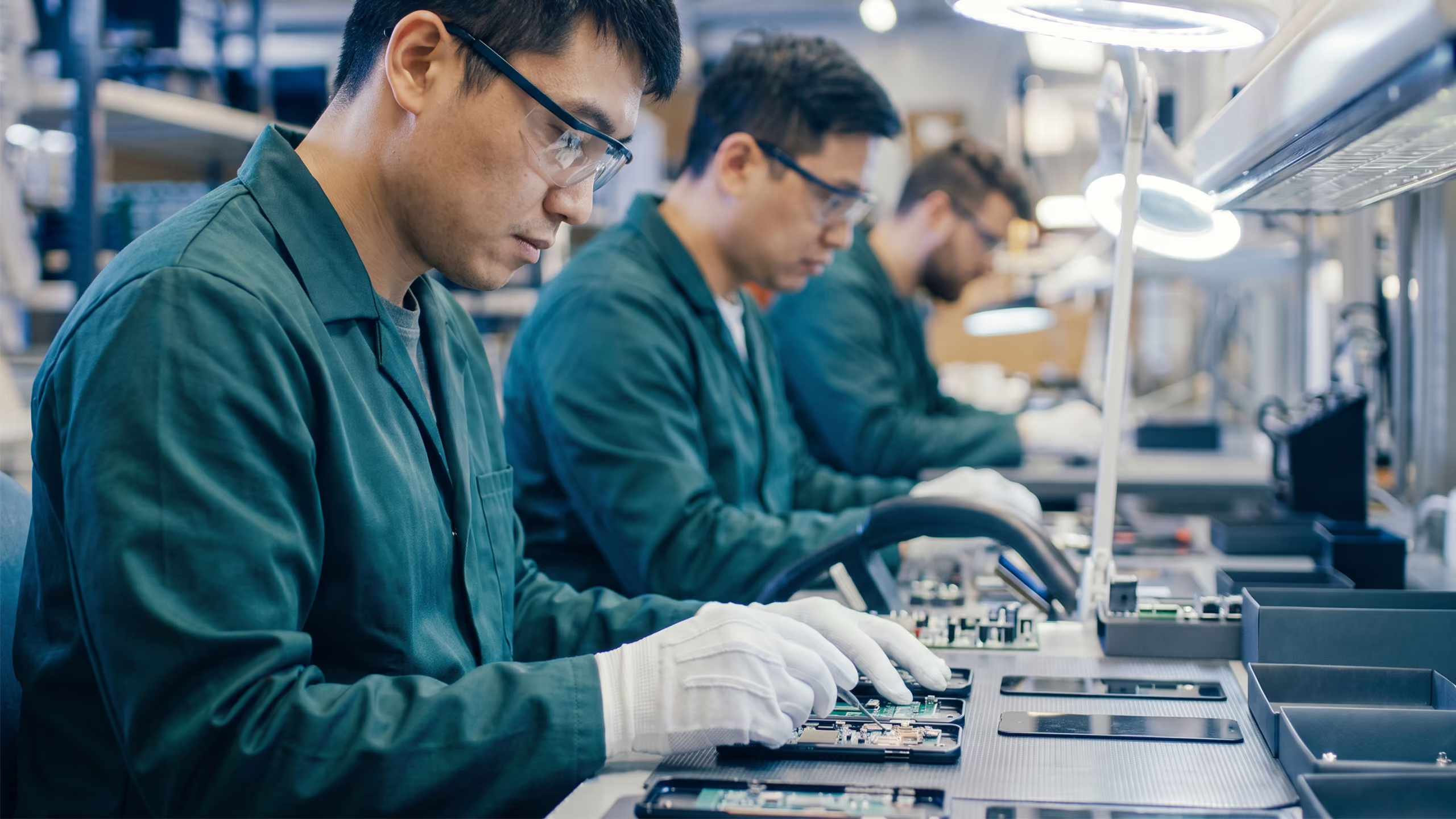
The general principles and fidelity levels are the same as for any product, our guide to prototype development covers what each stage is for. What's different for lighting is that electronics and casing largely run as separate tracks that come together rather than one continuous process. Most lighting products use LEDs, cheap, compact, energy-efficient and safe, and the PCB behind them is doing real work beyond switching the light on: managing heat dissipation and providing the physical connections for transformers and batteries. That electronics side usually needs proving in its own right, light levels, colour and usability, before it's paired with a casing that's been resolved separately for shape, material and finish.
Manufacturing and selling a lighting product
Once the design and electronics are resolved, manufacturing and route to market follow the same considerations as any product. Our guides to manufacturing a new product and step-by-step product commercialisation cover that ground in full, certification is worth carrying through from the design stage rather than treating as a separate gate at the end.
A real example: Core Lighting TablePoint
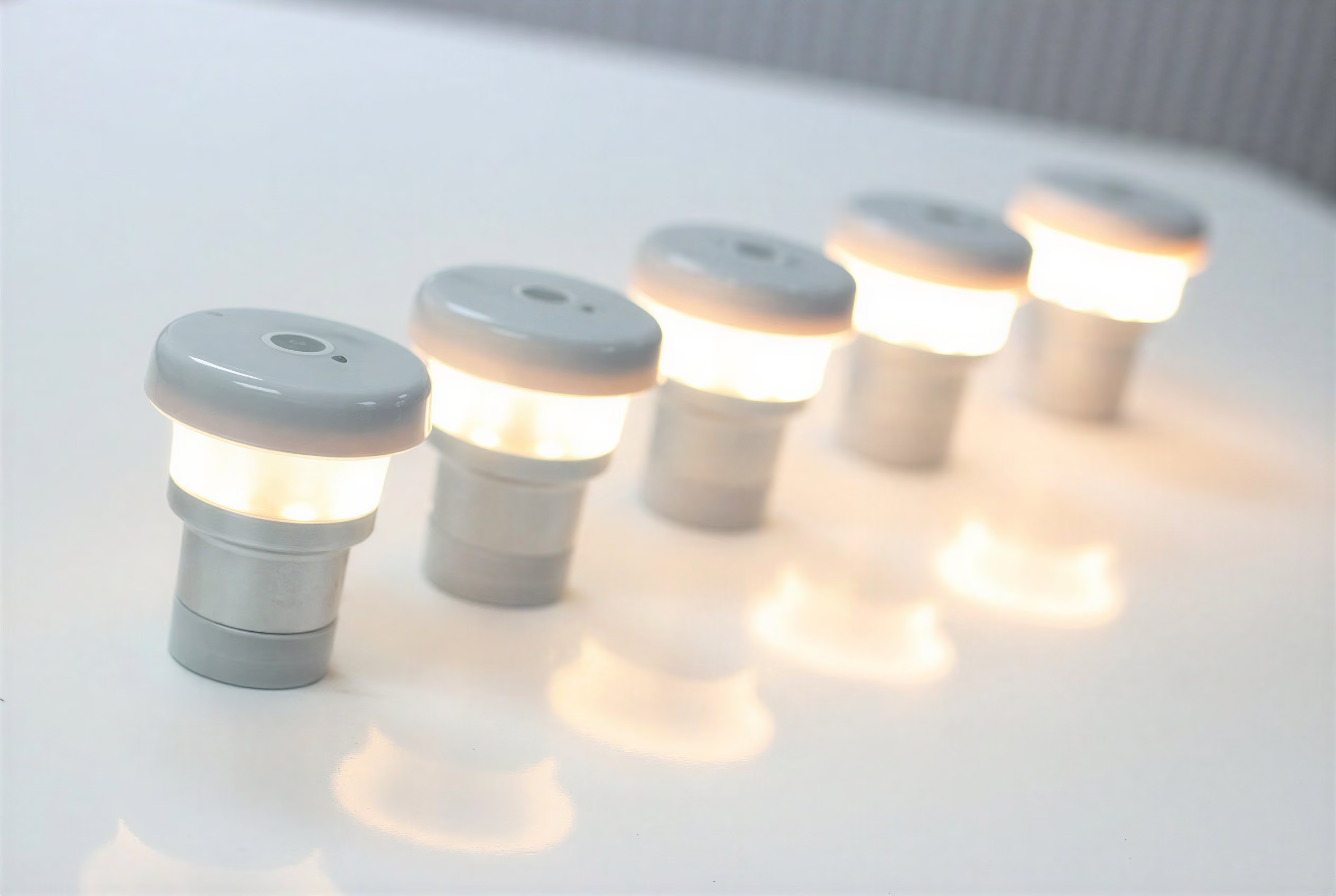
Core Lighting came to D2M with a clear brief: a battery-powered wireless light that could genuinely replace a wired bulb for event and venue use. The result, the TablePoint, needed to fit standard lamp fittings or attach magnetically to steel surfaces, a mechanism developed to patent standard, and the priorities throughout were functionality, cost-effectiveness and a form that suited hospitality environments.
The TablePoint is now part of Core Lighting's permanent range and has been adopted across venues throughout Europe, including use at a royal palace, a reminder that getting the electronics and the mechanism right is what earns a lighting product a place in demanding, real-world settings.
Getting the electronics and the finish to agree
Lighting products succeed or fail on two things running in parallel and actually meeting in the middle: electronics that genuinely work, and a casing and finish that suit where the product will live. We work with clients on both sides of that at once, proving the light source and its control early, then resolving the material and form around it, so the two arrive at the same product rather than a compromise between them.