AI is a genuinely useful design tool, but it is not going to replace the human product designer. The work that decides whether a product succeeds, empathy for the user, original problem-solving, patentable ideas and sound judgement, remains human. AI's real value is as a collaborator that speeds up the routine parts and frees designers for the parts that matter. This guide sets out why, with real examples of where AI falls short and where the human designer is decisive.
Whether AI can replace human creativity in product design is a question worth taking seriously, not least because founders increasingly ask whether they still need a design team at all, or whether a few AI tools will do. The honest answer, from working with these tools daily, is that AI changes how designers work but does not replace them. It is a powerful ally for parts of the process, and no substitute for the judgement at its core.
What AI is good at, and where it stops
AI has real strengths, and in some tasks it outpaces a human. Given a clear, fixed set of criteria, it can generate solutions faster and more cheaply than a designer. That is genuinely useful.
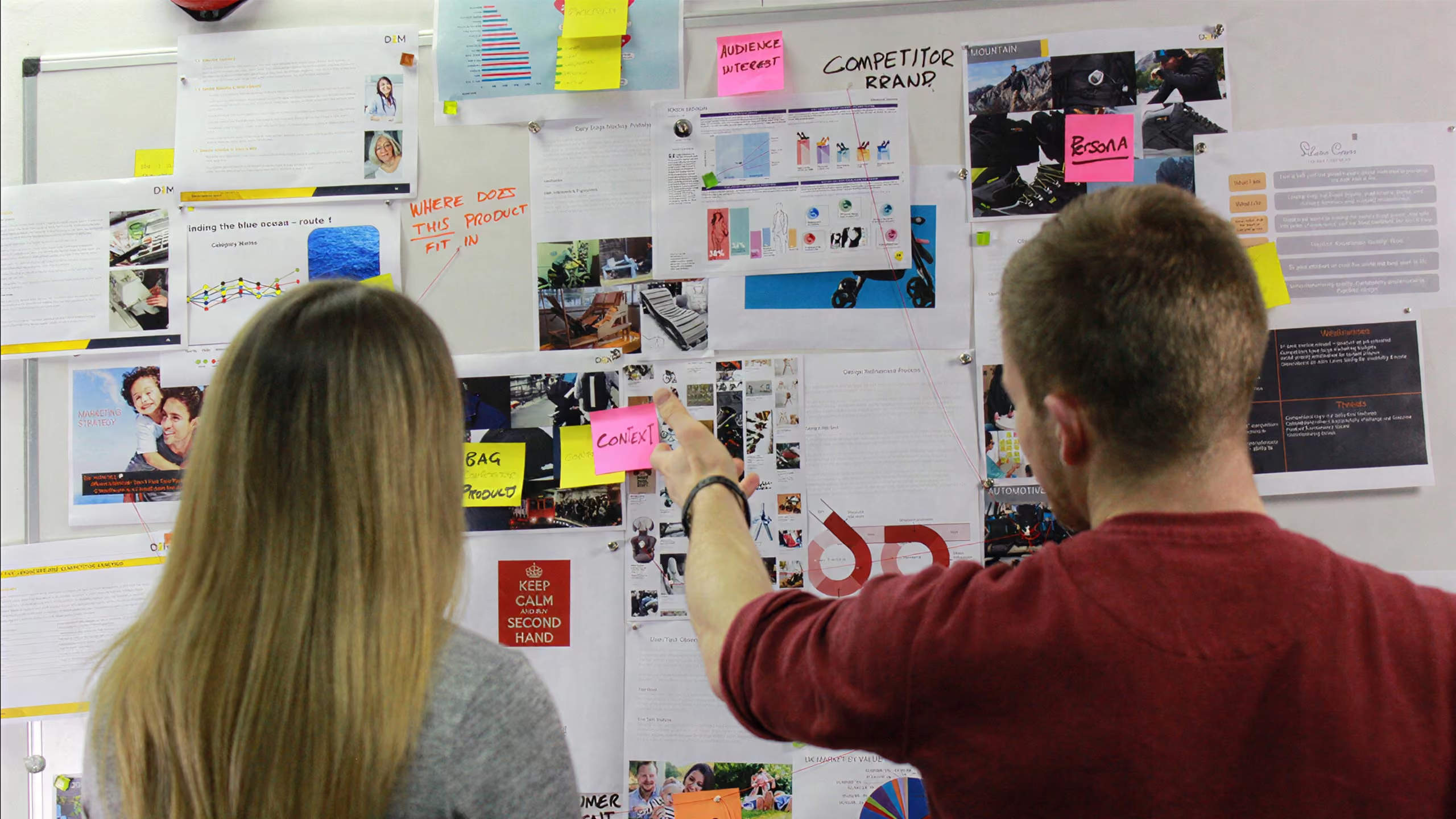
The limitation is in that word "fixed". AI depends on specific, defined criteria, and product design rarely offers them. A brief evolves: the team discovers new methods or necessary features partway through, requirements shift as understanding deepens, and the whole thing is shaped by empathy for the end user. Creating and evolving a brief like that, reading what the user actually needs rather than what was first written down, is human work.
The parts of design that stay human
Five things sit beyond what AI can currently do, and they happen to be the things that make a product succeed.
Empathy and perception. Product design is not only about function; it is about connecting with the user emotionally. Designers read consumer behaviour both rationally and emotionally, and shape how a person feels about a product and its brand. AI cannot perceive or empathise in that way.
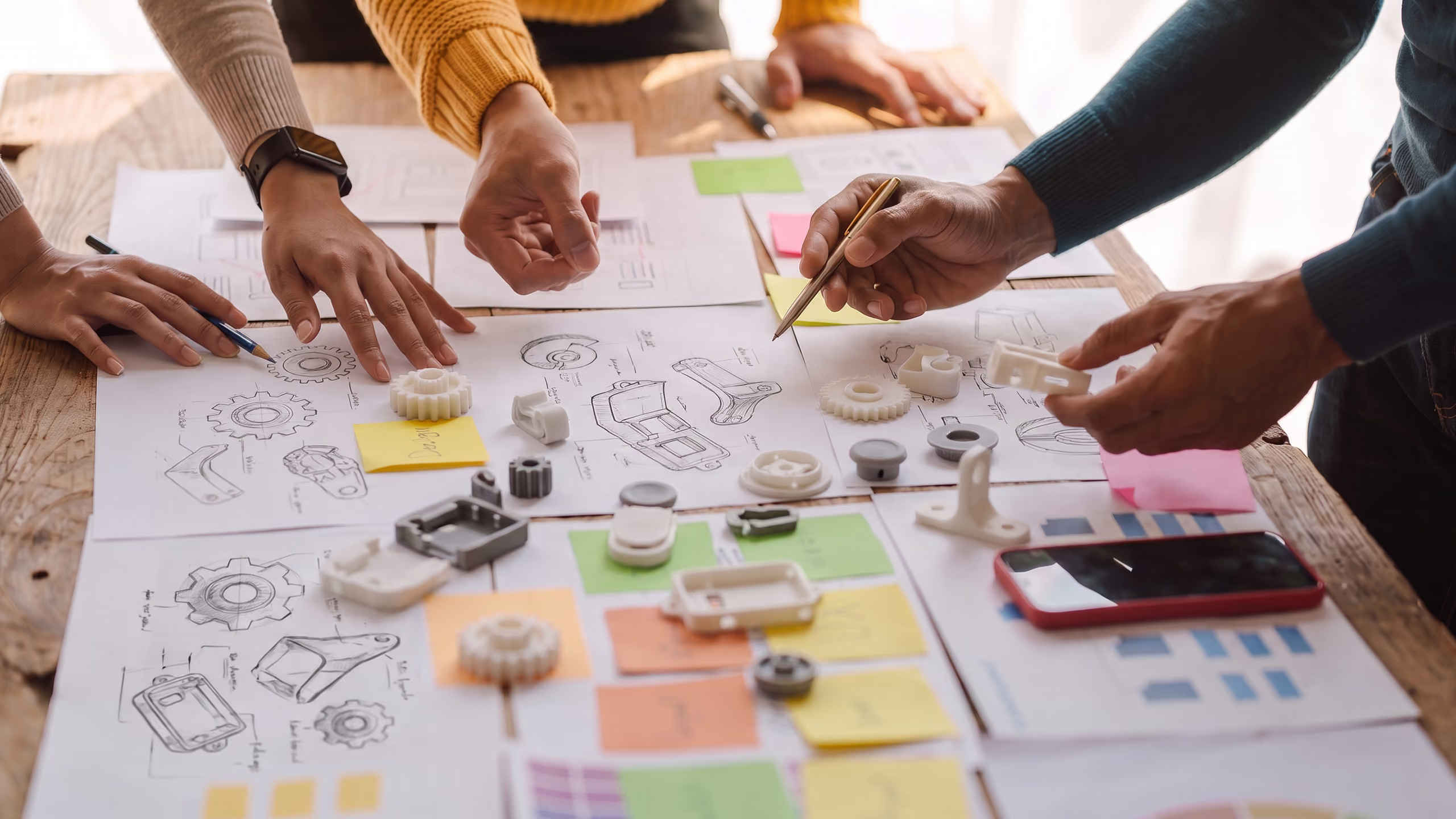
Original, patentable solutions. AI does not naturally arrive at genuinely novel solutions or create new, patentable subject matter, and that matters commercially: a patentable innovation is what protects a product from being copied the moment it reaches the market.
Adaptability. Human designers absorb new information, changing requirements and feedback, and adjust quickly. That flexibility drives the iterative refinement that improves a product in ways a predefined algorithm would not anticipate.
Ethical judgement. Designers weigh the implications of their decisions, privacy, security, social impact, and balance what is technically possible against what is responsible. AI has no moral judgement of its own.
Collaboration. Design happens in interdisciplinary teams, negotiating, persuading and integrating different perspectives into one coherent product vision. That is human territory.
Two examples: AI against a human designer
The gap shows most clearly in real projects.
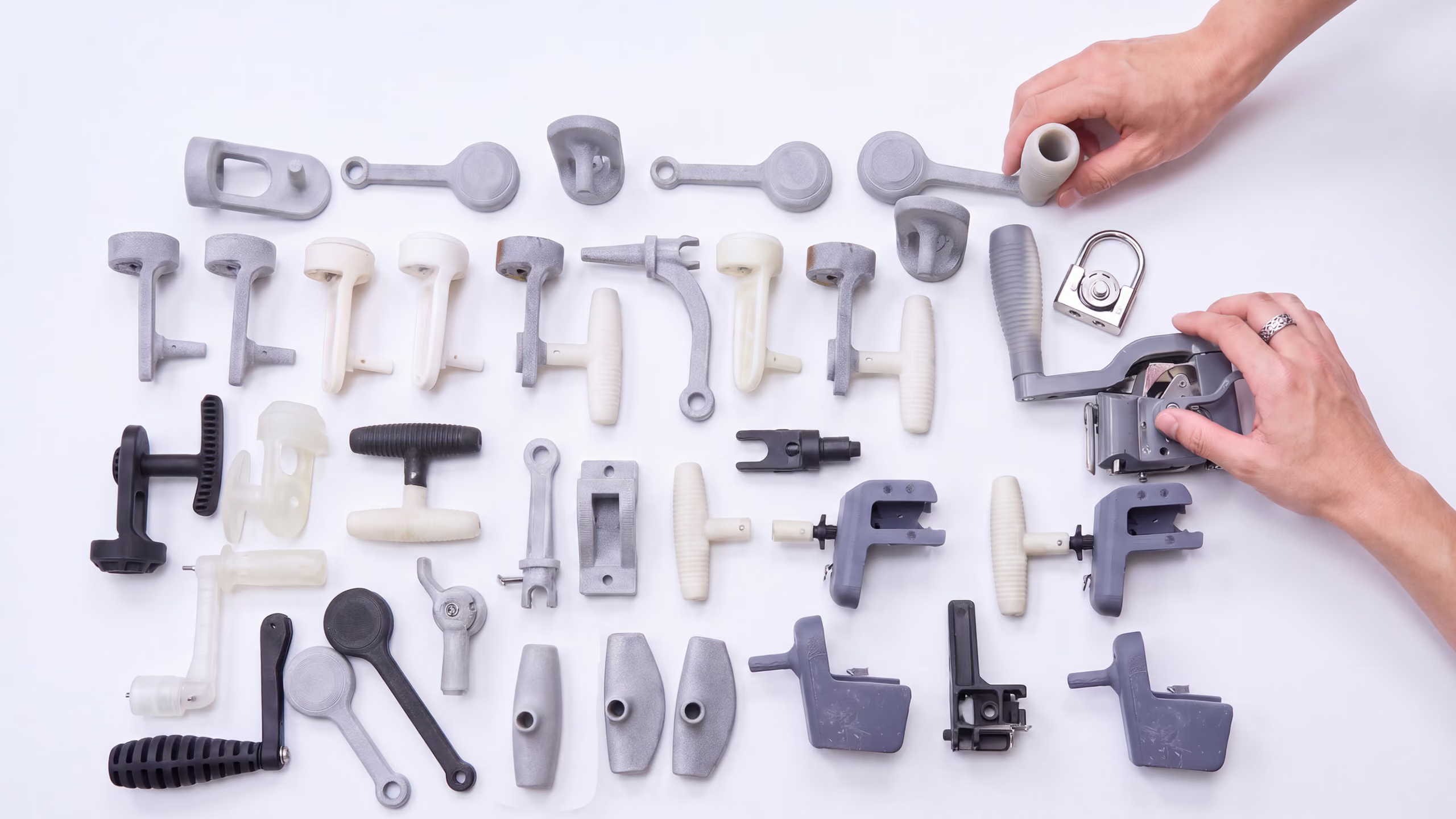
A strap-tightening system for a harness. Asked to design this, AI produced visually appealing concepts that did not actually work, form without function. The human team started from the functional requirement and the user's experience, and arrived at a solution effective and novel enough to secure a patent: a system that tightened all four harness straps at once. That grasp of practical need and user interaction is exactly what the AI output lacked.
A rucksack for home economics. Here too AI stayed at the surface, decorating the exterior with pictures of food rather than addressing what the bag needed to do. It had no insight into what compartments were required or what students actually carry. The human team delivered a genuinely functional product designed around the real task of carrying and organising food for class.
Both show the current reality: AI can generate striking concepts, but understanding and executing the practical, user-centred substance of a product is where the human designer is decisive.
AI as an ally, not a replacement
None of this means ignoring AI, quite the opposite. Used well, it is transformative for parts of the workflow.
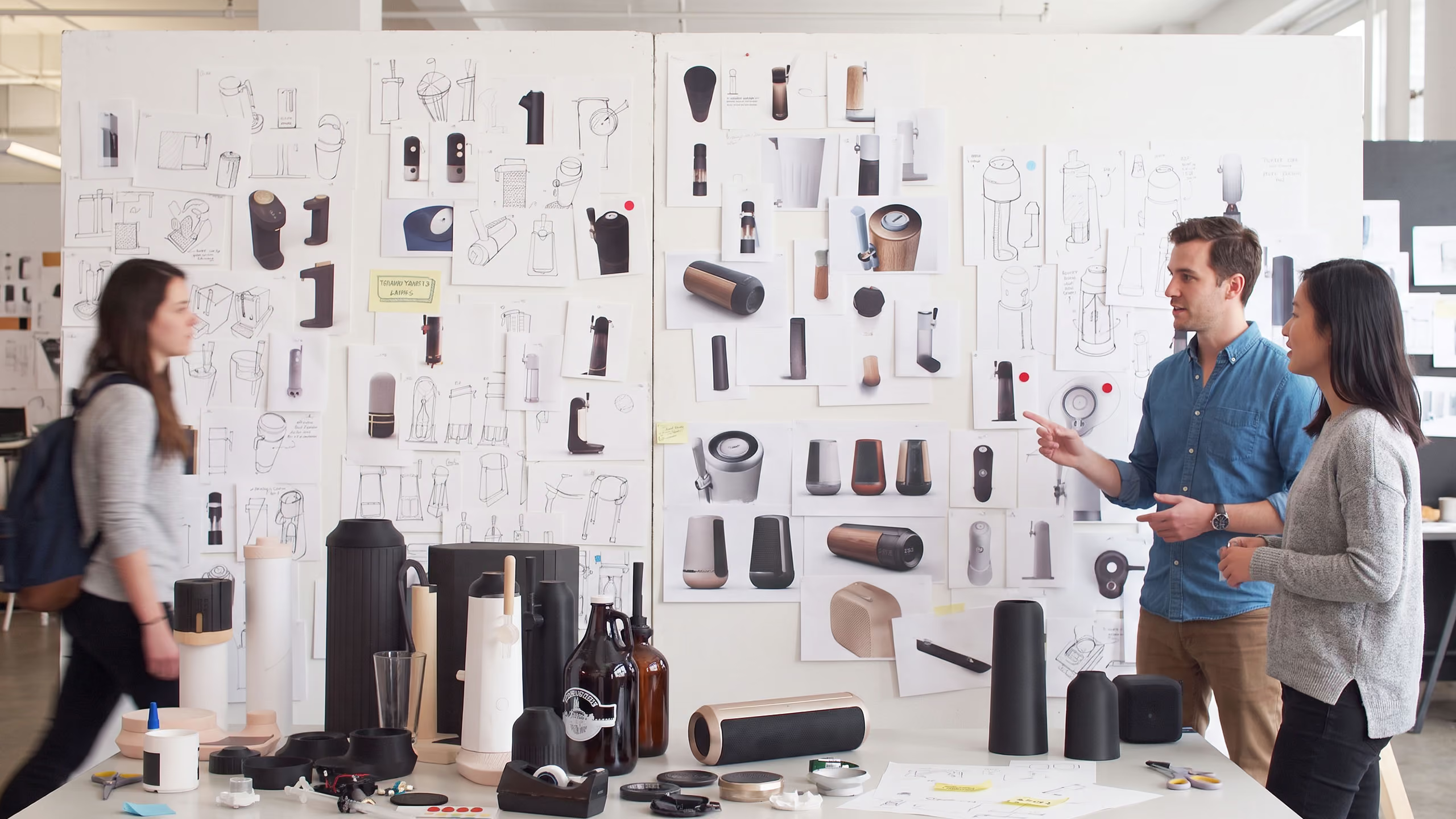
Its ability to process large amounts of data quickly and spot patterns is valuable early on: it can rapidly survey market trends, consumer preferences and design possibilities, giving designers a rich, data-driven starting point. It speeds up geometry optimisation, rendering (including in-context visuals) and moodboard creation, taking on repetitive, time-consuming tasks so designers can concentrate on emotional resonance, user experience and genuine innovation.
It is also a strong tool for rapid iteration: generating many variations quickly so a designer can explore a broader range of options and, with human feedback, refine towards a more considered, user-centred result. Looking further ahead, pairing AI with market-research tools, generating concepts and testing them through virtual feedback, points to faster, more responsive design cycles. That integration is early, and evolving, but the direction is clear.
The essence of the discipline, understanding human needs, desires and emotions, stays human. Combining that with AI's computational power is what points to better, more user-centred products: the machine handling speed and volume, the designer providing empathy, originality and judgement. For a closer look at where AI actually struggles in practice, see our piece on the real issue with using AI for product design.
In short
AI is a powerful addition to the design toolkit, not a replacement for the designer. It is fast and capable with fixed criteria and routine tasks, but product design turns on empathy, original and patentable problem-solving, adaptability, ethical judgement and collaboration, all of which remain human. The future is the two working together: AI expanding what designers can do, and designers providing the creativity and judgement that decide whether a product actually succeeds.
Related guides: The Real Issue With Using AI for Product Design · Product Design Process · How to Patent an Idea
FAQ
Can AI replace human product designers? No. AI is strong at data analysis, rendering and generating initial generic concepts, but it cannot bring empathy, original problem-solving or deep creative judgement. It complements designers rather than replacing them.
What are AI's limitations in product design? It cannot show empathy, read subtle human needs, or reliably originate novel, patentable solutions. It depends on fixed criteria and cannot evolve a brief organically the way a designer does.
How can AI enhance the design process? By handling repetitive, time-consuming tasks, data analysis, rendering, early styling, rapid iteration, freeing designers to focus on the creative and complex work.
Will the need for human designers fall as AI advances? The need is expected to hold; the role is what evolves. Designers who use AI to augment their creativity and analysis will have the advantage, but the human essence of design remains.