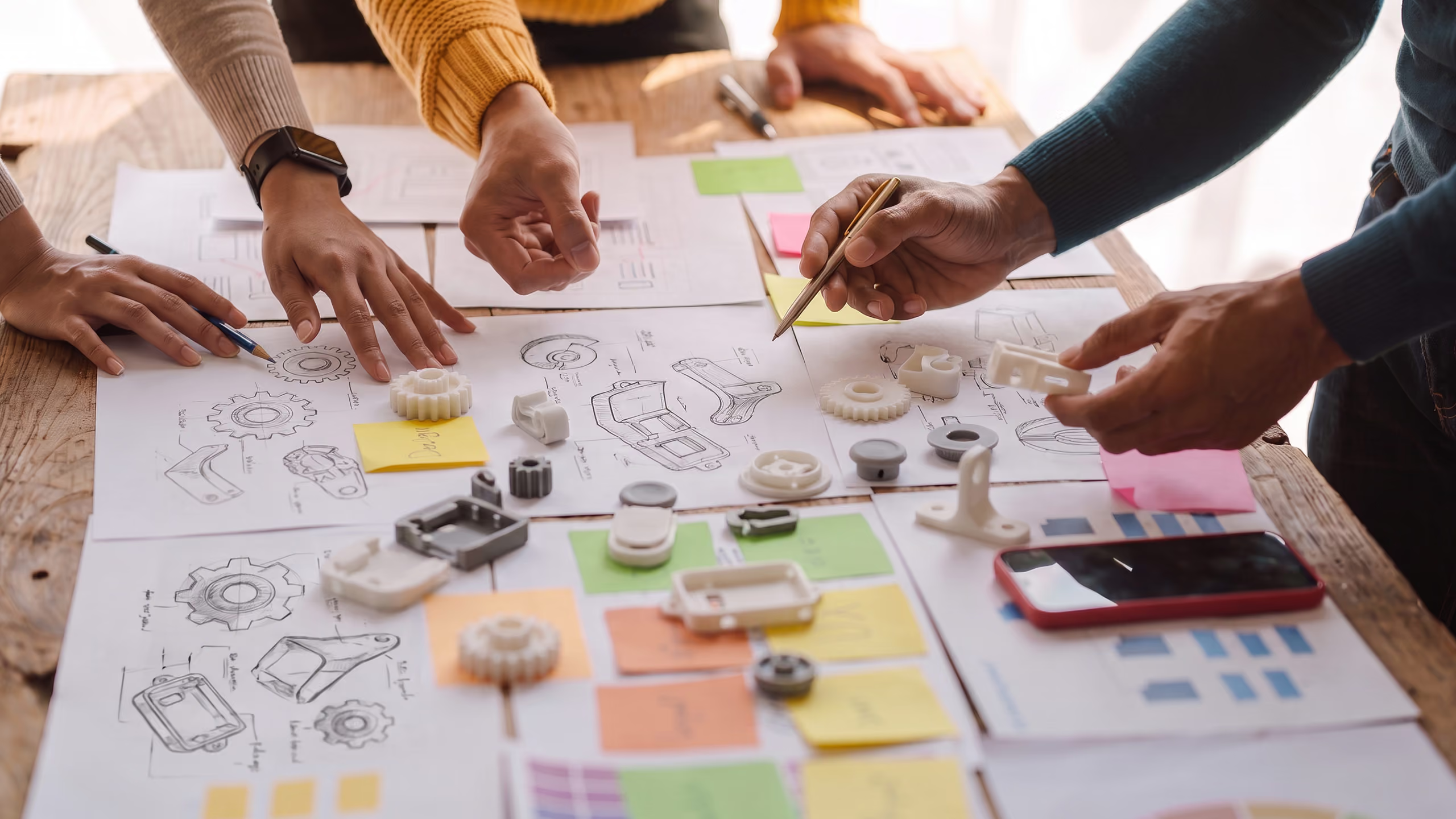
Value engineering is the disciplined way to bring down what a product costs to make without compromising what it does or how it feels to use. It works by analysing a product's functions and targeting the cost centres that do not earn their place, through material choice, simpler design, and processes better suited to the product. The difference between value engineering and simply cutting cost is method: one preserves the product's value while lowering its cost, the other erodes it. This guide covers how it works, where the savings come from, and how it is done in practice.
Most products can be made for less than their first design suggests. The question is whether the cost comes out of the price or out of the product. Value engineering is the discipline that takes it out of the price: reducing what a product costs to manufacture while protecting the functions that make it worth buying. It is one of the most effective levers available to a product business, because it works on the cost at the stage where cost is actually set, the design.
This guide sits beneath our overview of manufacturing cost considerations, which covers what drives cost in the first place. Here the focus is narrower: how to bring that cost down without cutting corners.
What value engineering is?
Value engineering is a systematic way of improving the value of a product, where value is the relationship between what a product does and what it costs. You improve that relationship either by raising function or lowering cost, and value engineering concentrates on the second without sacrificing the first.
The important word is systematic. It is not a round of cost-cutting where features are stripped until the price looks acceptable. It is a structured analysis of a product's functions, component by component, to find where cost is going in and whether each part of that cost is earning its place. A feature that adds real value for the user stays. A cost that exists only because of how the product happened to be designed is a candidate for removal. The essential functions are preserved throughout; that is the line that separates value engineering from cheapening a product.
It is worth distinguishing value engineering from value analysis, as the terms are often used interchangeably. Value analysis looks at an existing product to find savings after the fact. Value engineering applies the same thinking earlier, during design and development, where the freedom to change things is greatest and the cost of changing them is lowest. The earlier it happens, the more it delivers.
Where the cost comes out?
In practice, most of the saving comes from a few places, and a good value-engineering exercise works through each of them against the bill of materials and the cost sheet, so effort is aimed at the parts of the product that actually drive the cost rather than spread evenly across all of it.
Material choice is often the first lever. Substituting a material for one that performs as well but costs less, or that removes a processing step, can take significant cost out without any visible change to the product. Occasionally the better material also looks or feels more premium, which improves the product while lowering its cost.
Design simplification is usually the largest. Reducing the number of parts cuts material cost and assembly time at once, and every part removed is also a part that cannot fail, cannot be sourced late, and cannot be assembled wrongly. Consolidating several components into one, designing parts that locate and fasten themselves, and removing fixings such as screws and glues all reduce cost and make the product easier to assemble, and easier to automate where labour is expensive.
Process and assembly come next. Choosing a production method suited to the product and the volume, and designing the product to suit how it will actually be made, avoids paying for complexity the process does not need. Sometimes an alternative process removes a costly step entirely, such as a specialist material or a secondary operation that a different approach makes unnecessary.
Packaging and logistics are easy to overlook and often significant. Designing a product to fold, nest or pack more compactly reduces packaging material, storage and shipping cost per unit, and those savings recur on every unit shipped.
Underneath all of these sits the discipline of returning to the bill of materials and asking, of each element, whether it earns its place. Stripping a product back to what users actually want and are willing to pay for, rather than trimming around the edges, is frequently where the real saving is found.
How it is done in practice?
A value-engineering exercise follows a clear sequence. It starts by defining the objective and the constraints, so everyone is clear on what must be protected and what is open to change. It analyses the product's functions to separate the essential from the incidental. It then generates alternatives, materials, designs, processes, and evaluates each on feasibility, cost saving, and effect on the product, before implementing the changes that hold up and confirming they work as intended.
The work is most effective when it is collaborative and when the factory is involved. Much of the real cost intelligence sits with the people who will actually make the product, and a designer working alongside a factory's engineers can target the cost centres precisely rather than guessing at them. This is particularly true when a product is being designed or reworked for manufacture closer to home, where higher labour and overhead costs mean the design has to do more of the work. Producing locally offers better responsiveness and more control over the supply chain, but it only becomes financially viable if the product is engineered to suit local processes: fewer parts, materials available in the local supply chain, tolerances matched to local machinery, and designs that lend themselves to automation and fast assembly. That kind of rework is not a standard design task; it needs a working knowledge of the relevant manufacturing processes and close communication with the chosen factory from the outset.
Two examples
On one project, a product with a patented feature came through development with a design that was too expensive to produce viably. Rather than compromise the feature, we worked closely with the factory's engineers over about two months, examining material selection, component count, alternative processes, assembly options, and fixtures and fittings, using the bill of materials and cost sheet to target the largest cost centres. The revised price came down far enough to make the product commercially viable. A change in manufacturing location contributed, but it was the design detail that made the difference.
On another, a vehicle-accessories company had a product that sold well but was costly to make at scale. A new folding-frame design cut packaging material by around forty per cent, which reduced packaging, storage and shipping cost together. An alternative production method removed the need for an expensive specialist tape and simplified assembly. A different material both performed better and removed a secondary process, taking out more cost again. Alongside the savings, we helped the business develop a premium version that cost slightly more to make but carried a materially higher perceived value and margin, a reminder that value engineering is about the relationship between cost and value, not cost alone.
How D2M can help?
Because the decisions that set a product's cost are largely design decisions, the point of greatest influence is early, while the product is still taking shape, and that is where we apply value engineering. We work through a product's functions and its bill of materials to find where cost is going in and whether it is earning its place, then reduce it through material choice, design simplification and processes suited to the product and its volume. Where it helps, we do this alongside the factory's engineers, so the changes are grounded in how the product will actually be made. Reducing cost without cutting corners is one of the most valuable things a design partner brings to a project, and it is often the difference between a product that can reach its market at a viable price and one that cannot.
In short
Value engineering reduces what a product costs to make while protecting what makes it worth buying. It works by analysing a product's functions and targeting the cost that does not earn its place, through material choice, simpler design, better-suited processes and smarter packaging, worked against the bill of materials rather than applied evenly. Done early, and ideally alongside the factory, it is one of the most effective levers a product business has, and the clearest example of the difference between reducing cost and cheapening a product.
Related guides: Manufacturing Cost Considerations · How Much Does It Cost to Manufacture a Product · Choosing a Manufacturing Location · Manufacturing Specification